

What Size Cushion Insert to Buy
Posted by Meliusly
You've got the cushion off the sofa, the foam looks tired, and now the question is simple but easy to get wrong, what size cushion insert should you buy? If you guess from the flattened pad that came out of the cover, you can end up with a wrinkled cushion, a strained zipper, or a seat that still feels saggy after the work is done. The right answer starts with the cover, the frame opening, and the way the fill behaves under load.
Measuring the Cover and Frame Opening
The first mistake is measuring the old foam and calling it the answer. A reliable sizing workflow starts with the furniture opening and the cover, not the worn insert alone, because old foam may have softened, shrunk, or become permanently misshapen. That matters on sofas, chairs, benches, and sleeper pieces, where the true fit comes from the usable interior space, not the outside dimensions.
Start with the cover, not the collapsed insert
Lay the cushion cover flat, zip it closed, and smooth it without stretching the fabric. Measure seam to seam for width and depth, then note the boxing height and where the zipper and welt sit. If the cover is tapered, curved, or worn, take measurements at more than one point and use the smallest usable dimension as your guide.
The frame opening matters just as much. Remove the cushion and record the clear width from side to side, the usable depth from the front edge to the back constraint, and the vertical space available for the insert or support layer. That sequence is the one that keeps you from copying a sagging shape instead of restoring the seat.
Practical rule: if the frame opening and the cover disagree, trust the smaller usable measurement, then confirm with a dry fit before you commit.
If you want a visual reference for cushion pad sizing and support choices, this guide on chair cushion pad options is worth keeping nearby while you measure.
Why the opening beats the label
A sofa label can say one thing while the actual cavity says another. A cushion that matches the nominal width can still fit badly if the depth is off or the arms pinch the sides. The standard consumer seat-depth range of 20 to 24 inches is only a starting point, and a neutral furniture-measurement guide treats seat depth as the distance from the front edge to the back cushion, not the furniture's outside shell (Room & Board measurement guide).
That's why the insert should be chosen from the measured opening rather than from a generic “standard cushion” label. Measure twice if the frame is worn or tapered, because the smallest point controls the fit. A correct measurement now saves you from ordering a cushion that looks fine on paper and fails the minute it meets the actual seat.
Sizing Rules for Foam Versus Down Fill
The old “buy it two inches bigger” advice causes more bad fits than it fixes. Fill type changes everything. Foam behaves like structure, while down and down-alternative behave like a compressible volume that shifts inside the cover.
Foam needs a tighter, more controlled allowance
For a tight upholstery cover, a polyurethane foam insert is commonly cut about 0.5 to 1 inch larger than the cover's internal width and depth so it compresses into a taut finish (Chill Seat Trade). That oversize is a starting point, not a law. Too much extra foam strains the zipper and bows the seams, while too little leaves loose corners and a flat face.
Use the following as a practical comparison, not a universal rule:
| Fill Material | Width/Depth Allowance | Best Use Case |
|---|---|---|
| Polyurethane foam | About 0.5 to 1 inch larger than the internal cover dimensions | Tight upholstery covers, seat cushions, firm structured seating |
| Down or down-alternative | More allowance than foam, because the fill compresses and shifts more easily | Loose covers, fuller decorative looks, soft sink-in seating |
| Loose fiber or mixed fills | Depends on loft and casing, not just size | Covers that need a softer hand and a plumper profile |
A foam insert that's too large can stop the zipper from closing cleanly. A foam insert that's too small looks tired the moment it's installed. Measure the cover's internal cavity, apply the allowance consistently to width and depth, and test the fit before you finish the closure.
Down and softer fills need a different mindset
Down and down-alternative don't behave like a block of foam. They compress, redistribute, and puff into corners in a way that can make a same-size insert look undersized. That's why a cover that works with foam can need a different insert size when the fill changes.
That difference is also why decorative pillow advice often doesn't transfer cleanly to seat cushions. For example, a resource on plump minky pillows that hold shape is useful for understanding how soft fills create a fuller look, but a seat cushion has to do more than look full. It has to support body weight without distorting the seat.
If you're comparing cushion support and filling behavior, this article on couch padding for cushions fits naturally into the decision process. The point is simple, foam wants control, soft fill wants room, and the wrong rule for one material can ruin the other.
Balancing Thickness and Ergonomic Support
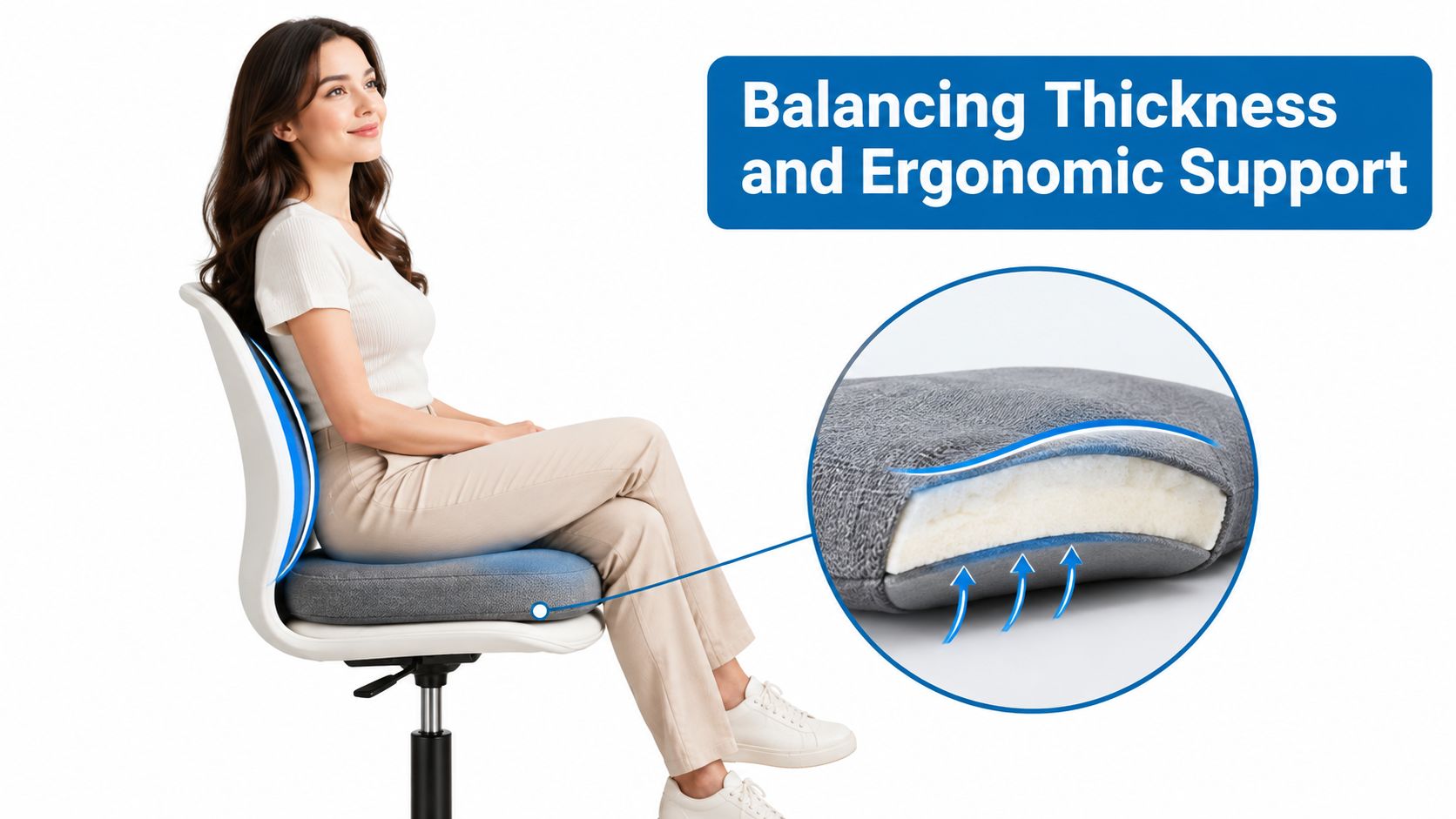
A thicker cushion doesn't automatically make a better seat. Too much loft can let the body sink, reduce movement, and increase compression under the thighs. Cornell's ergonomics guidance also favors a softer upper layer over a firmer support layer, which is the opposite of the “just add more fluff” approach people often take when a sofa feels tired (Cornell ergonomics guidance).
Thickness should protect posture, not just fill space
Seat thickness has to work with the user's body, not against it. If the replacement raises the knees too high, the feet lose contact, the sitter slides forward, and the seat starts feeling less supportive even though it looks fuller. That's why a cushion that seems plush on the workbench can feel wrong after ten minutes of sitting.
The practical test is to compare the original compressed sitting height with the new setup, then sit on it long enough to notice whether the front edge still supports the thighs. A firmer support layer under a softer top layer often gives a better result than a single oversized slab of foam. You're trying to keep the seat stable, not build the tallest cushion in the room.
A good seat keeps you on the cushion, not sliding into it.
Match firmness to the person, not just the furniture
Older adults, caregivers, and anyone repairing a sagging sofa usually need stable edge support more than extra loft. A cushion that feels luxurious for a minute can become tiring if it pushes the sitter forward or makes standing up awkward. That's especially true when the frame is already low or the seat pitch has changed over time.
A dense insert can also hide a support problem below it. If the support deck is weak, thicker foam only masks the issue for a short while. Choose thickness with the body in mind, but don't let thickness do the job of a broken foundation.
Testing the Fit Before Final Assembly
Dry fitting saves you from sewing the wrong answer into a permanent one. Put the insert into the cover temporarily, close it gently, and test it on the actual furniture before you call it done. The goal is to see how the cushion behaves under load, not just how it looks in your hands.
Use the cover as a diagnostic tool
Check the corners first. Empty corners usually mean the insert is too small or the shape doesn't match the cover pattern. If the seams bow outward or the zipper fights back, the insert is too large or too rigid for the construction.
Then sit on it. A cushion that looks full but collapses at the edge is undersupported, while one that feels rigid but lifts the sitter too high is overbuilt. If the cover can't lie flat on the furniture, the problem is still in the sizing.
Watch for the signs people miss
Look for these warning signs before you finish the assembly:
- Corner gaps, which usually point to an undersized insert or a cover that needs a different fill profile.
- Seam bowing, which usually means the insert is too full for the zipper, piping, or corner construction.
- Poor edge support, which shows up when weight pushes the cushion sideways instead of keeping it planted.
- A cover that wrinkles under load, which often means the insert doesn't fill the cavity evenly.
If the cushion passes the dry fit but still feels wrong after a few minutes of sitting, the issue may not be the insert size at all. It may be the frame under it.
Addressing Sagging Frames and Support Decks
Sometimes the insert isn't the problem. If a new cushion still sinks, the support deck, webbing, or sleeper mechanism may be failing underneath it. In those cases, sizing the insert correctly is only half the repair, because the seat still needs a stable base.
When the foundation is the real culprit
A fresh insert can't rescue a broken deck. If the seat swallows weight, feels hollow in the center, or bottoms out near the front rail, the cushion is carrying a load the frame should be handling. That's where sofa support boards, bunkie boards, or other rigid inserts become part of the fix.
For a practical walkthrough on choosing a support layer, this guide on DIY cushion repair tips is a useful complement to the measurement work. For support under the cushion itself, the right reference is what to put under couch cushions for support, because the insert and the base have to work together.
A correctly sized insert on a weak deck still feels wrong. A support board under a properly measured cushion can restore the seat's shape without forcing you into a full reupholstery job. That's the combination that usually solves the “my couch still feels dead” complaint.
Reversible Fixes for Renters and Hosts
Renters and hospitality operators need repairs that come out cleanly. Permanent modifications aren't always allowed, and high-traffic seating needs to recover fast after each guest. In those settings, reversible support changes usually make more sense than a full rebuild.
A practical rental scenario
A renter with a sagging sofa may replace the cushion insert with medium-firm foam, then add a removable support board under the seating area to prevent the deck from dropping out beneath the new fill. That gives the seat a firmer feel without altering the frame or committing to upholstery work. The result is cleaner, cheaper, and easier to reverse when the lease ends.
Hosts face a similar problem with sleeper sofas and guest beds. The best fix often isn't the fanciest one, it's the one that stays put, protects the guest from feeling the frame, and can be removed during turnover without tools. In that kind of setup, a non-permanent support board often matters as much as the cushion itself.
What to prioritize in shared-use furniture
Choose inserts that keep their shape under repeated sitting, but don't overbuild them so much that the seating becomes hard or awkward. Then pair them with a removable support solution when the deck underneath needs help. That combination keeps the furniture useful without locking you into a permanent change.
If you're fixing more than one seat at once, the right sizing process gives you consistency across the room. The cushion should fit the cover, the cover should fit the frame, and the base should support both.
If you're trying to fix sagging seating without replacing the whole piece, Meliusly offers support solutions that work with the cushion, not against it. For sofa seats, sleeper sofas, and other furniture that needs a firmer foundation, visit Meliusly to find support options that help restore comfort and extend the life of what you already own.