

Chair Cushion Pad Guide: Comfort, Sizing, and Support
Posted by Meliusly
A chair cushion pad is a removable seating insert designed to improve comfort, redistribute pressure, and protect upholstery, but its real effectiveness depends on proper sizing and the support system beneath it. In the market, that small upgrade sits inside a category projected to grow from USD 2.63 billion in 2025 to USD 5.91 billion by 2035, with 8.43% CAGR for 2026 to 2035, which tells you people aren't buying pads only for looks anymore, they're using them to make seats work better in real life.
You know the feeling, a chair that seems fine at first, then starts digging into your hips, flattening in the same spot, or sliding you forward by the end of dinner. That problem usually isn't just “old cushioning.” It's pressure management, fit, and what's supporting the pad from underneath.
What Makes a Chair Cushion Pad Actually Work
The most common mistake is assuming a chair cushion pad is just a softer surface. In practice, the pad has to spread load, protect the chair's original upholstery, and keep the seat usable over time. If it only adds loft without handling pressure properly, it feels nice for a short stretch and then turns into another lump on top of a bad seat.
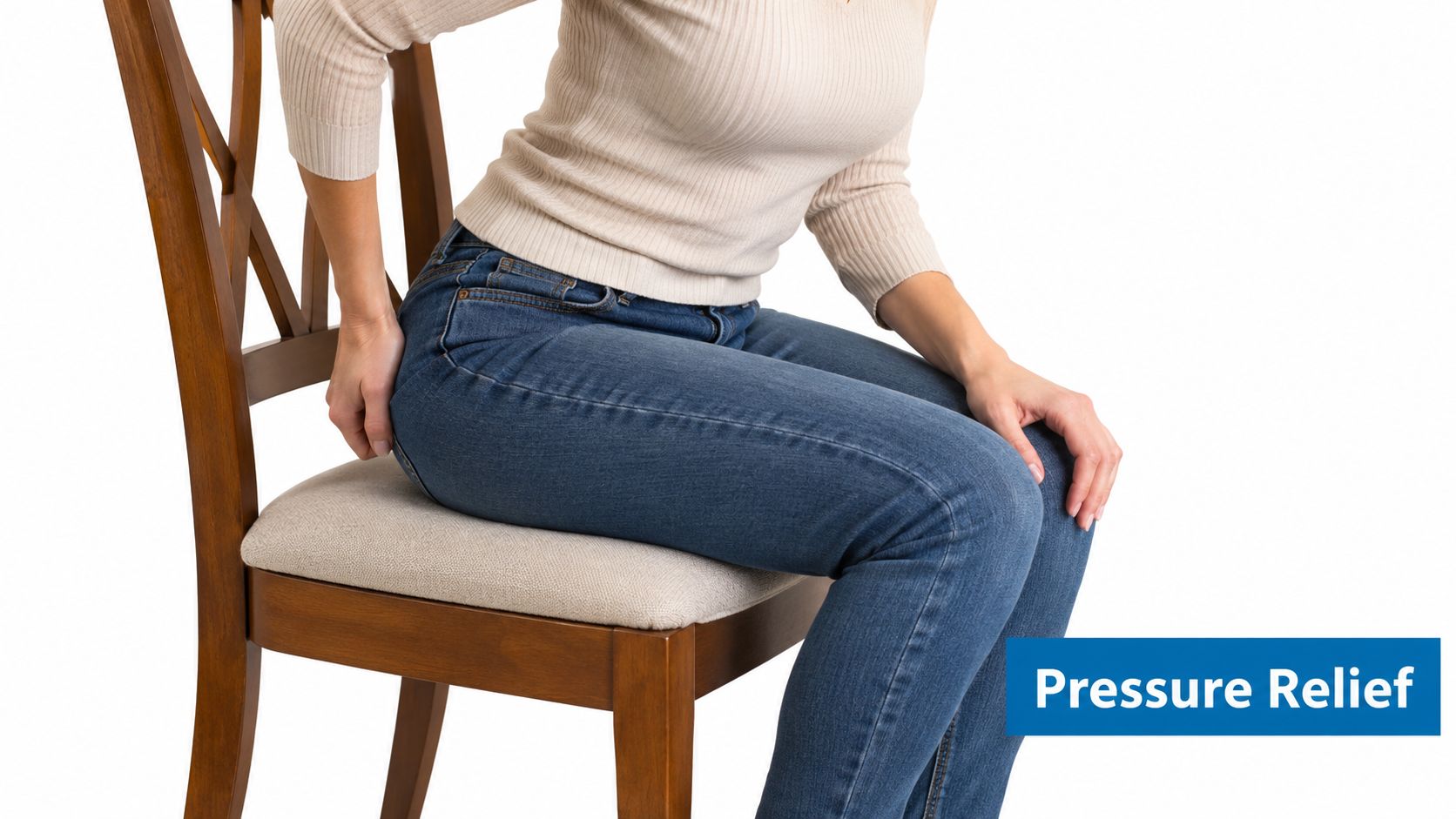
A good way to think about it is a mattress topper. A decent topper can rescue a mattress that's still structurally sound, but it won't fix a bed that's collapsing underneath. The same logic applies here, because a chair cushion pad works best when the chair frame and seat surface are still giving it a consistent foundation.
The everyday test
If a dining chair feels fine for five minutes and then starts creating hot spots, the issue is usually not appearance. It's how the seat is distributing your weight. That's why I always tell homeowners to judge a cushion by how it feels after a normal meal, a work call, or a long sit, not by the first 30 seconds.
A useful reference point on thickness is this seat cushion thickness guide, which helps show why loft alone doesn't guarantee comfort. A thicker pad can still be the wrong pad if it bottoms out or slides around.
Practical rule: a cushion that hides discomfort for a few minutes but shifts your posture is usually masking the problem, not solving it.
The value of a chair cushion pad lies in buying comfort without replacing the chair. It only works as intended when the surface beneath it isn't already failing.
The Science Behind Comfortable Seating
Research backs up something furniture repair people see every day, the pad itself changes how a person sits. In a comparative study, memory foam produced better comfort and lower peak contact pressure than the same seat design without that material, and adding more seat features reduced pressure even further. That matters because comfort isn't just a feeling, it's a load-sharing problem.
Another ergonomic study found that seat cushions affected postural balance and control, and foam cushions improved postural control. In plain terms, the right pad doesn't just soften a chair, it changes how steadily a person can sit in it. That's one reason cushioning and posture need to be considered together, not as separate problems. For a deeper look at how seat depth changes comfort and posture, this seat depth ergonomics guide is useful context.
Pressure mapping tells the real story
Pressure mapping research makes the point even clearer. In one study, a custom ISO cushion produced mean pressures of 39.01 ± 34.64 mmHg upright, 40.38 ± 37.42 mmHg reclined, and 41.63 ± 37.48 mmHg forward-leaning, while a standard office chair recorded 35.74 ± 39.78 mmHg, 31.61 ± 38.17 mmHg, and 35.67 ± 37.57 mmHg in the same postures, with peak pressures reaching 159.16 to 178.68 mmHg on the ISO cushion. The big takeaway is that average pressure can look acceptable while localized spikes still punish the body.
That's why a pad should be judged on localized load control, not just softness. A chair cushion pad that feels plush but lets pressure spike under the sit bones is a poor long-term fix.
A cushion can feel better and still be technically worse if it concentrates pressure in one spot.
That's the part most shoppers miss. The goal is not maximum squish, it's stable, even distribution.
Comparing Common Chair Cushion Materials
Material choice decides whether a cushion feels supportive, warm, durable, or sloppy after a few months. Memory foam is popular for a reason, it conforms well and handles pressure intelligently, but it can trap heat in warmer rooms. Polyester fiberfill feels lighter and cheaper, but it usually loses shape faster and offers less structure. Latex tends to feel more resilient, while gel-infused options are often chosen when cooling matters.
Density and recovery matter more than marketing
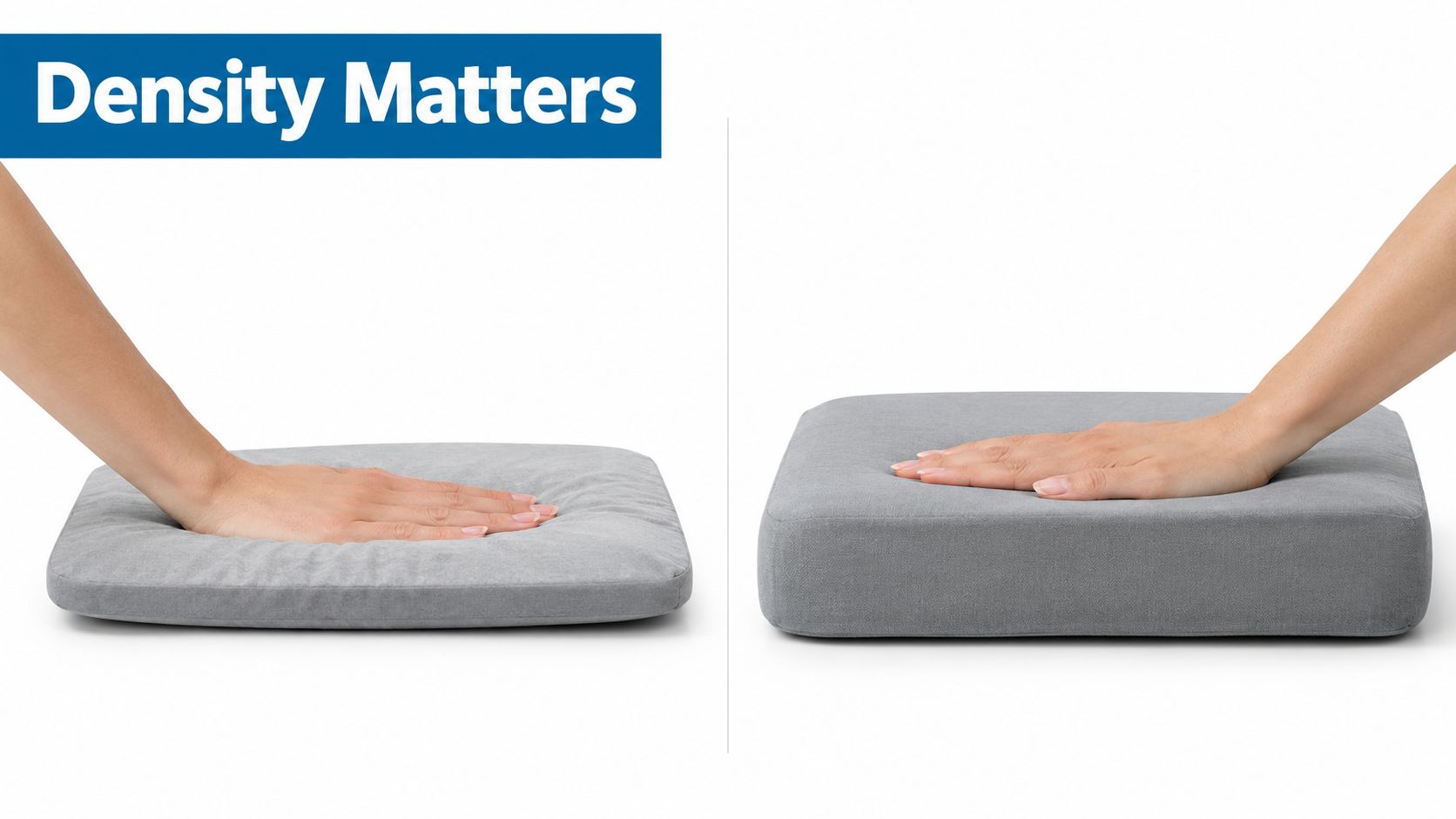
A widely cited upholstery rule says indoor seating foam should have a density of at least 1.8 lb per cubic foot, because higher-density foam uses less air, has a stronger structure, and resists sagging over time. That's the kind of detail that separates a cushion that lasts from one that pancakes in a season.
Foam research also shows that density and contouring change performance. One study on foam density gradients reported a mean peak ischial pressure of 4.83 kPa for uniform foam, while separate research found re-entrant foam blocks at 2 to 4 lb/ft3 produced lower maximum seating pressure than conventional foam of similar density. Another seating-comfort study found slow-recovery cushions distributed pressure more uniformly than fast-recovery cushions, with the best-rated configuration being a 3 cm thick cushion at 65% IFD of 280 N.
That lines up with what I see in repairs. Softer isn't automatically better, and firmer isn't automatically harsher. The right balance depends on how the foam rebounds and whether it holds shape under repeat use.
Heat, durability, and high-use spaces
Conventional memory foam can feel warm, so newer open-cell and copper-infused foams are being used when heat build-up is a concern. In hospitality, rentals, and family homes, washability and wear resistance often matter just as much as comfort. Market coverage also points to rising interest in recycled fibers, organic cotton, and performance fabrics, which makes sense for seats that get heavy use and repeated cleaning.
If you're comparing materials for a daily-use chair, start with these practical filters:
- Shape retention: does the pad hold its form after repeated sitting?
- Heat management: does the material run warm in your room or climate?
- Cleaning reality: can the cover survive real household use?
- Support needs: does the foam fit the way the chair is built?
That's the honest way to shop. A cushion should suit the way the chair is used, not just the way it looks in a photo.
Measuring for the Right Chair Cushion Pad Fit
Fit decides whether a cushion feels intentional or sloppy. A pad that's too small leaves edges exposed and misses the pressure points that need help, while one that's too large slides, bunches, or hangs off the seat in a way that creates instability. For chairs, you want the pad to fit the seat, not the other way around.
Standard chair pads commonly run 15 to 21 inches long, with small pads near 15 inches, standard pads around 16 to 18 inches, and large pads around 19 to 21 inches. For many dining and kitchen chairs, common square dimensions are about 40 x 40 cm or 38 x 38 cm, and a cushion height of roughly 3 to 5 cm usually balances padding with stability.
For more sizing context, the daily use counter vs bar height guide is a good reminder that chair height and seating setup affect how a cushion feels in everyday use.
Measure the seat the right way
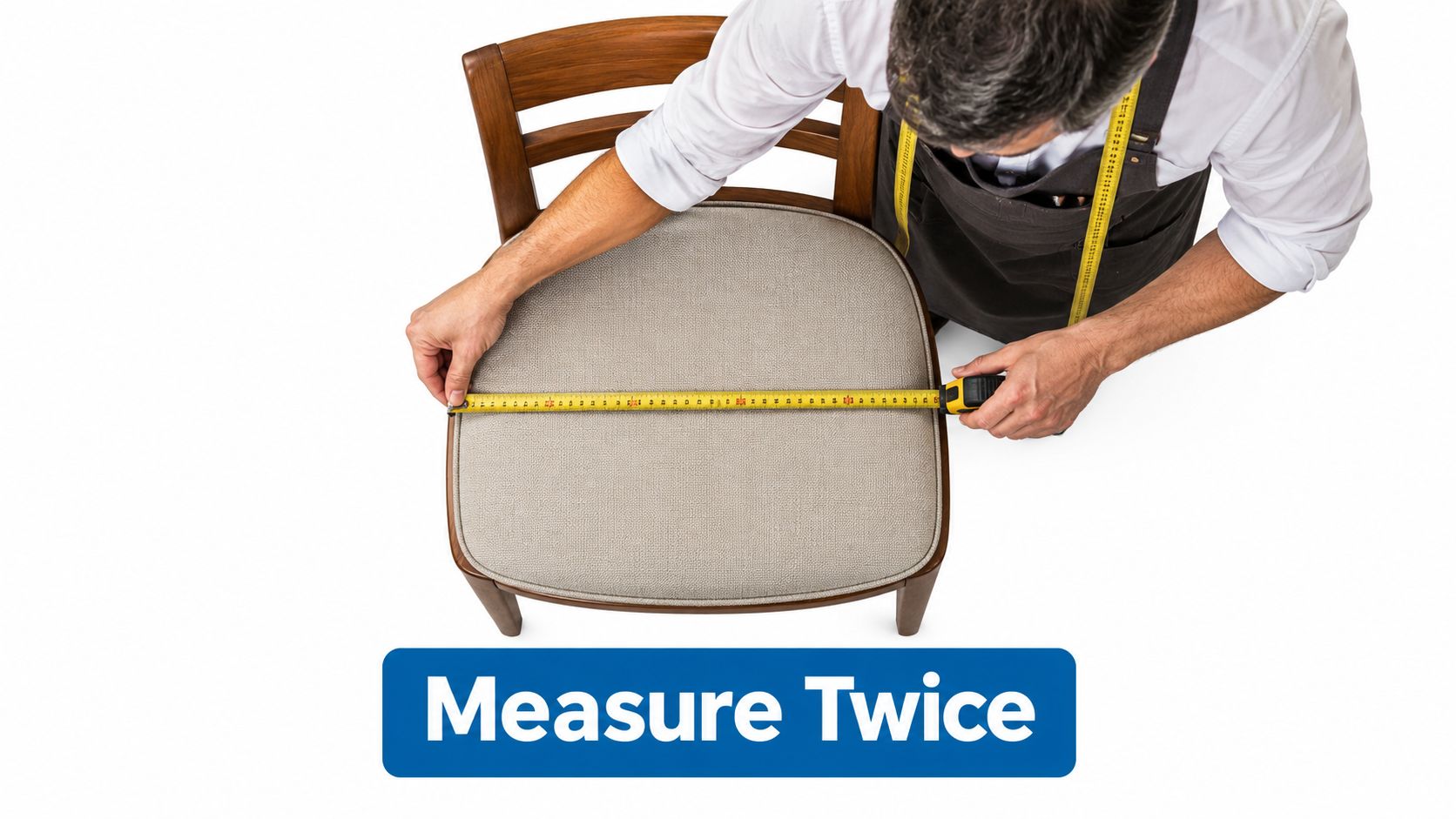
Start with the seat's widest point and deepest point, then check whether the front edge curves or tapers. Many chairs aren't perfectly uniform, so measuring once in the middle isn't enough. If the chair already has a worn-in cushion, measure both the base seat and the existing cushion so you know what the new pad has to sit on.
For a larger seating option, this chair cushion large guide can help if you're comparing pad dimensions for oversized seats.
Best fit check: if the cushion overhangs, it usually moves. If it undersizes, it usually fails to protect the full sitting area.
I always tell people to measure twice, once across the front half of the seat and once across the back half. That catches tapering, rounded corners, and other details that product photos hide.
Why Support Systems Matter as Much as Cushions
A chair cushion pad on a sagging base is a temporary fix, not a real solution. If the frame flexes too much or the seat underneath has lost support, the pad compresses unevenly and wears out faster. That's the same problem you see with mattress toppers on a bad box spring, the topper feels decent at first, then the weak base creates dips and lumps.
Surface comfort needs a sound foundation
The Meliusly approach makes sense in practical terms. Meliusly has served over 400,000 customers with furniture support solutions, including sofa supports, sleeper sofa support boards, bunkie boards, and bed slats. The point isn't to add another soft layer, it's to restore the structure that lets the seating surface perform properly.
The company's support products are also tested and approved by Prüfengel, which matters because support boards and similar products need to do more than just sit under a cushion. They need to keep the load stable so the cushion doesn't collapse into the frame beneath it. For office seating specifically, this office chair cushion lumbar support guide is useful when a chair needs both seat and back support.
If the base is weak, the cushion ends up doing two jobs, comfort and structure, and it usually fails at both.
That's why people often buy multiple cushions and still stay uncomfortable. The actual fix is to pair the pad with the right support under it, so the load is shared instead of absorbed by foam alone.
A chair cushion pad lasts longer when it isn't asked to compensate for a failing foundation. That's the practical difference between a temporary comfort upgrade and a proper seating repair.
Choosing the Right Cushion Pad for Your Needs
The right choice depends on the problem you are solving. If you mainly want a softer seat for meals or occasional use, a lighter pad with standard density may be enough. If you sit for long stretches, or if pressure points are already an issue, a denser foam or a contoured design is a better bet.
For casual dining chairs, comfort and appearance often come first. For office chairs used every day, structure matters more, so higher-density foam and a shape that supports posture are worth paying for. In hospitality or rental spaces, durability and easy cleaning usually outrank plushness.
Use conditions should drive the choice
Warmer climates or users who run hot should pay attention to heat retention. A pad that traps heat can feel fine for a short visit and miserable by the second hour. That's why breathable fabrics and cooling materials matter, especially in homes with pets, kids, or heavy turnover.
One overlooked filter is whether the chair itself is still sound. If the seat frame sags, tilts, or shifts, the cushion can't compensate for that reliably. Skipping that check is the mistake that leads to repeated purchases and no real improvement.
A simple decision path works well:
- Measure the seat.
- Decide the main goal, comfort, protection, or longevity.
- Match material to usage intensity.
- Check the support under the cushion before buying anything else.
That sequence keeps the purchase grounded in the actual chair, not just the product listing. It also keeps you from overspending on softness when structure is what's missing.
Installation Tips and Troubleshooting
Put the cushion pad in the center of the seat and make sure it lies flat before anyone sits down. If the front edge hangs too far or the pad bunches toward the back, the fit is off and the pressure distribution will be off too. A few minutes of adjustment at the start saves a lot of frustration later.
If the cushion slips, the usual causes are a smooth seat surface, a pad that's too small, or backing that doesn't grip well enough. Non-slip pads, upholstery tape, or a cushion with a grippy underside can help. On slick dining chairs, I've also seen people succeed by matching the cushion size more closely to the seat footprint.
When a cushion flattens too quickly
Early flattening usually means one of two things. The foam is too low-density to recover well, or the chair underneath isn't supporting the load evenly. In that case, the fix isn't just a new cushion, it's better support under the whole seating area.
Care matters too. Vacuum the cushion regularly, spot clean spills right away, and rotate the pad periodically so wear doesn't concentrate in one spot. Follow the manufacturer's cleaning instructions, especially with performance fabrics, because some hold up much better than others around stains and moisture.
Troubleshooting rule: if a cushion keeps failing in the same seat, stop replacing the pad first and check the support system.
A properly installed chair cushion pad on a well-supported chair can restore comfort for years instead of months. That's the difference between a temporary soft layer and a lasting fix.
If your chair still feels wrong after you've measured it and chosen the right pad, the problem may be underneath the cushion, not on top of it. Visit Meliusly to explore furniture support solutions that help restore structure, improve comfort, and extend the life of the seats you already own.