

Best Cushions for Sofa: 2026 Guide to Buying and Support
Posted by Meliusly
You sit down on your sofa and feel yourself drop lower than expected. The front edge has softened, the fabric wrinkles around the seat, and standing up takes more effort than it used to. Replacing the cushions seems like the obvious fix, but a new insert can sag quickly if the frame, webbing, or springs underneath have already lost their support.
The best cushions for sofa restoration projects are chosen as part of a system. Foam density, fill construction, cushion dimensions, and the seat foundation all affect comfort and service life. Before ordering replacement cushions, inspect what sits beneath them and decide how the sofa is used every day.
| Sofa condition or use | Cushion construction to consider | Foundation check |
|---|---|---|
| Occasional seating or guest room | Moderate-density foam with a simple fiber wrap | Look for uneven webbing, loose slats, or damaged springs |
| Everyday family sofa | High-resilience, higher-density seat foam with a supportive wrap | Check for sagging across the entire seat base |
| Heavy daily use | Foam in the stronger daily-use density range, with durable outer construction | Add or repair support beneath the cushions before installing new inserts |
| Older sofa with sound frame | Custom-sized replacement cushions | Confirm that the frame and seat foundation remain level |
| Sofa that sinks toward the floor | Cushion replacement alone may not be enough | Inspect webbing, springs, and any gap between the frame and cushion |
The Hidden Cost of Choosing Wrong Sofa Cushions
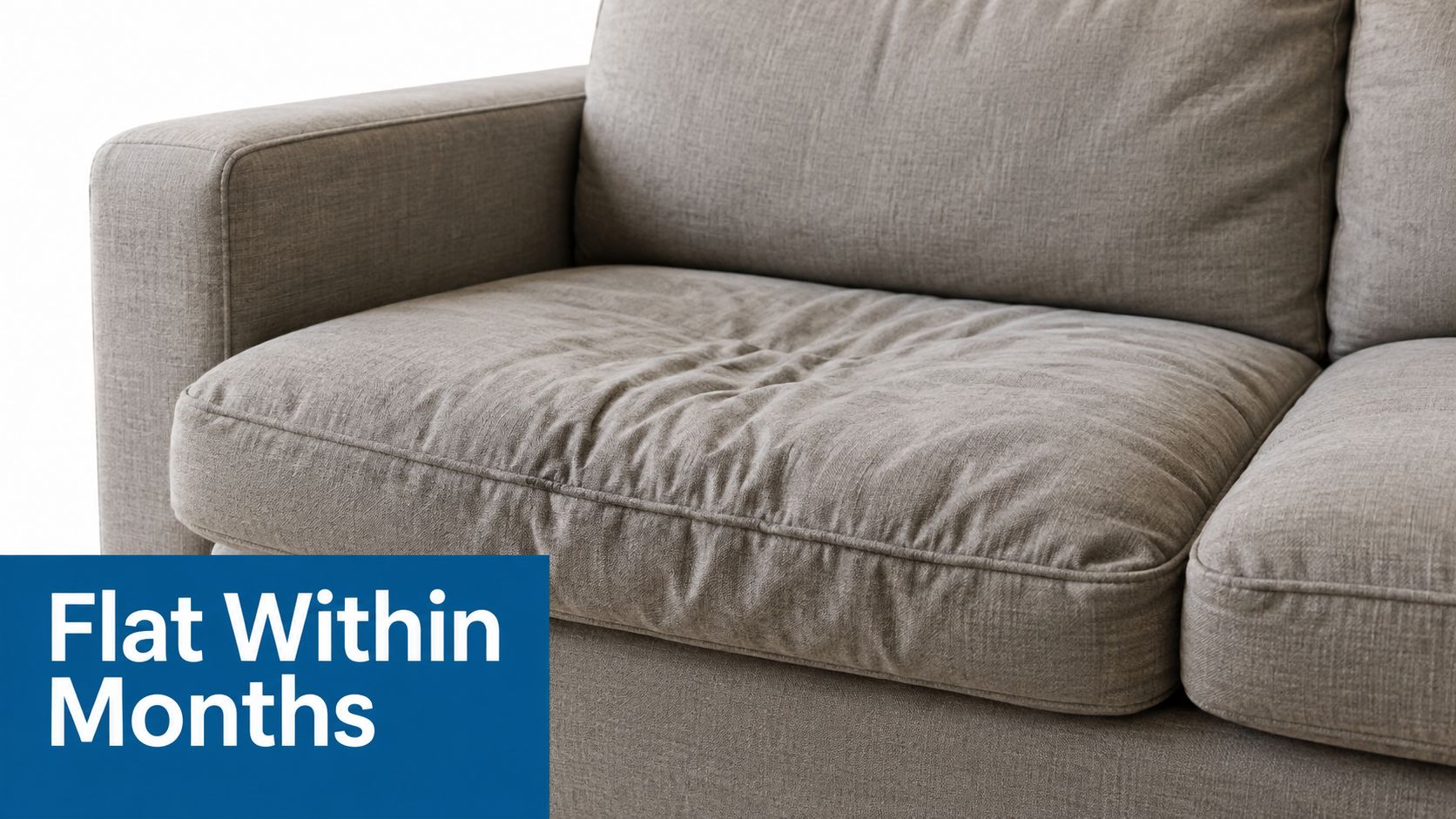
A homeowner often discovers the problem in stages. First, one seat feels softer than the others. Then the cushion develops a permanent hollow where someone sits most often. Finally, the replacement cushion arrives, looks full on the first day, and starts feeling flat because it is still working against a weak base.
That cycle creates unnecessary expense. The visible cushion gets blamed because it is the part you touch, but the support system beneath it determines how evenly the cushion carries weight. A durable insert cannot compensate for a seat foundation that bends, drops, or leaves unsupported spaces.
Why softness is a poor quality test
Softness tells you how a cushion feels during the first few seconds of sitting. It doesn't tell you how the foam will respond after repeated compression, whether the cushion will bottom out, or how well it will recover after you stand.
Density is the more useful starting point. Industry guidance commonly places everyday residential seat cushions around 1.8 to 2.0 lb/ft³, or approximately 28 to 33 kg/m³, while higher-end residential seating is often specified around 2.0 to 2.5 lb/ft³, or approximately 35 to 50 kg/m³. Denser foam generally resists breakdown better, which is why the upholstery foam guidance from Make Bespoke treats density as a core specification rather than a minor detail.
A very soft cushion may feel luxurious in a showroom but compresses significantly under a heavier occupant. That substantial compression can make the user contact the frame or seat base, especially when the foam is already losing resilience. A firmer cushion isn't automatically better either. The practical objective is enough density and firmness to support the user without creating a hard, upright seat.
The foundation changes the result
Before ordering, remove every seat cushion and examine the surface underneath. Look for sagging webbing, broken springs, exposed slats, cracked support pieces, or a center area that sits noticeably lower than the edges. Furniture support guidance confirms that stretched or broken webbing and damaged springs can make a sofa feel as if it is sinking toward the floor, even when the cushion itself isn't the only problem. You can review those foundation warning signs in this durable sofa support guide from Coleman Furniture.
Practical rule: If the sofa base is uneven, don't judge a replacement cushion by the way it sits on that uneven surface. Correct the foundation first, or the new cushion will inherit the same stress pattern.
A sound older frame can be worth restoring. Replacing worn inserts while preserving the frame often gives you more control over firmness, height, and fabric fit than buying another sofa with unknown internal materials. The repair only works, however, when the cushion and its foundation are treated as one load-bearing assembly.
Understanding Foam Density and Lifespan Benchmarks
Foam density describes how much material occupies a given volume. It isn't the same as firmness. ILD measures the force needed to compress foam, while density helps indicate how much foam structure is available to resist breakdown. Two cushions can feel similarly firm at first and still have different long-term durability because their densities differ.
For normal seating, upholstery references commonly describe 1.8 and 2.0 lb/ft³ as the two most common seat-cushion densities, with the broader range of foams used in upholstered seating generally falling between 1.5 and 2.5 lb/ft³. A long-running foam selection guide from StitchDesk also notes the familiar trade-off between seat and back cushions. Seats need more support, while backs usually use softer material.
Match density to the workload
The practical minimum for seating is often placed around 1.8 lb/ft³, but daily-use guidance points to approximately 2.5 to 2.9 lb/ft³ as a stronger durability target. That range comes from FoamOrder's couch cushion guidance, which distinguishes a minimum usable specification from a more resilient choice for repeated compression.
That distinction matters in a family room. A cushion used for short visits in a guest room doesn't face the same workload as one used for meals, television, reading, naps, and daily lounging. If the sofa is occupied for long periods, choose the higher-density option your upholsterer recommends, then tune the feel with firmness, a wrap, and the cover construction.
The difference becomes clearer in benchmark-style wear testing. Foam specified at 35 kg/m³ retained roughly 90% of its original thickness after 50,000 compression cycles at 25% deflection, while 28 kg/m³ foam began showing permanent compression after about 30,000 cycles. Foam in the 40 to 45 kg/m³ range maintained structural integrity beyond 80,000 cycles in the same cited comparison. These figures are reported in Evergo Casa's comparison of sofa cushion fill types, and they illustrate why a cushion that feels comfortable on delivery may not be the best choice for heavy use.
Understand what the numbers don't tell you
Density isn't a complete buying decision. A dense cushion can still feel wrong if its firmness doesn't suit the user, if its thickness is poorly matched to the frame, or if the base flexes underneath it. Likewise, a softer back cushion can be appropriate because backs support a different load than seats.
Memory foam is another example. It responds to heat and pressure differently from conventional upholstery foam, so readers comparing materials may find this BEDHEAD memory foam guide useful for understanding the material itself. It shouldn't replace an upholstery specification, but it can clarify why memory foam blends feel different from a resilient seat core.
For a practical explanation of how padding layers affect the finished seat, see this guide to couch padding for cushions. A wrap can improve edge shape and initial comfort, but it won't turn low-density foam into a heavy-duty seat core. Buy the core for the workload, then use the outer layers to refine the feel.
Comparing Fill Materials for Different Living Styles
The inner core carries the main load, but the surrounding fill controls the first impression when you sit down. It also affects how often you need to reshape the cushion, how cleanly the cover fits, and whether the sofa looks crisp or relaxed.
A household with children and pets usually needs recoverability and easy maintenance. A formal living room may prioritize a structured silhouette. Someone furnishing a guest room may prefer a simpler construction because the sofa sees less frequent use. There isn't one universal fill that works for all three settings.
Sofa Cushion Fill Comparison
| Fill Material | Durability Profile | Best Use Case |
|---|---|---|
| Polyester fiberfill | Light and easy to reshape, but can compress or form uneven areas when used without a supportive core | Casual family rooms, decorative cushions, and households that prefer a softer, less structured feel |
| Down alternative | Creates a plush, relaxed surface without relying on natural feathers, but needs regular reshaping to maintain loft | Lounge-focused rooms, reading areas, and users who prefer a soft sink-in feel |
| Memory foam blend | Provides pressure-responsive comfort and can feel more enveloping than conventional foam, but the formulation and support level vary | Users who like contouring comfort and are willing to prioritize feel over a uniformly firm seat |
| High-resilience foam with a wrap | Gives the seat a stable core and a cleaner outline, with the wrap softening the surface and edges | Daily seating, older furniture restoration, and households that want support without a hard feel |
Polyester fiberfill suits flexible rooms
Fiberfill works well when you want a cushion that can be lifted, rotated, and reshaped easily. It gives a lighter, more casual look and can soften a firm underlying core. The limitation is structural. Fiberfill alone doesn't provide the same stable load support as a properly specified foam core, especially when people use the same seating position repeatedly.
For a family sofa, fiberfill is most useful as part of a layered construction rather than as the only seat material. A supportive core handles compression, while the fiber layer softens the contact surface and helps the cover sit neatly.
Down alternatives favor softness
Down alternatives create a relaxed appearance and suit people who enjoy sinking into the sofa. They can also be a practical choice when you want a plush surface without using natural down. The trade-off is maintenance. A soft, loose fill needs reshaping more often, and the seat may look less neat between adjustments.
If you prefer a structured appearance or need easier standing support, don't choose a loose fill based only on how comfortable it feels for a brief showroom test. The spring-down cushion guide offers useful context for comparing plush cushion constructions and their support characteristics.
Memory foam blends need a careful test
Memory foam blends can contour around the body, which some users find comfortable during longer sitting sessions. Others dislike the slower response or the feeling of sinking into the cushion. The right choice depends on whether you want pressure relief and contouring or a seat that rebounds promptly when you change position.
Pet owners and parents should also evaluate the cover separately from the fill. A removable, washable cover can matter more to daily convenience than a small difference in surface softness. Whatever the fill, check the core specification, the cover construction, and how easily the cushion can be turned or serviced.
Precise Measurement Strategies for Custom Fits
A replacement cushion should fit the furniture, not merely resemble the old cushion. Worn inserts often have compressed edges, stretched covers, and distorted corners. If you copy those damaged dimensions without checking the frame, the new cushion may arrive too narrow, too thick, or unable to sit flat.
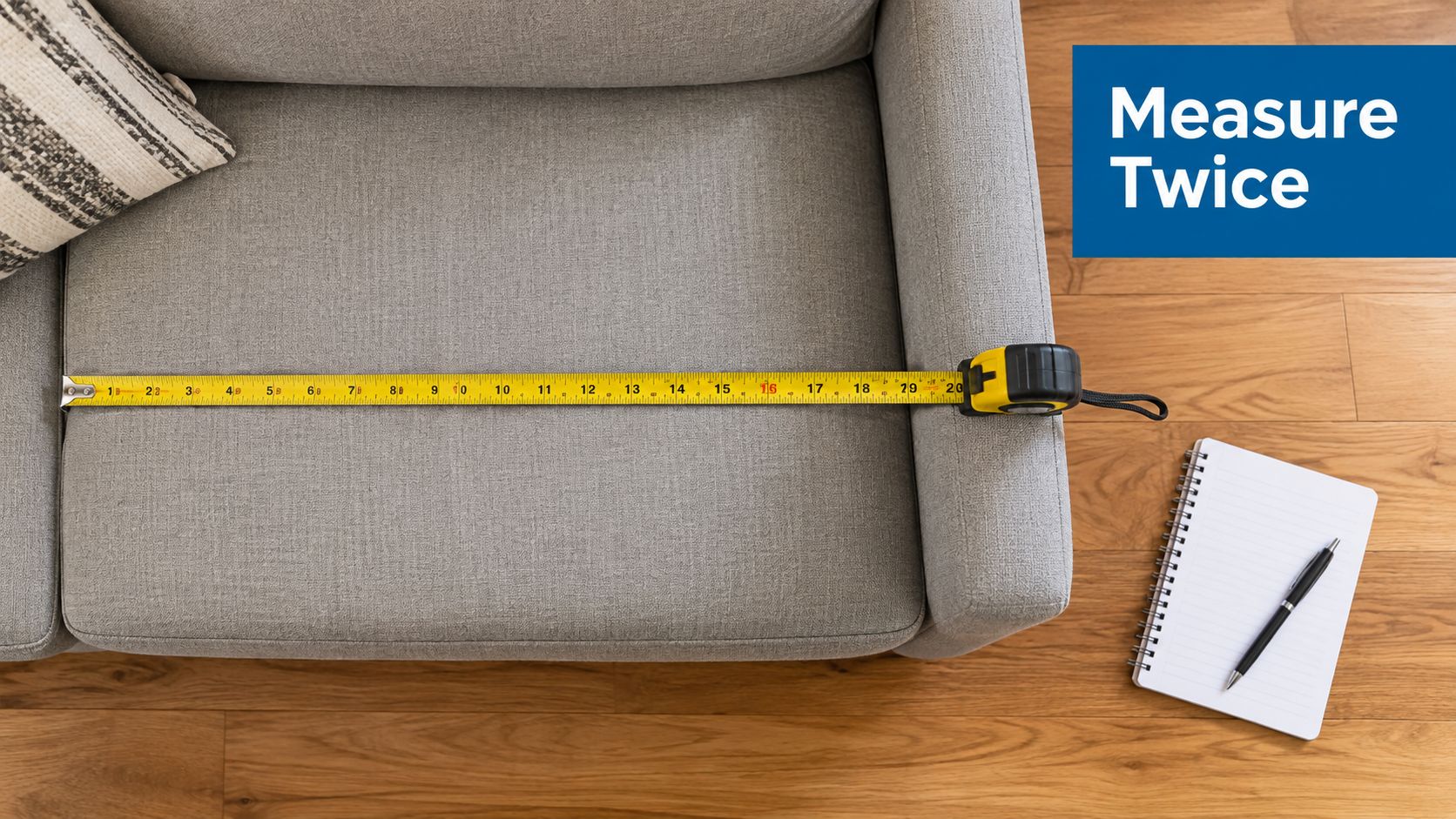
Measure the opening and the support surface as well as the old insert. That gives you a more reliable finished size and exposes problems that the old cushion may be hiding.
Use this measurement sequence
- Remove the cushion: Place it on a flat surface without forcing it into shape. Note whether the corners, front edge, or sides have collapsed.
- Measure the frame opening: Record the usable width from inside edge to inside edge. For multiple cushions, measure the full opening and then inspect the dividers, gaps, and any center support.
- Record the depth: Measure from the front edge of the support surface to the back edge. Don't confuse this with the sofa's overall depth, which includes the back and frame.
- Check the shape: Measure the front and rear width separately if the cushion tapers. Do the same for depth if the back edge is narrower or angled.
- Measure thickness carefully: Use the frame and the desired finished seat height as references, not just the current flattened cushion. A compressed insert can make you order a replacement that is too thin.
- Make a template for irregular seats: Trace a wedge, corner, bench, or curved shape onto cardboard or kraft paper. Place the template in the sofa and correct the fit before ordering foam.
Measure the support board area too
The cushion needs a stable, evenly supported surface beneath it. If you're adding a board or replacing a damaged base, measure the area that the board will occupy, including the distance between arms and any clearance around hinges or reclining mechanisms.
A cushion that overhangs its support can develop unsupported edges. One that is forced into a tight opening can bulge, stress the cover, and change the way users sit. Take photographs from above and from both sides, and write down every measurement immediately. Measuring twice is faster than correcting a custom order.
For wedge-shaped cushions, list each dimension separately rather than relying on one “length” measurement. A professional upholsterer can use a paper template and photos to confirm the cut, but the final result still depends on accurate information from the sofa owner.
How Sofa Support Boards Extend Cushion Longevity
A new cushion can fail early when the sofa base beneath it still gives way. Springs lose tension, webbing stretches, and widely spaced slats allow the seat to dip between support points. Instead of spreading the sitter's weight across a level surface, the cushion bends into weak areas and develops uneven compression.
A support board changes that load path. It creates a more consistent plane beneath the cushion, reducing bending and limiting collapse in the seat base. It cannot repair a broken frame or restore damaged springs, but it can stabilize a usable foundation when the existing support makes the sofa feel soft, uneven, or lower in the middle. See this guide to sofa cushion support boards for sizing and installation details.
Diagnose the base before buying inserts
Remove every cushion and press across the seat foundation by hand. Compare the center with the front and side edges. The pattern of movement often tells you whether the insert is the actual problem.
- A central drop: The middle sits below the perimeter and pulls the cushion into a hollow.
- Visible gaps: Spaces between slats or support members let the cushion flex into unsupported areas.
- Broken or loose components: Snapped springs, detached webbing, and cracked frame pieces require repair before concealment.
- A hard edge under the cushion: A frame rail or slat creates a concentrated pressure point that accelerates local compression.
- Movement under load: If the base shifts while you press down, a replacement cushion will not remove that underlying motion.
A board works best when it covers the sofa's usable support area and rests securely without blocking hinges, reclining hardware, or removable mechanisms. Confirm the opening and clearance before ordering. Installation also needs to follow the support product's instructions, since a board that sits unevenly can create new pressure points.
Why a firm layer helps
An uneven base makes one part of the cushion compress more than another. Over time, that produces the familiar “pancake” profile, with a flattened center and raised edges. A firm layer distributes the load more consistently and lets the foam operate through its intended range instead of dropping into gaps.
The approach suits older sofas whose cushions remain serviceable while the foundation has softened. The aim is a stable seat, not a rigid one. The board should reduce excess movement and uneven loading while preserving the sofa's normal comfort.
For repair context, these Northern New Jersey sofa repair tips from Suburban Furniture cover common causes of sagging and checks to make before replacing visible upholstery components.

A Meliusly support board installed across the seat base creates an even load surface before new cushions go in.
Treat the board as part of the cushion replacement decision, not as a last-minute fix for a collapsed couch. On an aging sofa, compare the effort of stabilizing the base with the cost of placing new foam on a surface that already causes sagging. A board will not make an unsuitable cushion durable, but it can protect a sound replacement from the uneven stress that shortened the old cushion's life.
The same inspection applies to sleeper sofas, chairs, and other furniture with flexible or widely spaced supports. Check the mechanism first, preserve its required movement, and choose a support solution that fits the furniture rather than forcing a generic piece into the opening.
Final Recommendations for Optimal Sofa Comfort
The best cushions for sofa restoration depend on three decisions: how often the sofa is used, how much support the user needs, and whether the foundation is still sound. Start with those questions instead of choosing the softest sample.
For a guest room or lightly used sitting area, a moderate residential foam specification with a simple comfort wrap may be sufficient. You can focus more on cover style and ease of maintenance because the cushion won't face the same repeated loading as a family-room seat.
For a sofa used every day, choose a higher-density, high-resilience seat core in the stronger daily-use range described earlier. Add a suitable wrap to soften the contact surface, but don't use fiberfill or a plush outer layer to compensate for an underspecified core. If the user has difficulty standing from a deep, soft seat, prioritize recovery and stable support over a dramatic sink-in feel.
Match the solution to the furniture
The cushion is flat, but the base is level. Replace the insert after measuring the frame opening. Choose density according to use, then select the firmness and wrap based on the user's preferred sitting posture.
The cushion is still reasonably full, but the whole sofa sags. Inspect webbing, springs, slats, and frame rails before purchasing new foam. A support board or foundation repair may produce the greater improvement.
The sofa feels comfortable but the user sinks too far. Move toward a more supportive core and avoid judging quality by softness alone. Test how quickly the cushion recovers when you stand and whether you can rise without pushing heavily against the arms.
The sofa has a tapered or unusual shape. Use a template and measure the top, bottom, front, and rear edges separately. Custom accuracy matters more than selecting a nominal “standard” size.
The household includes pets or children. Put cleaning and access into the specification. Removable covers, durable upholstery, and a core that retains its shape are more useful than a delicate fill that looks perfect only when freshly arranged.
The frame is cracked or the mechanism is damaged. Repair the structure before ordering cushions. New foam can't correct a broken load-bearing component, and installing it first may make the later repair more difficult.
A good restoration should feel stable when you sit down, recover when you stand, and remain aligned with the sofa frame. The cushion should support your body without forcing you into a rigid posture, while the base should distribute your weight instead of allowing the insert to fall into a hollow.
For homeowners trying to extend furniture life affordably, the sensible sequence is clear. Inspect the foundation, measure the actual support area, select density for the workload, choose the outer fill for the household, and only then finalize the cover and appearance. That process costs less frustration than replacing a cushion that was asked to solve a foundation problem.
Meliusly offers sofa cushion support boards and related furniture support solutions that help stabilize sagging seating without replacing the entire piece. Visit Meliusly to compare support options for sofas, sleeper sofas, chairs, and other furniture foundations before ordering new cushions.