

Old Couch Cushions: How to Restore, Clean, or Replace Them
Posted by Meliusly
You sit down on the same couch you've owned for years, and instead of feeling support, you feel yourself dropping into a soft hollow. The seat looks tired. The cushions wrinkle even after you stand up. Maybe the fabric still looks decent, and that makes the problem more frustrating. The sofa isn't completely dead, but it doesn't feel right anymore.
That's where many people get stuck with old couch cushions. They assume the whole sofa needs to go, or they try a quick re-fluff that lasts a weekend. In practice, worn seating usually falls into a few predictable categories: surface wear, foam failure, or support failure under the cushions. Once you identify which one you're dealing with, the fix gets much clearer, and often much more affordable than replacement.
Understanding the Aging Process of Old Couch Cushions
Aging cushions rarely fail all at once. They decline in a pattern. First, the seat feels a little less springy. Then the cushion starts holding a body impression. After that, the cover begins to look loose, even when nobody is sitting on it.
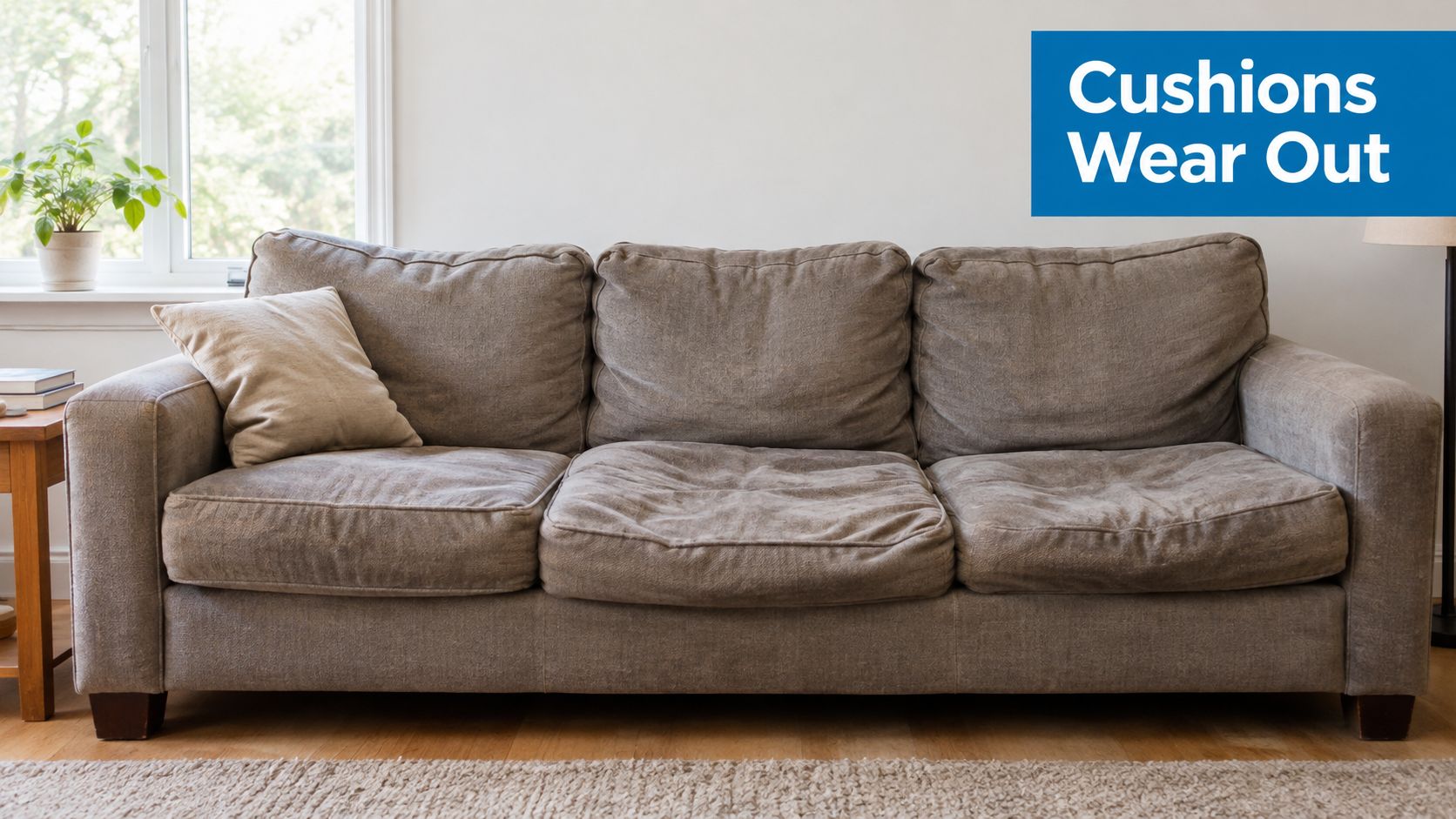
Most homeowners are surprised to learn that this is normal wear, not necessarily a manufacturing defect. Low- and mid-priced upholstered furniture often starts losing cushion shape and comfort within 1 to 3 years, and many seat cushions need replacement within 3 to 5 years according to this furniture lifespan guide. Better foam can last much longer. That same source notes that 1.8-density foam is often estimated at 3 to 5 years, 2.0-density foam at 4 to 6 years, and 2.5-density foam at 10 to 15 years.
What aging usually looks like
In real homes, old couch cushions tend to show the same warning signs:
- Permanent wrinkles: The cover doesn't smooth back out after use.
- Loss of bounce: You sit down and don't get much rebound.
- Visible dips: One favorite seat starts sinking lower than the others.
- Loose cushion covers: The fabric stays slack even when the cushion is empty of pressure.
Old couch cushions usually fail gradually. By the time you notice discomfort, the foam or support underneath has often been weakening for a while.
There's also a material reason behind this decline. As polyurethane foam ages, it loses resilience from thermal, oxidative, hydrolytic, and mechanical stress, which can lead to brittleness, crumbling, softness, tackiness, and loss of shape, as outlined in this conservation review of aging foam.
Restore or replace
The practical decision starts with one question: Is the problem limited to the cushion, or is the seat support underneath also failing?
If the cushion still has some structure and the seat is dipping mainly because it's falling into gaps below, a structural correction often buys you much more life. If the foam has collapsed, stays compressed, or feels uneven throughout, replacement is usually the cleaner answer.
If you want to understand why two sofas that look similar can age very differently, Meliusly's sofa construction guide is a useful reference. Construction details under the fabric often matter as much as the fabric itself.
Assessing and Cleaning Your Sofa Cushions
Don't clean first and diagnose later. That's how people waste time scrubbing a cushion that actually has a broken support system underneath it.
Start with the seat fully stripped down. Remove all loose cushions and look at the deck, which is the upholstered platform under the seat cushions. If that area visibly dips or feels soft when you press it by hand, the problem may be in the sofa's internal support system, not just the cushion fill, as noted in this sagging couch repair guide.
A quick inspection routine
Use this order and you'll usually find the issue fast:
-
Check the cushion shape first
Set each cushion on the floor. If one has a strong slope, thin center, or lumpy edges, the insert is wearing unevenly. -
Inspect the foam core
Open the cover if possible. If the foam is crumbling, discolored, misshapen, or has that dead, flattened feel, cleaning won't restore function. -
Look for moisture and odor issues
Musty smell that keeps returning after cleaning is a red flag. Recent repair guidance also notes that persistent odor after cleaning, visible mold, and foam that is crumbling or discolored usually point toward replacement rather than more cleaning in this article on musty couch cushions. -
Test the seat deck
Press down across the full seating area, especially the center and front edge. Soft spots under otherwise decent cushions often mean the support below is the weak link.
What cleaning can fix
Cleaning helps with surface grime, dust, and some odor from fabric and batting. It does not reverse collapsed foam. It also won't solve trapped moisture deep in the cushion core.
A sensible cleaning routine looks like this:
- Vacuum first: Pull out grit, crumbs, and pet hair before adding any moisture.
- Spot clean second: Follow the upholstery code on the tag if one is present.
- Dry fully: Don't put a cushion back into service while it's still damp inside.
- Air it out: Good airflow matters more than scented sprays.
Practical rule: If a cushion smells clean for a day and then turns musty again, the problem is usually deeper than the fabric surface.
If you manage vacation rentals, offices, or shared spaces where upholstery sees heavier turnover, professional help can make sense for fabric-only issues. For larger commercial cleaning needs, resources like specialty carpet cleaning for businesses can be useful when the broader goal is restoring soft surfaces across a property, not just one sofa cushion.
When to stop cleaning and move on to repair
Cleaning is worth doing when the structure is still sound. Stop and shift to restoration when you see these signs:
- The cushion stays flat: Compression remains after hours of rest.
- The cover hangs loose: The insert no longer fills the shell.
- The smell returns: Deep contamination is likely inside the foam.
- The seat feels uneven: One area sinks more because support below has given way.
That's the point where cleaning becomes maintenance, not a fix.
Comparing Repair Options for Sagging Seats
Once you know the problem, the repair path usually falls into three buckets. You can add fill, replace the foam, or reinforce the seat from below. Each one solves a different failure point, and people get poor results when they use the wrong method for the wrong problem.
Comparison of Cushion Restoration Methods
| Method | Difficulty | Longevity |
|---|---|---|
| Add polyfill or batting | Low | Short-term |
| Replace foam inserts | Medium | Medium to long-term |
| Install a support board | Low to medium | Long-term for support-related sag |
Option one: add fill or batting
This is the fastest fix and the most commonly overused. Practical repair sources consistently mention adding more cushion fill, such as polyfill or Dacron wrap, as one of the standard ways to improve a sagging seat, as summarized in this repair guide.
It works well when the cushion has only lost a little fullness around the wrap, or when the corners and top layer need help looking smoother. It does not work well when the center foam core is spent.
Use it when:
- The cushion is mildly loose in the cover
- The foam still rebounds somewhat
- You're correcting shape, not rebuilding structure
Skip it when the cushion folds in half easily or bottoms out under normal sitting.
Option two: replace the foam insert
This is the right move when the insert itself is the failure. Upholstery workflows usually start by measuring the cushion cover, not the old compressed foam, because old foam shrinks and distorts. A practical approach is to trace the cover seam to seam, add about 0.5 inch to width and depth for a snug fit, and use a paper template for T-cushions or unusual shapes, according to this sofa foam replacement guide.
That same workflow commonly includes wrapping the new foam in batting and using thin plastic to help slide it into a tight cover.
A few useful specifications matter here:
- IFD or ILD: This refers to firmness. Flexible polyurethane foam is commonly evaluated by Indentation Force Deflection, which measures the pounds of force needed to compress a 4-inch sample by 25%, as described in this IFD testing overview.
- Residential firmness guidance: An industrial upholstery source notes that residential seat foam is often selected around 25 to 35 ILD, while commercial and healthcare applications commonly use 40+ ILD. The same source treats density as a key durability factor, with about 20 to 30 kg/m³ for residential use and 35+ kg/m³ for commercial use in this upholstery foam guide.
Replacing foam can make an old sofa feel new again, but only if the support beneath the cushion is still doing its job.
Option three: install a support board
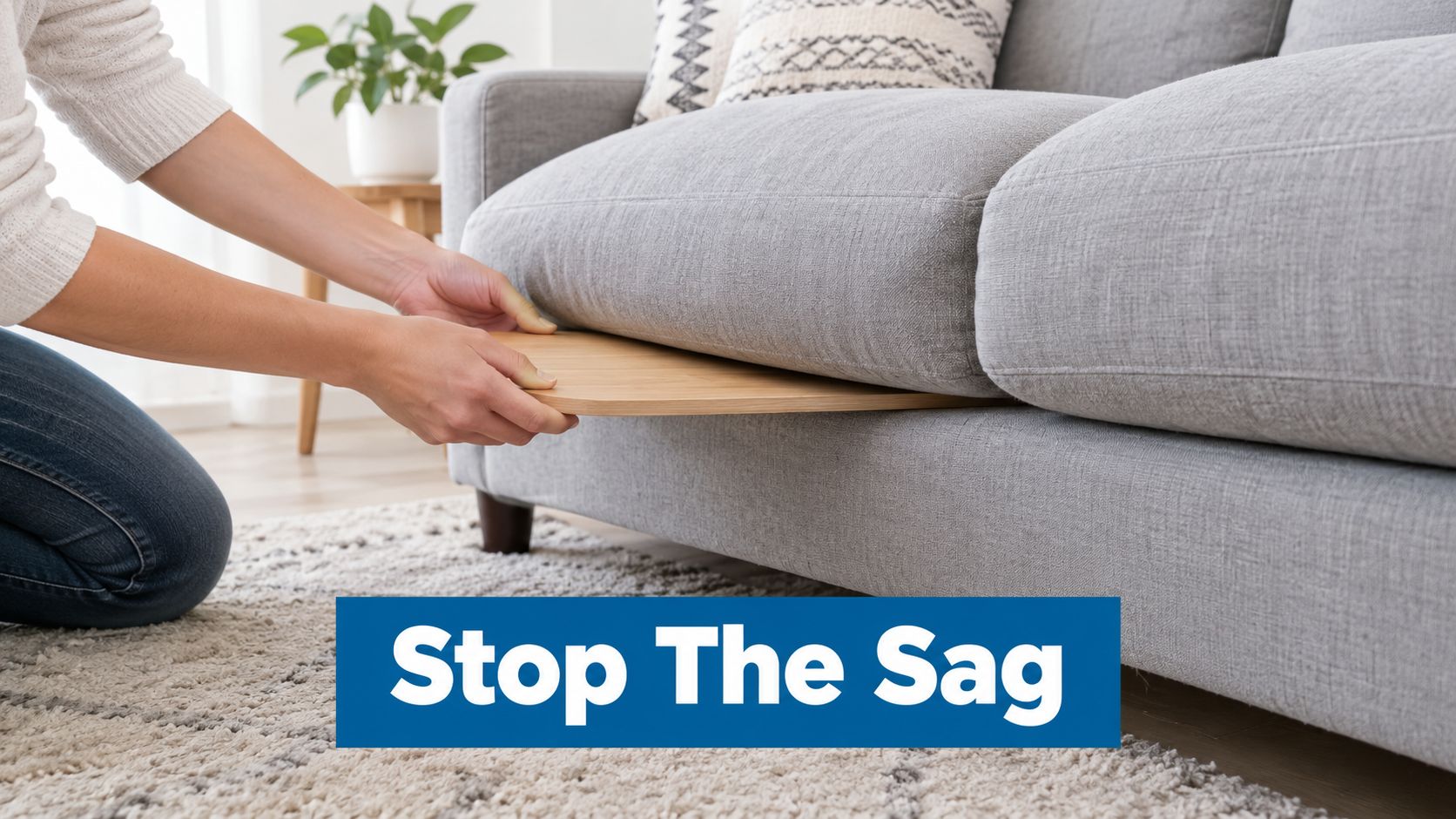
This method targets the seat platform rather than the cushion insert. If the sofa sags because the cushion is dipping into webbing gaps, stretched seating areas, or tired deck support, a rigid panel underneath can restore a flatter load-bearing surface.
This is often the most practical route when the cushions are worn but not destroyed, and the owner wants better support without opening upholstery or rebuilding springs. It doesn't permanently alter the furniture, and it addresses the mechanical failure point directly.
Installing a Support Board for Instant Relief
A support board works because it changes what the cushion sits on. Instead of dropping into weak spots, the cushion rests on a flatter, firmer base. That single change often makes old couch cushions feel far more stable, even before you replace any foam.
Measure the area that actually needs support
Don't measure the cushion alone. Measure the seating area where the board will rest.
Focus on:
- Width across the seating deck
- Depth from the front rail to the back support point
- Any center gap or sag zone that needs coverage
If the issue is concentrated in one seat, you may only need to reinforce that section. If the entire couch has gone soft, support the full run under the cushions.
Choose the right style of support
The goal is simple: create a rigid, flat foundation under the seat cushions. Practical repair guidance commonly describes using a rigid support panel such as plywood or MDF beneath the cushions to restore a flat load-bearing surface, as noted in this sofa cushion repair resource.
For homeowners who want a ready-made option instead of cutting their own panel, one available solution is the Meliusly support board for sofa, which is designed to slide under sagging seat cushions to improve firmness.
Install it the right way
The process is straightforward:
-
Lift off the seat cushions
Set them aside so you can see the deck clearly. -
Place the board over the weak area
Make sure it bridges the soft spots instead of falling into them. -
Lay it flat
The board should sit evenly without rocking or bowing upward. -
Return the cushions
Once the cushions are back in place, sit in the usual spots and check for even support.
A support board won't repair broken springs, but it can dramatically improve comfort when the sag comes from tired deck support or gaps under the cushion.
What this method does better than loose fill
Loose fill changes the cushion's top shape. A support board changes the base underneath it. That's why the result usually lasts longer for support-related sag.
Use this method when:
- The sofa frame is still serviceable
- The cushions sink between support points
- You want a non-permanent fix
- You need firmer seating quickly
If the deck is failing and the foam is also badly collapsed, combine support below with cushion restoration above. That paired approach often gets the most mileage out of an aging sofa.
Maintaining Your Restore Sofa for Years to Come
Restoration only pays off if you change how the sofa wears from this point forward. Old couch cushions usually fail fastest in one favorite seat, one household traffic lane, or one rental unit spot that gets used every day. Maintenance is how you slow that pattern down.
Rotate wear before you feel it
People commonly rotate cushions too late. They wait until one seat is visibly lower, then try to catch up. By then, the foam and cover have already been loading unevenly for months or years.
A better rhythm is simple:
- Rotate seat cushions regularly: Move the most-used cushion to a less-used position.
- Flip cushions when construction allows: Some cushions are single-sided, but if yours are double-sided, flipping helps distribute compression.
- Swap left and right positions: This matters on sectionals and family-room sofas where one seat gets all the use.
These habits don't reverse wear, but they do spread it out.
Keep dust and moisture from doing extra damage
Surface dirt looks harmless, but gritty debris acts like abrasion inside fabric folds and seams. Moisture is worse. Once it gets into the cushion core, the problem shifts from appearance to hygiene and material breakdown.
Use a maintenance routine that's boring and repeatable:
- Vacuum upholstery regularly: Get into seams, under cushions, and along the deck.
- Dry spills quickly: Don't let moisture linger in foam or batting.
- Use washable protective covers when practical: They help in homes with pets, kids, or heavy daily use.
- Let cushions breathe: If you've deep cleaned them, don't zip them back up damp.
Know when restoration has reached its limit
Some sofas are worth continuing to support and maintain. Others are telling you the inserts need to be rebuilt or replaced.
Watch for these end-stage signs:
- The foam crumbles when handled
- The cushion feels soft and dead across the whole surface
- The cover stays loose even after support and reshaping
- Odor keeps returning from inside the cushion
- Mold or deep moisture damage is present
At that stage, stop chasing cosmetic fixes. Replace the insert or retire the cushion.
If rebound is gone, cleaning and fluffing won't bring it back. The cushion may look fuller for a short time, but it won't perform better.
Repairing furniture also reduces waste
There's a practical environmental reason to restore furniture instead of discarding it early. Old sofa cushions are part of a much larger foam waste stream. The Polyurethane Foam Association says bonded carpet cushion accounts for about 85% of carpet cushion products sold in the U.S., is typically made with around 90% recycled content from foam scrap and post-consumer waste, and diverts more than 1 billion pounds of scrap flexible polyurethane foam from landfills each year in its sustainability overview.
That same source also makes the household challenge clear. While manufacturing scrap is widely recycled, old furniture foam is still difficult for many consumers to recycle locally. Many municipal programs don't accept it.
That's why extending cushion life matters. Every year you get from a repair, support board, or targeted foam replacement delays disposal in a category that isn't easy to handle at the curb.
Build a maintenance plan you'll actually follow
The best furniture care plan is the one you'll repeat without thinking. A simple pattern works well:
- Monthly: Vacuum under and around the cushions.
- Seasonally: Rotate or flip what you can.
- After any spill: Dry the area completely before reuse.
- When comfort changes: Inspect the deck before blaming the cushion.
For broader upkeep habits, Meliusly's furniture care guide is a helpful next read. Good support and good maintenance usually matter more than constant replacement.
Old couch cushions don't always need a dramatic overhaul. Sometimes they need cleaner fabric. Sometimes they need new foam. And often, they need a better foundation under the seat so the rest of the sofa can keep doing its job.
If your couch still has life in the frame but the seats keep sinking, Meliusly offers practical support solutions designed to restore firmness without replacing the whole piece. We make sofa supports, sleeper sofa support boards, bunkie boards, and bed slats for homeowners who want a straightforward fix that extends furniture life. See the full range at Meliusly.