

Furniture Protector Covers Guide
Posted by Meliusly
A sofa can look salvageable from across the room, yet feel uncomfortable every time you sit down. The cover slips toward the floor, crumbs collect beneath the cushions, pet claws catch the fabric, and a drink spilled last week has left a mark that won't disappear. Then you lift the cushions and find the deeper problem: the seat deck has sagged, the support underneath flexes, and the protector is being asked to cover a structure that no longer holds its shape.
Furniture protector covers work best when they're chosen as part of a larger furniture-care plan. The right fabric can reduce wear, manage spills, and make cleaning easier, but it can't repair a collapsed seat base or shield a sleeper sofa's exposed metal bars from pressure. Surface protection and structural support have to work together if you want to extend furniture life without replacing the entire piece.
The Real Cost of Ignoring Furniture Protection
Consider a family sofa that serves as the household's main seating, play surface, pet bed, and occasional dining area. The upholstery takes constant friction, while the cushions compress and the seat deck gradually loses support. A cover may hide the stains for a while, but if it wrinkles across the middle and shifts every time someone sits down, it isn't solving the full problem.
That distinction matters because furniture protector covers protect surfaces, not failing frames. They can intercept crumbs, claws, skin oils, damp clothing, and spills before those contaminants reach the upholstery. They can also give renters and homeowners a practical way to change or preserve a sofa without committing to permanent reupholstery. But they won't stop a weak foundation from bending beneath the cover.
Protection is a maintenance decision
The broader furnishing category is already substantial. The global market for furnishing articles, furniture, and cushion covers reached about $32.0 billion in 2024, with estimated consumption of 2.5 million tons worldwide, showing that these products are tied to everyday residential use, replacement cycles, and interior protection demand (IndexBox market overview). That scale reflects a straightforward reality: people would rather preserve usable furniture than replace it whenever the surface begins to show wear.
A cover makes particular sense when the furniture itself is still worth keeping. Homeowners with pets and children may prioritize washable protection. Renters may need a removable option that doesn't alter the upholstery. Hospitality operators may need a cover that can be removed, cleaned, and refitted between uses without creating a visibly temporary appearance.
Practical rule: If the cover keeps sliding toward the same low point, inspect the furniture underneath before buying a stronger cover.
Protective habits should extend beyond upholstery. If you're also caring for exposed wood, a practical guide to how to safeguard wood furniture can help you address scratches, stains, and surface damage on tables, cabinets, and frames. For a broader look at the relationship between support, materials, and everyday wear, see this furniture durability guide.
The best purchase isn't necessarily the thickest or most waterproof cover. It's the one that matches the furniture's shape, the household's habits, and the condition of the support beneath it.
Material Science and Fabric Performance Trade-Offs
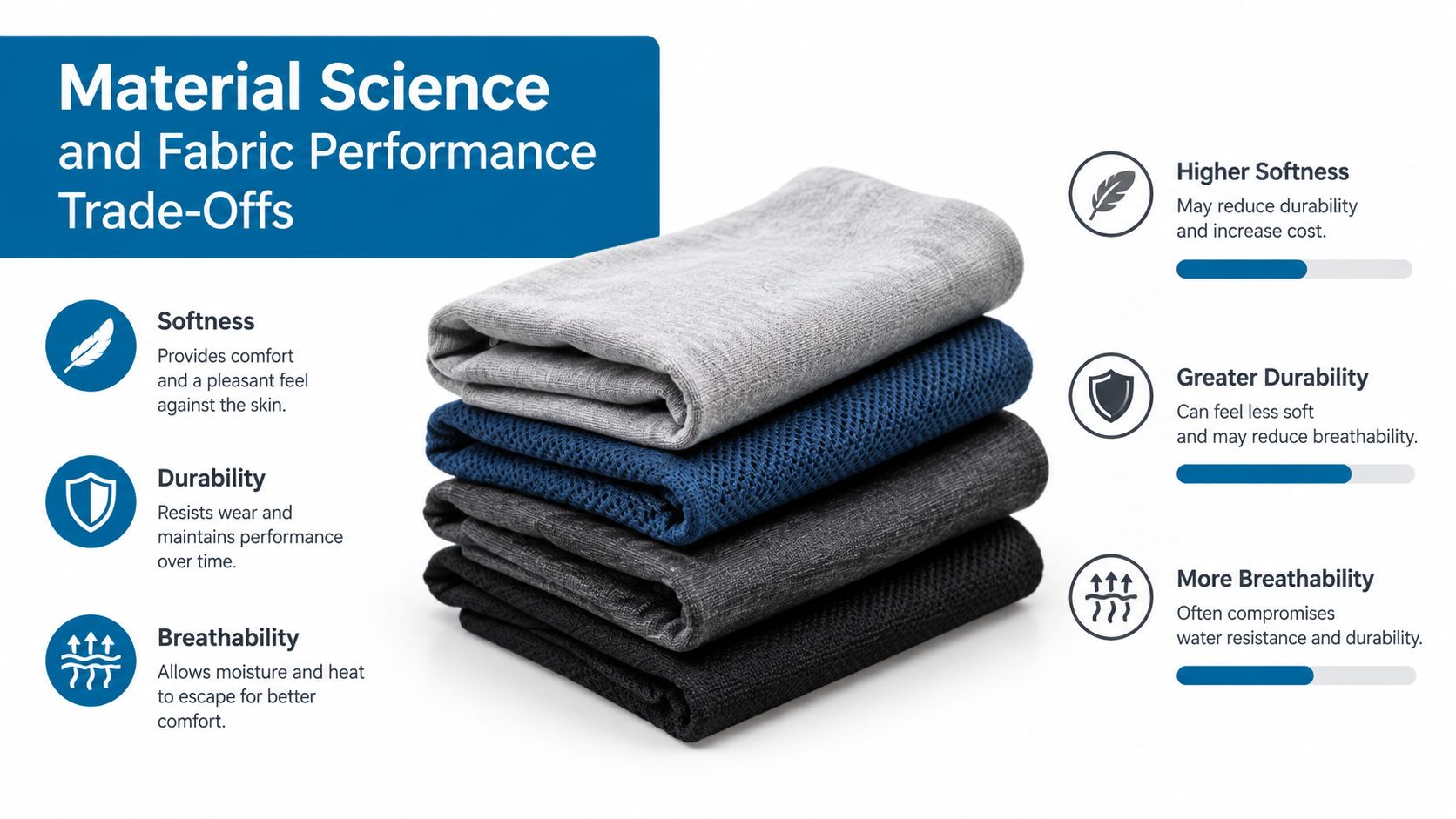
A cover can look substantial on the product page and still perform poorly on a sagging sofa. The fabric may resist spills, yet slide into the dip, strain at the seams, or hold moisture against upholstery. Material choice therefore has to match both household use and the condition of the furniture beneath it.
Start with abrasion resistance
Daily sitting produces repeated friction along the front edge of a cushion, across the seat, and on the armrests. Pets add clawing and rubbing, while frequent washing places further stress on fibers, stitching, and fasteners. Upholstery testing commonly uses Wyzenbeek or Martindale-style rub testing. Residential fabrics are often expected to exceed roughly 15,000 double rubs, while commercial-grade options are typically rated at 30,000 or more, according to this upholstery fabric durability guide.
These figures help compare materials, but they do not predict every aspect of daily use. A high rub rating says little about heat retention, bare-leg comfort, noise, or whether the cover will stay positioned on uneven cushions. Tight weaves and performance blends such as microfiber or polyester usually handle active households better than loose cotton constructions. Their trade-off can be a less natural hand feel, so inspect or touch a sample where possible.
A durable fabric cannot correct a collapsed cushion or weakened frame. If the cover repeatedly gathers at one low point, check the foam, webbing, springs, and frame before selecting a heavier material. Otherwise, added thickness may conceal the problem while increasing friction and making the cover harder to fit.
Balance water resistance with airflow
A sealed barrier blocks liquid effectively, but it can also trap moisture between the cover and upholstery. Spills, cleaning residue, condensation, and normal household use may leave that space damp, particularly in humid rooms. Persistent moisture can contribute to odor, mold concerns, and fabric degradation.
Polyurethane-coated and TPU-backed materials can resist liquid while allowing some vapor transmission. Guidance on technical furniture protection favors breathable, water-repellent construction when spill resistance, moisture management, and wipe-clean maintenance all matter. A fully non-breathable coating may suit a short, high-risk spill situation, but it can be uncomfortable on a primary sofa used every day.
Read the construction, not just the claim
Check the backing, surface, seams, closures, and care instructions. “Waterproof” describes liquid resistance, not seam protection, underside airflow, wash performance, or comfort after cleaning. A cover needs construction details that match the work it will perform.
Clear plastic works for short-term protection during messy work or storage. Compare that use case with the limitations explained in this guide to clear plastic sofa protectors. For everyday seating, choose protection that shields the upholstery without making the sofa feel wrapped for shipping. If the underlying structure is failing, repair that first, then choose the material.
Mastering Fit and Attachment on Complex Furniture Shapes
A cover that fits a rectangular dining chair may fail on a recliner or T-cushion sofa. The problem usually isn't the fabric. It's that the furniture changes depth, height, and tension as people sit, recline, or open a sleeper mechanism.
Retail listings repeatedly emphasize elastic edges, foam sticks, cushion anchors, slip-resistant surfaces, and weighted designs because keeping a cover in place is often the main user problem, not just blocking liquid (retail guidance on slipcover attachment features).
Measure the furniture in its working position
Start with the furniture arranged as it normally is used. A recliner should be measured in the position where the cover will stay most often, then checked again with the footrest extended if the product must accommodate both positions. A sleeper sofa should be measured with attention to the folded mattress compartment, hinge areas, and the extra movement created when the bed opens.
For a T-cushion sofa, measure the outer width, total depth, back height, arm height, and the cushion projection at the front. Don't assume the seat is a simple rectangle. The T-shaped cushions extend around the arms, so a cover designed for a straight bench cushion can pull inward or expose upholstery at the corners.
Sectionals need the same discipline. Measure each run, the depth of the chaise, the height of the back, and any unusual arm or corner shape. Oversized pieces often need separate covers because one loose envelope can create heavy folds and leave the inner corner exposed.
Match the attachment feature to the upholstery
Elastic edges work best when they can grip beneath a clear lower edge. They help define the cover's shape, but they can't compensate for excess fabric or a seat that drops sharply in the middle.
Foam sticks are useful in the gap between the back and seat cushions. Push them evenly into the crevice after smoothing the cover, then sit down and check whether the fabric pulls free. On a deep sofa, the sticks may need to be repositioned after cleaning or after someone sleeps on the couch.
Cushion anchors help when the cover is designed to pass around or beneath removable cushions. They're less effective when the cushions are fixed, unusually shallow, or constantly lifted. Weighted hems can improve stability along the outside edge, but added weight won't prevent a cover from shifting across a sagging seat deck.
Treat leather differently from fabric
Leather is smooth, so friction-based covers can migrate more easily than they do on textured fabric. Excessive anchoring pressure may also create unwanted creases or rub points. Choose a cover with a deliberate non-slip strategy, smooth it carefully, and avoid relying on a single elastic band to hold the entire piece.
Fabric upholstery generally gives anchors more grip, but loose weaves can catch on rough fasteners. Check every contact point, especially around recliner handles and moving joints. A neat fit should allow the user to sit, stand, recline, and remove cushions without the cover becoming a daily nuisance.
Evaluating Durability and Comfort Across Different Use Cases
The right cover for a family room isn't automatically the right cover for a vacation rental. Each setting creates a different balance between protection, comfort, cleaning effort, and fit retention.
A busy home with pets and children usually needs a cover that tolerates friction, handles ordinary spills, and can be removed without a complicated reset. A fully waterproof core may be useful on a pet bed or a rarely supervised seating area, but it can feel warmer and less flexible on a sofa used for several hours every day. A breathable, water-repellent surface often gives a better balance for ordinary living.
Short-term rentals have a different risk profile. Guests may bring wet clothing, food, luggage, and unfamiliar cleaning habits into the room. A more engineered construction can make sense where fast wipe-downs and spill containment matter, provided the cover doesn't create a visibly uncomfortable or poorly fitted seat. The owner should test the cover in the actual room before using it for turnover.
Long-term hospitality operations need repeatability. Staff should be able to remove, wash, dry, inspect, and reinstall the cover without guessing which corner goes where. A cover that protects well but takes too long to refit can create inconsistent presentation and unnecessary labor.
Demand for protection extends across both home and commercial settings. One industry dataset valued the furniture protection plan market at $6.96 billion in 2025 and projected $7.54 billion in 2026, reflecting sustained interest in reducing replacement costs across residential and commercial use (furniture protection market context).
Cover requirements by environment
| Environment | Primary Fabric Priority | Wash Frequency |
|---|---|---|
| Family home with pets and children | Durable, comfortable, breathable, and easy to spot-clean | As needed, with regular inspection |
| Primary living room sofa | Soft hand feel, stable fit, and balanced water resistance | Occasional, based on household use |
| Short-term vacation rental | Fast-drying protection, reliable attachment, and spill management | Between stays when soiled |
| Long-term hospitality operation | Repeatable fit, abrasion resistance, and straightforward laundering | On a scheduled maintenance cycle |
Machine washing can change more than cleanliness. Heat, agitation, and repeated folding may affect coatings, backing, elastic, seams, and the way the cover settles on the furniture. Follow the care label, use the recommended water temperature, and avoid assuming that a waterproof layer can tolerate any drying method.
A cover should be judged after it has been washed, dried, and put back on the sofa. That is when fit and comfort become real, rather than theoretical.
Why Surface Protection Fails Without Structural Support
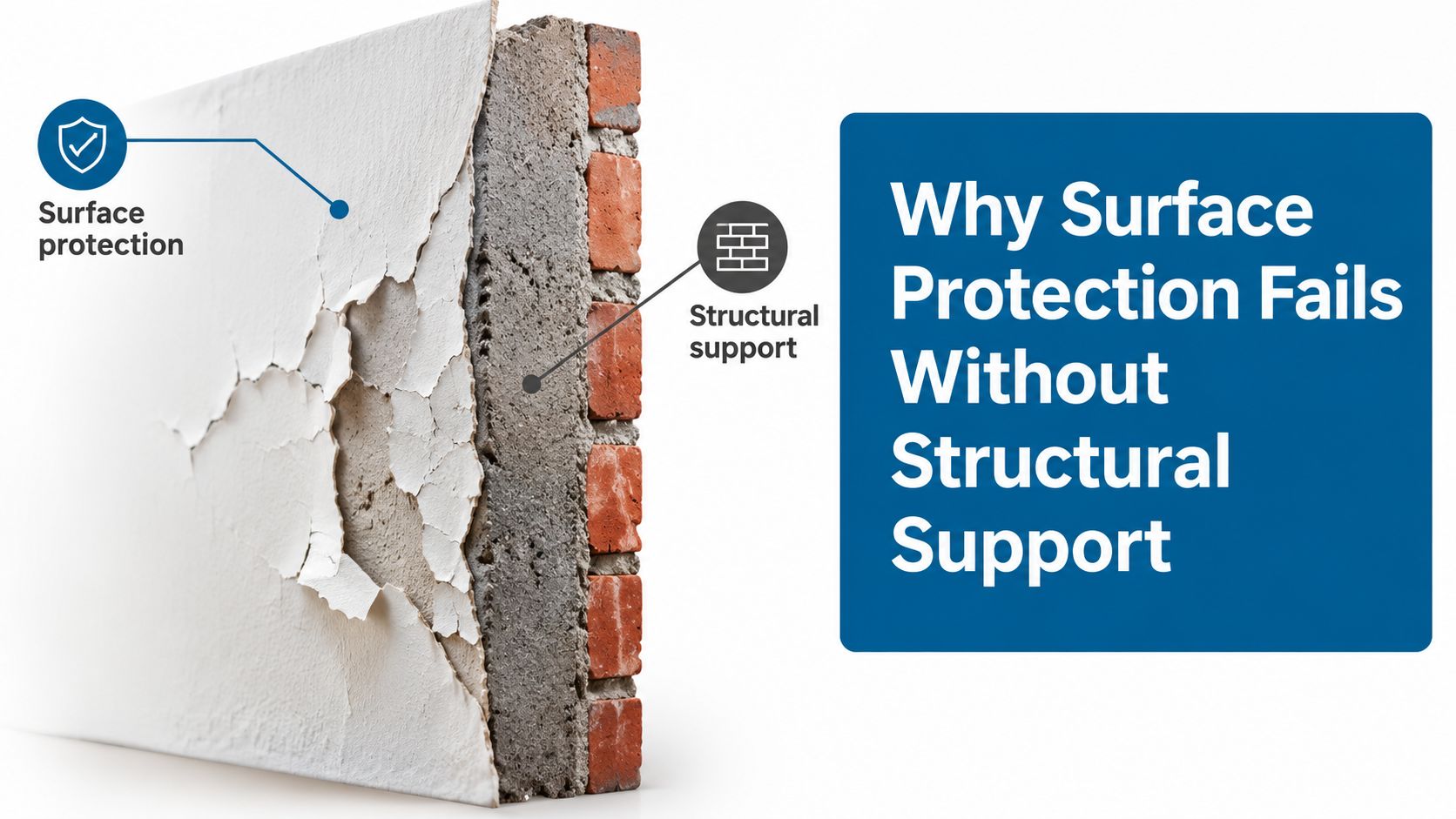
A protector cover can be perfectly measured and still look untidy because the furniture beneath it has become unstable. When a seat deck bends downward, the cover follows the depression. The fabric gathers at the low point, anchors loosen, and every sitting movement pulls the cover farther out of position.
The same problem appears when internal springs have failed or when a sleeper sofa's support bars press upward through the mattress. A surface layer can't create a rigid foundation. It can only conform to the shape beneath it.
Diagnose the low point first
Remove the cushions and inspect the seat deck. Look for a visible dip, broken support webbing, displaced springs, cracked wood, or a frame that flexes significantly when pressure is applied. Then inspect the cushions separately. A flattened cushion may need filling or replacement, while a sagging platform requires support beneath it.
For sofas with sagging seat decks, a rigid panel such as thin plywood or MDF is a common structural fix because it sits directly under the cushions and reduces the downward flex that causes the sag (guidance on repairing sagging couch support). The panel must fit securely, avoid sharp edges, and preserve the sofa's moving parts. It shouldn't interfere with reclining mechanisms, storage compartments, or the sleeper opening sequence.
Choose a non-permanent or installed solution
A removable sofa support board can be useful for renters and homeowners who want to improve firmness without rebuilding the frame. It spreads weight across the seat area and gives cushions a more stable platform. The cover then has a flatter, more predictable surface to follow.
Meliusly has served over 400,000 customers with furniture support solutions including sofa supports, sleeper sofa support boards, bunkie boards, and bed slats. Its SleeperSaver Pro is a permanently installed sofa bed support board that shields steel support bars and folds with the sofa bed mechanism, while the SleeperSaver Lite covers those bars with a slight give. Those products address the support problem beneath a protector, rather than treating a shifting cover as an isolated issue.
For a bed, inspect the slat spacing and the condition of the frame before adding a mattress protector or foundation layer. Most all-foam and memory-foam mattresses need slat gaps of no more than 3 inches, and many brands recommend about 2.75 inches, because wider gaps can let foam sink into the openings and contribute to premature sagging or pressure points (bed-frame foundation guidance).
Fixing the support first often improves comfort and cover stability at the same time. If the frame is cracked, loose, or structurally unsafe, a support board is not a substitute for proper repair.
Maintenance Routines and Final Purchasing Checklist
After a wash, a cover can look clean yet fit worse than before. Controlled cleaning and accurate reinstallation protect both the fabric and the furniture beneath it. Read the care label first, then identify coatings, waterproof backing, elastic edges, foam inserts, and non-slip sections. Heat and agitation may affect each component differently.
Remove crumbs and loose debris before washing. Treat a spill according to the fabric instructions instead of scrubbing the entire cover immediately. Use the recommended detergent and avoid harsh products that may weaken a coating. Let the cover dry completely before refitting it. A damp cover pulled tightly over upholstery can trap moisture where air circulation is poor.
Reset the fit after every wash
Reinstall the cover only when it is clean and fully dry. Center the seams, smooth the seat and arms, tuck excess fabric into cushion gaps, and reconnect straps or anchors evenly. Pulling one corner tight while leaving the opposite side loose creates diagonal wrinkles and stresses the seams.
Check the furniture during the same inspection. Look for new dips, loose fasteners, exposed hardware, and cushions that shift during use. A cover that suddenly moves after years of staying in place may indicate changed support beneath it. Tightening the elastic will not correct a sagging seat or a loose frame.
In humid rooms or heavily used spaces, breathable, water-repellent fabric offers a practical balance between spill resistance, moisture control, and wipe-clean maintenance. Keep the room ventilated, and do not leave wet items on the covered furniture for extended periods.
Use this buying checklist
- Inspect the structure: Sit in every seat, remove the cushions, and check for sagging, broken support, or exposed sleeper bars.
- Measure the working shape: Include arms, chaise sections, recliner movement, T-cushion projections, and sleeper-sofa depth.
- Choose the protection level: Select breathable, water-repellent fabric for routine living. Use more sealed construction where spill risk is higher.
- Check attachment: Match elastic edges, foam sticks, cushion anchors, weighted hems, or straps to the upholstery and furniture shape.
- Plan for laundering: Confirm washing and drying requirements before buying, especially if frequent cleaning is expected.
- Test comfort: Sit, recline, move the cushions, and assess heat retention and tactile feel before covering an entire room.
- Clean overlooked areas: Alongside the cover, review these commonly overlooked things to clean, including spaces where dust and debris collect around everyday furniture.
- Record the fit: Photograph the correctly installed cover and note anchor positions so future reinstallation follows the same setup.
A cover works best as the final layer of a sound furniture system. For routines covering upholstery, cushions, frames, and support checks, consult this furniture care guide.
Meliusly offers sofa supports, sleeper sofa support boards, bunkie boards, and bed slats for homeowners addressing furniture support before adding surface protection. Visit Meliusly to review support options for a sagging sofa, sleeper sofa, or bed foundation and extend the useful life of existing furniture.
Share this post
- Tags: couch protection, furniture protector covers, furniture support boards, sofa slipcovers, upholstery care