

8 Sofa Maintenance Tips for Lasting Comfort
Posted by Meliusly
A sofa doesn't need replacing just because it looks tired or feels less supportive. Visible sagging may come from compressed cushions, weakened support beneath the seats, loose joints, or a combination of problems. Upholstery can look worn while the frame remains sound, and a structurally useful sofa may only need targeted care rather than a costly replacement.
The most effective sofa maintenance tips address the causes of premature failure: uneven load, embedded debris, moisture, sunlight, daily abrasion, and hidden structural damage. That means combining regular cleaning with balanced cushion use, protective layers, sensible room placement, moisture control, and periodic inspections.
Cosmetic care and structural repair are different jobs. Vacuuming removes abrasive grit, but it won't correct a deflecting frame. A cleaning solution can treat a spill, but it can't restore lost support beneath a cushion. When the problem is structural, a correctly chosen sofa support board or sleeper sofa support board may be the sensible next step. Meliusly has served over 400,000 customers with furniture support solutions designed to help homeowners improve comfort without immediately replacing the furniture they already own.
1. Install Proper Support Underneath Your Sofa
A sofa's comfort depends on what happens beneath the cushions. Daily loading can leave the seating foundation less even over time, especially in older furniture, frequently used family-room seating, and sleeper sofas that must accommodate folding hardware as well as regular sitting.
Before buying anything, remove the cushions and inspect the seating area. Look for a dip in the center, a base that flexes noticeably, or a cushion that feels reasonably firm when placed on the floor but sinks when returned to the sofa. That comparison helps separate cushion wear from a support problem.
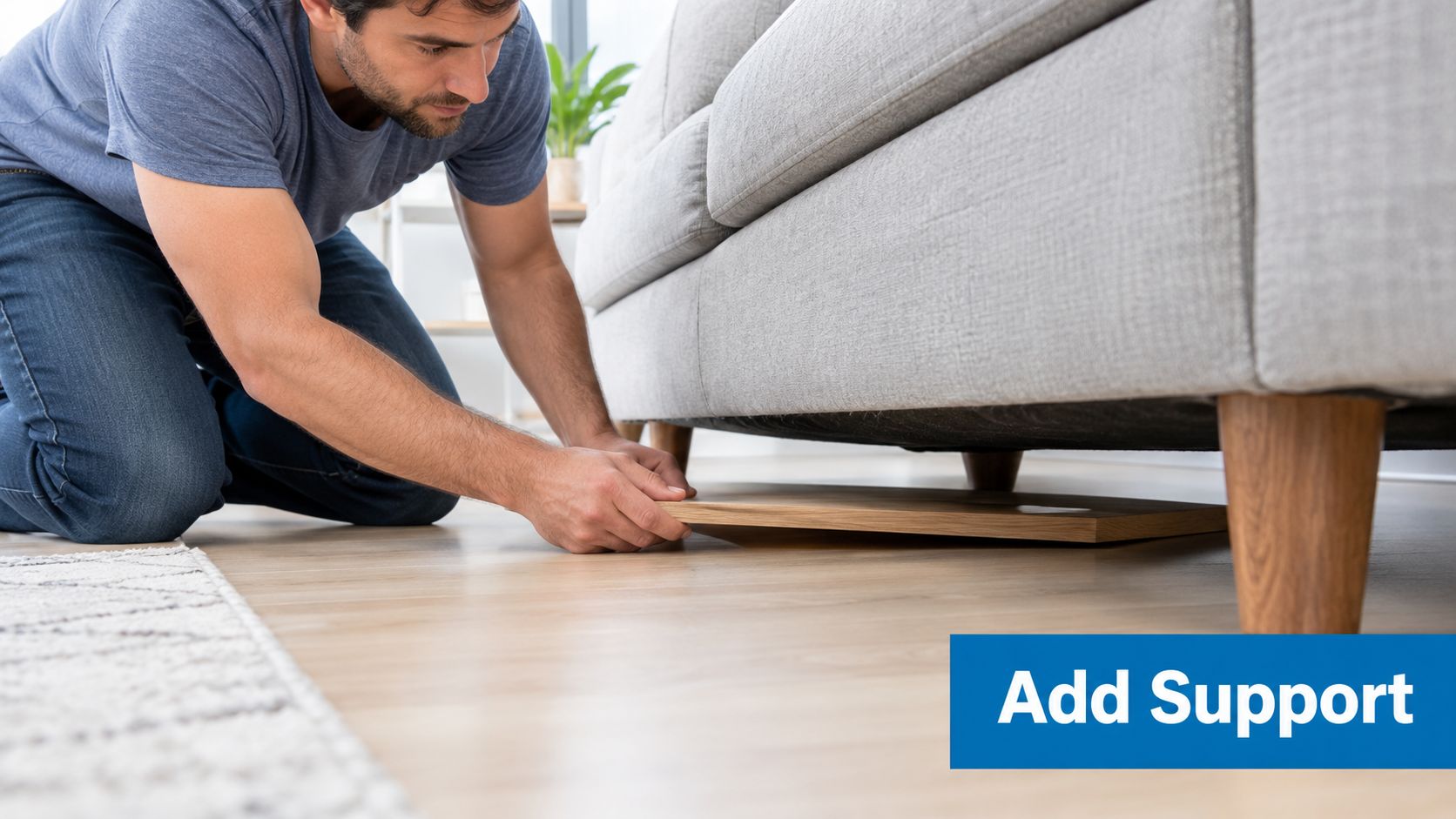
Match the support to the furniture
A support board can distribute load across the seating area and reduce excessive flex beneath the cushions. It won't repair a cracked frame or broken mechanism, but it can be an appropriate reinforcement when the sofa remains usable and the main complaint is inadequate support.
Measure carefully before ordering. Check the usable width and depth inside the frame, identify any center supports or mechanisms, and confirm that the sofa has enough clearance from the floor. For a sleeper sofa, choose a support designed for that construction rather than assuming a standard sofa board will work around its folding parts.
- Center the board: Place support beneath the area where the seating load concentrates, while keeping it clear of moving hardware.
- Consider flexibility: Foldable support boards suit renters and apartment dwellers who may need to remove or store the solution.
- Inspect after installation: Confirm that the board stays centered and that cushions sit normally before regular use.
For a practical explanation of the space beneath sofa cushions, see what to put under couch cushions for support. Support helps with structural comfort, but it works best alongside cleaning and cushion care.
2. Rotate and Flip Cushions Regularly
People rarely use every seat equally. One person favors the left side, another always chooses the corner, and the center may carry the most concentrated load. That pattern compresses cushion fill unevenly and can create permanent-looking indentations long before the rest of the sofa is worn.
If a cushion is reversible, turn it so the underside becomes the seating surface. If it isn't reversible, rotate it from front to back or exchange it with a cushion of similar size. A weekly rotation is recommended in several furniture-care guides, including guidance that connects turning reversible cushions with more even wear and longer use of the cushion fill (NFM's upholstery care guide).
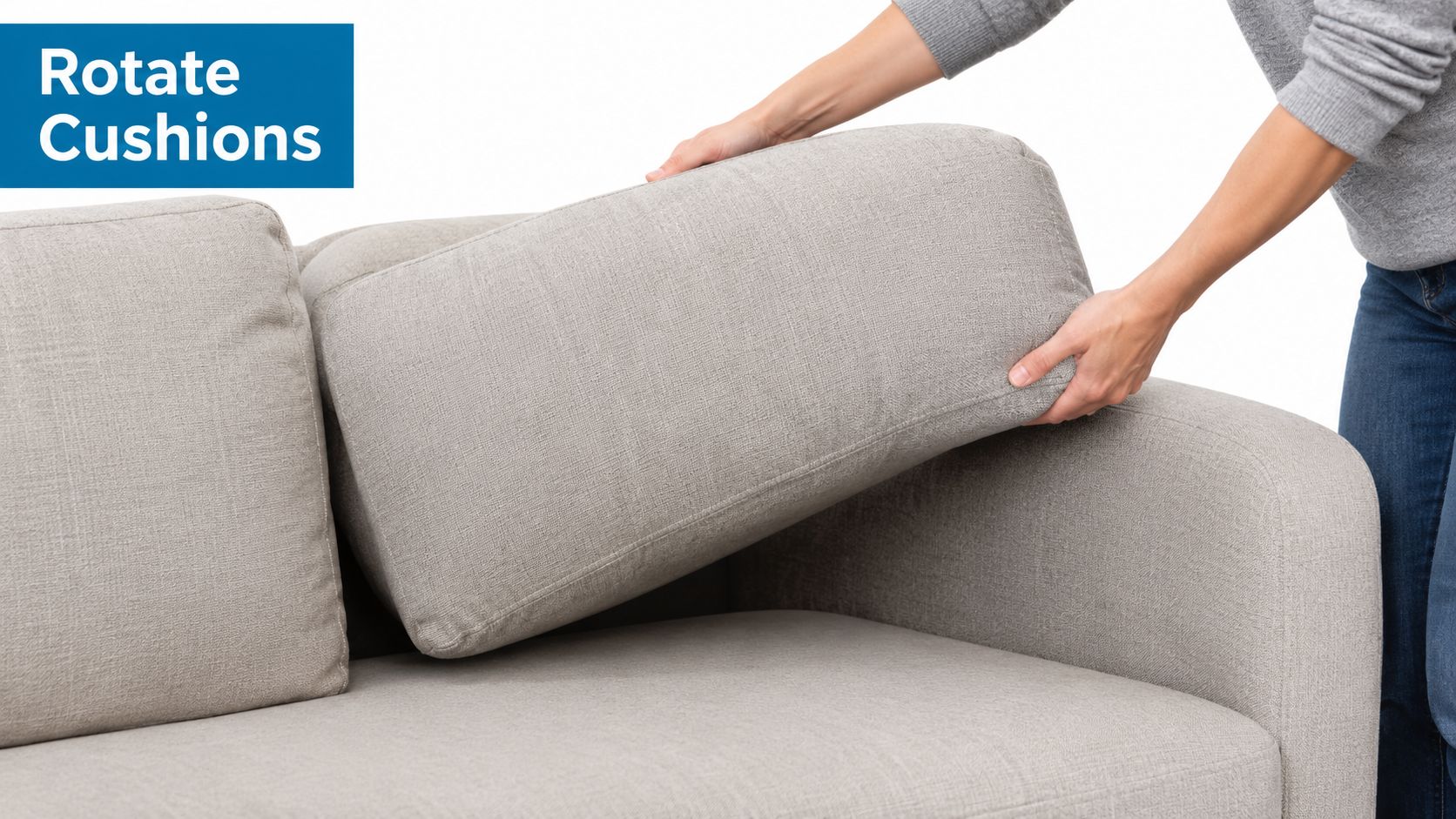
Use a routine that matches the sofa
High-use seating benefits from frequent rotation. For a sofa used lightly, a monthly or quarterly reminder may be more realistic, provided you check the cushions for developing depressions rather than treating the calendar as a substitute for inspection.
Pair rotation with a quick reshaping routine. Beat or fluff loose cushions according to the manufacturer's instructions, smooth the cover, and check whether the cushion returns to its usual profile. Rotation won't restore foam that has permanently broken down, but it can prevent one preferred seat from carrying all the wear.
Practical rule: Rotate the cushions before one seating position develops a visible hollow, not after the indentation has become permanent.
Set a phone reminder for the first of the month if weekly care isn't practical. A support board beneath the seating area can improve the foundation, while rotation prevents the cushions above it from developing a new uneven load pattern.
3. Vacuum and Clean Under Cushions Weekly
Vacuuming the visible upholstery alone leaves one of the sofa's main wear zones untreated. Crumbs, grit, dust, and pet hair settle between the cushions and frame, then get pressed into fabric and foam whenever someone sits down. Those particles act like fine abrasive material, increasing daily wear and shortening the life of the upholstery.
Furniture-care guidance commonly recommends weekly vacuuming, while one upholstery-care standard treats monthly routine cleaning as a baseline for upholstered seating (Gorin's furniture-care guide). Use an upholstery attachment over the cushions, then a crevice tool along seams, the frame perimeter, and the gap beneath back cushions.
Remove each cushion whenever the sofa allows it. Vacuum the base, inspect for loose threads or displaced support, and clear food residue before it becomes compacted. A clean base also makes it easier to spot hidden structural problems. If a support board or other affordable reinforcement has shifted, inspection can prompt a repair before premature replacement becomes necessary.
Clean according to household conditions
A sofa used by pets or a family throughout the day needs more frequent attention than seating in an occasional-use room. Humidity makes these checks more useful because trapped debris, dampness, and odors can remain hidden beneath cushions.
- Remove loose material first: Lift the cushions and pick up larger crumbs by hand before vacuuming.
- Choose the attachment carefully: Use a soft upholstery brush on fabric and a crevice tool for narrow channels.
- Inspect concealed areas: Check beneath cushions, behind removable back panels, and around sleeper-sofa mechanisms.
- Dry any damp parts: Let cushions or removable covers dry fully before placing them back on the frame.
Weekly vacuuming will not correct structural sagging. It removes abrasive debris, limits moisture-trapping buildup, and gives you a regular opportunity to inspect the support beneath the seating.
4. Address Stains and Spills Immediately
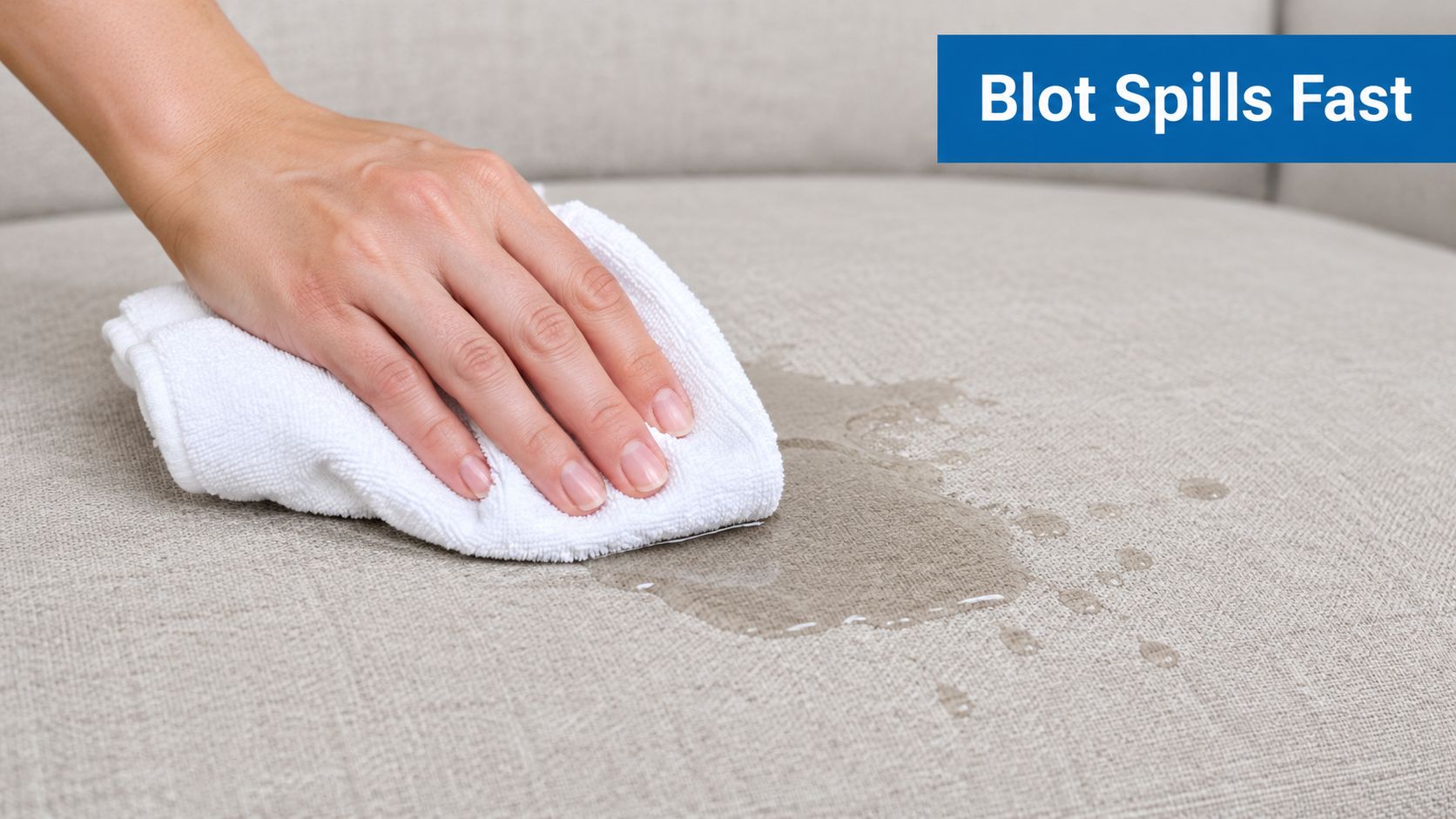
A spill can become a permanent upholstery problem after it reaches the fabric backing or cushion interior. Act quickly, but use restraint. Rubbing spreads liquid and pushes it deeper, while excess cleaner can leave moisture behind and encourage odor or mildew.
For a wet spill, lift away the excess with a clean white cloth. Blot from the outer edge toward the center, changing to a dry section as the cloth becomes damp. Remove dry food, dirt, or crumbs by hand or with a vacuum before applying any liquid. Small, controlled steps protect the surface and reduce the chance of saturating the foam.
Check the manufacturer's cleaning code before choosing water, solvent, or steam. Upholstery-care guidance lists codes including W, S, WS, and X. They indicate whether water-based products, solvent products, either option, or vacuum-only care is appropriate (New Mexico State University's upholstery guide).
Test the product on a hidden area first and check for color transfer. Use only a small amount, keep airflow moving, and do not return a damp cushion to the sofa until it has dried completely. Foam that stays wet can develop persistent odor and may lose resilience.
Keep a simple spill kit nearby: white cloths, a fabric-appropriate mild soap, a spray bottle, and a soft brush. During messy projects, moving, or unusually heavy use, a clear plastic sofa protector can shield upholstery temporarily, though it may trap heat or moisture if left in place.
Stop home treatment when foam is heavily soaked, odor persists, or a colorfastness test fails. For specialist guidance on cleaning leather and velvet upholstery, choose a method made for that material. Cleaning preserves the surface, but it cannot repair a sagging base or hidden support damage.
5. Protect Against Sunlight Exposure and Fading
Replacing a faded sofa is often unnecessary. Uneven sunlight can age one arm, cushion, or side faster than the rest, so control the exposure before the fabric reaches that point.
Begin with placement. Move the sofa away from direct rays, even if you can shift it only modestly. The window-facing side receives the greatest load, while the sheltered fabric keeps its original color, making the contrast more noticeable over time.
Use sheer curtains, roller blinds, or cellular shades to filter daylight. Close them during the brightest part of the day, accepting a little less natural light in exchange for slower fading. Opaque shades provide stronger protection when the sofa sits close to the glass.
Rotate loose cushions and vary the main seating position when practical. This spreads exposure across removable parts instead of leaving one cushion or arm to absorb it continuously. Rotation cannot correct existing color differences, but it can reduce further imbalance.
A UV-blocking throw can protect a vulnerable seat or arm while also limiting daily abrasion. Choose a breathable cover and remove it periodically so you can check the fabric. A throw is a low-cost way to protect a high-use area before replacement becomes necessary.
Use window film carefully where blinds are impractical. Confirm that the film suits the window and follow the film and window manufacturer's instructions. Installation may cost more than a curtain, but it keeps the window clear and reduces the need for daily adjustment.
Treat fabric protectant sprays as temporary support. They may require reapplication and should not replace sensible placement or window control. Test any product on an inconspicuous area first.
Sunlight care preserves appearance, not structure. Pair it with support beneath the seats when cushions sag, because a fabric-saving measure cannot correct hidden frame or spring damage.
6. Control Humidity and Prevent Moisture Accumulation
Humidity-related damage often starts out of sight. Moisture beneath covers or inside cushions can create odors, weaken fabric, compress filling, and stress the frame or other internal components. Limited airflow increases the risk, especially when a sleeper sofa remains folded for long periods.
Start with the room before blaming the sofa. Check basements, poorly ventilated spaces, areas near plumbing, and rooms with recurring condensation. Move the sofa slightly away from the wall where possible, use a fan to improve circulation, and repair leaks promptly. Cleaning visible upholstery alone will not solve moisture entering from the surrounding area.
In a moisture-prone room, a hygrometer can reveal changing indoor conditions. A dehumidifier may address recurring dampness more effectively than repeated sofa cleaning. Open windows only when outdoor air is drier, since ventilation can make the problem worse during humid weather.
Give sleeper sofas room to breathe by opening the mechanism periodically when it is safe and practical. Let the folds and enclosed areas air out before storing the bed again. Keep the space around the mechanism clear so air can circulate and inspections remain possible.
Check after spills if liquid may have reached beyond the surface fabric. Inspect the cushion interior and nearby frame areas rather than assuming the top has dried.
Avoid sealed dampness. Do not cover the sofa while its upholstery or cushions are still wet. A cover can hold moisture against the material and extend drying time.
Use absorbers carefully near localized dampness, but do not treat them as a solution for leaks or sustained high humidity. Source control matters more.
Watch for persistent odor. A smell that returns after thorough drying may indicate contamination inside a cushion or frame area. Arrange professional assessment before the problem spreads or the sofa requires larger repairs.
Aim for controlled dryness, not aggressive heat. Excessive heat can affect some upholstery materials, so prioritize airflow, leak repair, and steady room conditions.
7. Use Arm Protectors and Throws to Minimize Daily Wear
Daily abrasion often starts at the sofa's edges, not the main seating surface. Armrests, headrests, and front seat edges collect hand oils, dirt, clothing friction, and repeated contact from pets. Protecting these high-use points can delay visible wear while the rest of the upholstery remains sound.
Use a washable throw or arm protector as a replaceable barrier. This is particularly practical for a pale sofa, a busy family room, or a home where pets return to the same spot. Select fabric that tolerates regular washing and allows the upholstery to dry properly, rather than a decorative layer that holds dampness against it.
Start with the areas that receive the most contact. Cover both arms if people use both sides, then add protection to a headrest or seat edge only where wear is developing. A formal room may need a light throw, while a pet-heavy room may justify a stain-resistant or water-resistant cover.
Secure the cover only when it remains safe for the furniture. Furniture grippers or clips can reduce sliding, but inspect them after fitting. They should not press into the upholstery, catch on fabric, or interfere with reclining or sleeper mechanisms.
Wash the protection regularly. Dust and grit trapped in a dirty throw can act like abrasive particles against the sofa. Reposition or rotate the cover periodically as well, so one area does not stay protected while another receives all the contact.
A throw cannot correct sagging or repair a frame problem. If the sofa is structurally sound, however, this low-cost layer can reduce daily abrasion and postpone unnecessary replacement. For a relaxed styling option, learn how to drape a faux fur throw effortlessly.
8. Inspect the Frame and Springs Annually and Reinforce as Needed
Surface care can make a sofa look clean while a hidden structural problem continues underneath. Remove the cushions and inspect the seating base, frame joints, spring area, and any accessible webbing. Look for cracked wood, separated joints, broken springs, loose hardware, or a section that moves differently from the rest.
Press different parts of the frame carefully and listen for unusual movement or creaking. Compare the left, center, and right seating areas. A sag that remains in the frame when cushions are removed points toward the foundation, while a problem that follows one cushion is more likely to involve that cushion's fill or cover.
Choose repair or reinforcement based on the evidence
Document what you find with photographs. Tightening an accessible loose connection may be reasonable, but cracked structural members, broken spring assemblies, or damaged sleeper mechanisms may require an upholsterer or furniture repair specialist.
A cushion problem follows the cushion. A foundation problem stays with the sofa.
If the sofa is otherwise usable and the main issue is inadequate support beneath the seating area, a support board may provide targeted reinforcement while you plan a more involved repair. Read how to repair sagging couch springs before attempting work around springs or mechanisms.
Inspect at least annually, preferably during a spring or fall household-care routine. A support product is not a substitute for a dangerously damaged frame, but it can be appropriate when the structure needs better load distribution and replacement would be premature.
8-Point Sofa Maintenance Comparison
| Practice | Implementation Complexity | Resource Requirements | Expected Outcomes | Ideal Use Cases | Key Advantages |
|---|---|---|---|---|---|
| Install Proper Support Underneath Your Sofa | Moderate, requires access, measuring, occasional installation | Support board/slats, basic tools or pro installation | Restores firmness, reduces sagging, extends sofa life (5+ years) | Older or sagging sofas, sleeper sofas, high-use seating | Immediate structural support; cheaper than replacement |
| Rotate and Flip Cushions Regularly | Low, simple monthly/quarterly task | Time only (5–10 min), reminders | More even wear, fewer permanent indentations, extends cushion life (2–3 years) | Removable or reversible cushions, family rooms | Free, fast, no tools or special skills |
| Vacuum and Clean Under Cushions Weekly | Low, routine weekly task | Handheld vacuum or upholstery attachment, time | Removes debris/allergens, prevents foam decay and mold, improves air quality | Homes with pets/children or humid climates | Improves hygiene; early detection of spills or pests |
| Address Stains and Spills Immediately | Low–Moderate, quick action with correct methods | Cleaning kit (cloths, mild soap), knowledge of fabrics | Prevents stains from setting, stops moisture reaching foam/frame | Light-colored fabrics, households with food/drinks, rentals | Often avoids professional cleaning; preserves appearance |
| Protect Against Sunlight Exposure and Fading | Low–Moderate, positioning and window treatments | Curtains/blinds/UV film, throws, occasional sprays | Slows UV fading, protects fabric and foam integrity | Sofas near windows, south-facing rooms, sunrooms | Preserves color and resale value; low-cost prevention |
| Control Humidity and Prevent Moisture Accumulation | Moderate, ongoing monitoring and equipment | Hygrometer, dehumidifier, improved ventilation | Prevents mold/mildew, reduces foam deterioration, better indoor air | Basements, humid climates, sleeper sofas | Protects health and prevents irreversible moisture damage |
| Use Arm Protectors and Throws to Minimize Daily Wear | Low, easy to apply and change | Throws, arm covers, grippers (optional) | Reduces visible wear on armrests/edges, shields from pets and oils | High-traffic sofas, pet owners, families | Affordable, washable, decorative way to protect fabric |
| Inspect Frame and Springs Annually and Reinforce as Needed | Moderate–High, thorough inspection, possible repairs | Time, tools, possible professional upholstery service | Early detection of structural issues, targeted repairs, prevents collapse | Older/antique sofas, frequently used or sleeper sofas | Prevents sudden failure; often cheaper to repair than replace |
Turn Sofa Care Into a Simple Routine
Sofa maintenance works best when it becomes a set of small habits rather than an occasional rescue project. Vacuum beneath cushions weekly, remove crumbs and pet hair from crevices, and check the frame while the cushions are already off. Guidance on how to manage dust and pet hair can help you build the same habit into broader household cleaning.
Respond to spills immediately. Blot rather than rub, use the upholstery code to choose a compatible treatment, and let cushions dry completely before putting them back. Deep upholstery care should be planned according to fabric, use, and household conditions. Independent guidance commonly places deep cleaning at every 12 to 24 months, while professional cleaning may be appropriate around annually for heavily used seating (Gorin's furniture-care guidance). Don't force a single interval on every sofa. Pets, children, humidity, and daily family-room use all justify closer observation.
Rotate cushions weekly where the construction allows it, or use a monthly or quarterly reminder for sofas that receive lighter use or have cushions with limited orientation options. The important point is to redistribute body load before one position develops a permanent hollow. Pair that habit with throws or arm protectors where abrasion concentrates.
Manage sunlight and moisture continuously. Filter direct light with curtains or shades, move furniture away from intense exposure when possible, keep airflow around the frame, and address leaks or condensation promptly. A sofa that stays dry and clean is easier to maintain than one repeatedly exposed to moisture and embedded grit.
Inspect the frame and springs each spring or fall. Remove the cushions, compare support across the seating area, and decide whether the issue is cosmetic wear, cushion compression, loose hardware, spring damage, or inadequate support beneath the seats. A well-constructed sofa typically lasts about 7 to 15 years, while some budget models can begin showing sagging and permanent stretch in as little as 3 to 5 years when lower-grade webbing or foam is used (Dropcurb's sofa lifespan guide). Maintenance can't change the original construction, but it can help you use the furniture more intelligently.
Support boards address structural sagging. They don't replace vacuuming, stain treatment, moisture control, or fabric care. Measure the sofa frame carefully before choosing a Meliusly sofa support board, and measure around the folding mechanism before choosing a sleeper sofa support board. The correct fit should sit securely, remain centered, and avoid interfering with moving parts.
Consistent small interventions can preserve comfort and postpone an expensive replacement. Start this week with the space beneath the cushions, then add cushion rotation, spill response, light control, moisture checks, protective layers, and a seasonal structural inspection to your routine.
Meliusly offers sofa support boards and sleeper sofa support boards for homeowners who want to address inadequate seating support without replacing usable furniture. Measure your sofa carefully, choose the support type that fits its construction, and visit Meliusly to explore practical options for improving everyday comfort.
Share this post
- Tags: furniture maintenance, sagging couch repair, sofa care, sofa maintenance tips, sofa support boards