

Sofa Bed Support Boards: What They Do and How to Choose
Posted by Meliusly
Your guest has been polite all evening. Then you pull out the sofa bed, hand over a pillow, and watch them lie down and shift, then shift again. You already know what's wrong before they say it. They can feel a bar under their hips, the middle dips, and the whole surface tilts toward a gap that wasn't there when you bought it.
That nightly complaint doesn't always mean you need a new sofa or a new mattress. Often the failing part is the platform underneath, and sofa bed support boards exist to fix that specific layer. The hard part is knowing when a board is the right repair and when you're about to spend money covering up a frame or mattress that's already finished.
Why Sofa Beds Lose Their Support
A sleeper sofa is a compromise built around folding hardware. To disappear into a sofa frame, the mattress has to stay thin and flexible, and the deck beneath it has to fold in sections. That leaves steel crossbars, wire grids, webbing, or narrow slats carrying a sleeper's weight in strips rather than across a solid surface.
When the bed is new, the mattress hides some of that geometry. After repeated opening, closing, and guests sitting on the edge to tie their shoes, the deck flexes more, the mattress compresses where it's least supported, and those bars start telegraphing through. The sleeper's hips drop into the weakest span while the shoulders stay higher, which is why people wake up sore even on a mattress that feels fine when you press it with your hand.
The Problem Is Rarely Just the Mattress Surface
Replacing the mattress without checking the deck is the most common wasted purchase I see. A fresh mattress laid over the same wire grid will follow the same gaps within weeks of use. The surface may feel newer, but the load path hasn't changed.
The reverse happens too. People blame the frame when the actual issue is sagging seat springs making the sofa itself uncomfortable during the day. Those are separate repairs, and our guide to repairing sagging couch springs covers that daytime seating problem. For the sleeping surface, you have to look at the deck, the hinges, and the mattress as one system.
If the dip lines up with a bar or gap every time someone lies down, you're looking at a support problem first and a comfort problem second.
A support board won't rescue every sleeper. What it can do is flatten a weak but intact platform, reduce bar feel, and extend the usable life of a sofa bed you'd otherwise apologize for. The decision comes down to diagnosing which layer has failed, choosing a design that works with the folding mechanism, and installing it so the bed still closes safely.
What Sofa Bed Support Boards Actually Do
Treat a support board as a structural load-distribution component, not a comfort pad. It sits between the deck and the mattress, bridges gaps between slats, webbing, or folding sections, and spreads a sleeper's weight over a wider area. Instead of the hips loading one crossbar, the load reaches several frame members at once.
That bridging reduces localized flexing in the deck. It also limits how far the mattress can press into open spaces, which cuts the ridges and hollows that form when foam is supported in some spots and hanging in others.
Why the Platform Matters for Spinal Alignment
The biomechanics behind this aren't unique to sofa beds. A 2019 peer-reviewed review of 18 studies on mattress biomechanics concluded that mattress design has increasingly emphasized customization and regional support, but found no universally accepted target values for ideal spinal alignment or pressure distribution in that same review. For sofa beds, this means the mattress alone is not the entire support system. The deck, frame, slats, or added support board influence how evenly loads reach the mattress and whether users experience localized sagging or pressure points.
That same body of research makes another useful point. There's no single firmness that's right for everyone in your household. Body weight, height, and sleeping posture change what neutral alignment looks like, so a board can't pick the ideal firmness for every guest. What it can do is give whatever mattress you own a consistent base, so the mattress performs the way it was designed to instead of collapsing into the frame.
Board Versus Topper
- Support board: Changes the foundation. It stiffens the platform, bridges gaps, and stops the mattress sinking into the mechanism.
- Mattress topper: Changes the surface. It adds cushioning on top but still follows every dip underneath.
- Both together: Sometimes appropriate, but only after the foundation is level. A topper over a sagging deck just makes a softer sag.
People often buy a topper first because it's familiar, then wonder why the bar is still there under extra foam. Foam compresses. A rigid or semi-rigid panel resists bending, which is a different job entirely.
A board also has clear limits. It improves load transfer, but it doesn't restore foam that has permanently compressed, and it doesn't straighten a bent rail. Understanding that boundary is what separates a good repair from money spent disguising structural damage.
How to Tell If a Support Board Is the Right Fix
Open the bed fully, pull the mattress off, and look at what you're working with. Don't diagnose from how it felt last Thanksgiving. Three checks will tell you whether a board belongs in the conversation.
Check One Measure the Dip
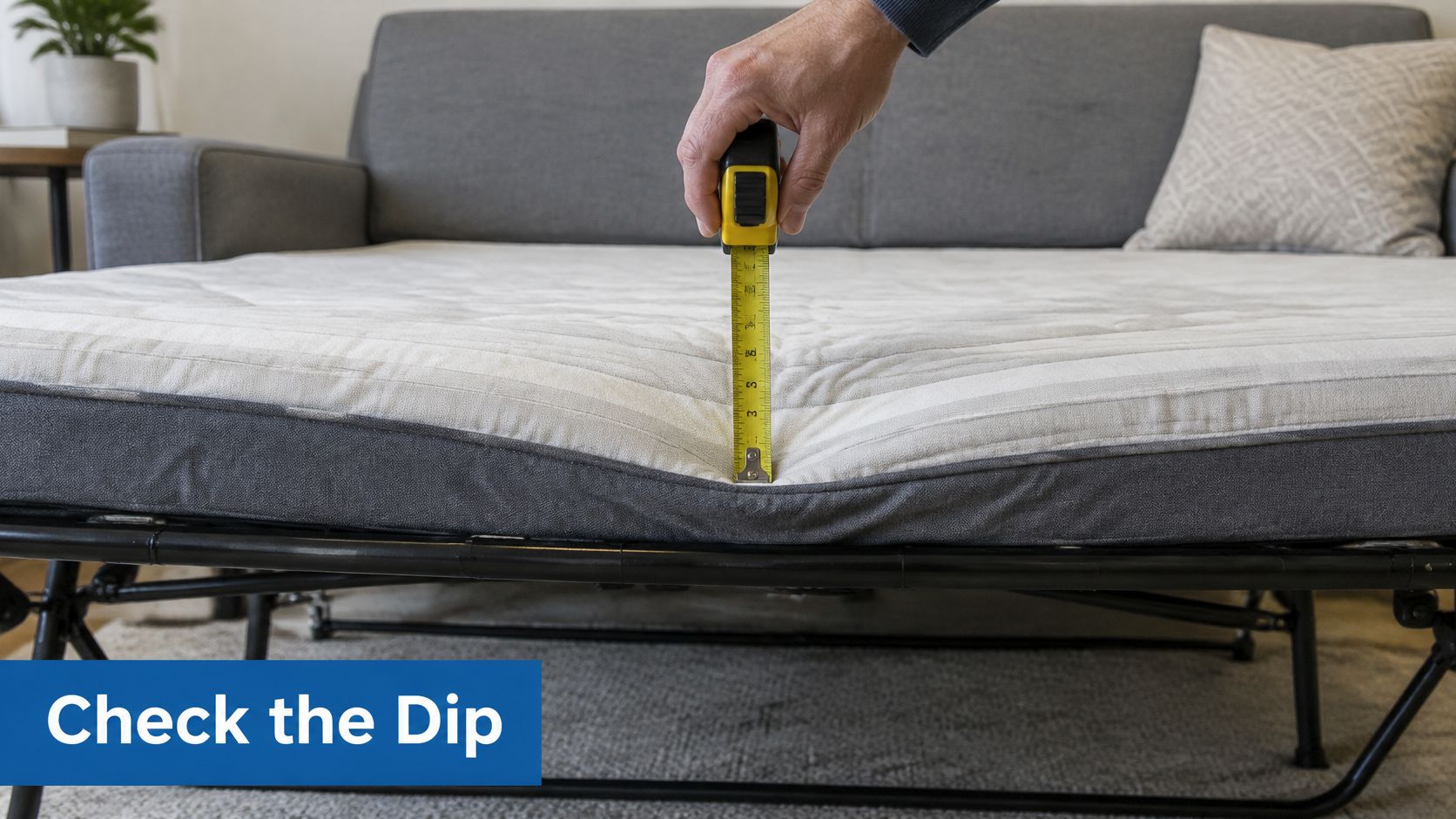
Lay a straightedge, broom handle, or level across the deck and measure the gap at the lowest point. A home-furnishing guide on sleeper sofa support board limits warns that a support board cannot solve a damaged frame or worn mattress, and notes that a deck dipping more than roughly 1-2 inches or having unhooked springs indicates a frame problem in that same guidance. A shallow, even hollow over a wide span is a bridging candidate. A deep drop on one side is not.
Then test the mattress separately on a flat floor. If the dip stays in the mattress when it's off the frame, the foam has taken a permanent set. If the mattress looks even on the floor but sinks over the same spot back on the deck, the platform is your problem.
Check Two Inspect Springs Hinges and Rails
- Springs and webbing: Look for unhooked, stretched, or broken springs and torn webbing. Reattach what's unhooked, but stretched springs won't recover under a board.
- Rails and crossbars: Sight along each rail. A bend you can see is a bend a board will rock on.
- Hinges and legs: Wiggle each joint and confirm the legs sit flat. Loose hardware needs tightening or repair before any panel goes in.
Check Three Test the Fold
Open and close the mechanism slowly with nothing added. It should travel without grinding, catching, or needing a shoulder shove. If it already binds, fix that first. Adding a panel to a mechanism that's out of alignment makes a bad fold worse.
Use the results to pick your intervention. A sound frame with gap-related sag points to a board. A sound frame and level deck with a surface that feels hard points to a topper. A mattress that's dipped on the floor points to replacement. A bent rail, deep one-sided drop, or failed springs point to professional repair or retiring the sleeper.
If you're at the stage of replacing the whole piece instead, Stahl Home Center's sofa selection advice is worth reading before you shop, because frame construction and support systems are exactly what determine whether the next sofa ages better than this one.
Contrarian point: Adding firmness is not automatically an improvement. Medium-firm support is generally a better target than either an extremely soft or excessively hard surface, especially for side sleepers and anyone using the bed night after night.
Foldable vs Permanent Support Board Designs
Once you've confirmed the frame is sound, the next decision is how the board lives with the mechanism. This choice matters more than material marketing, because a panel that fights the fold will cause trouble no matter how sturdy it looks in the box.
Foldable Designs
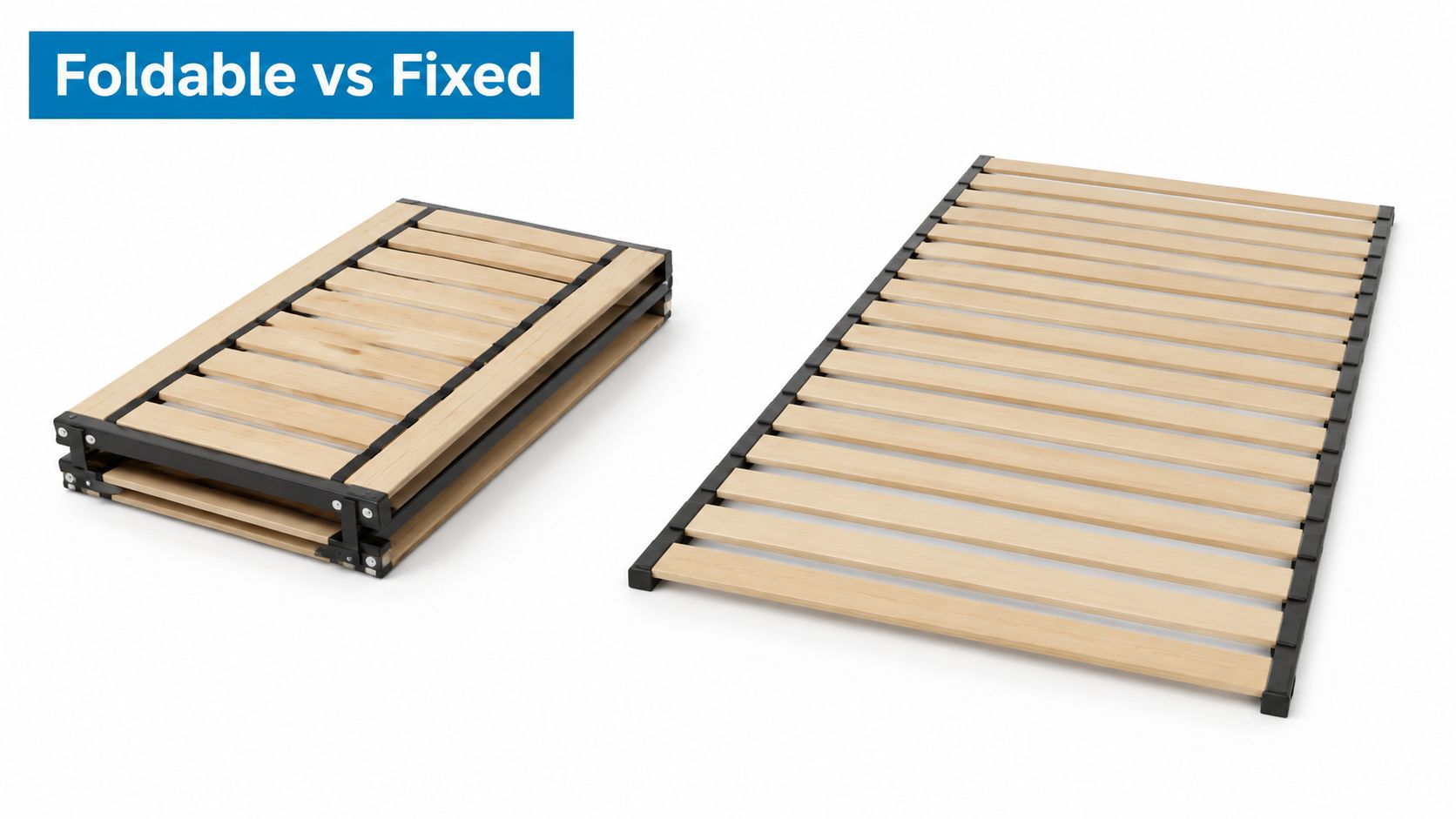
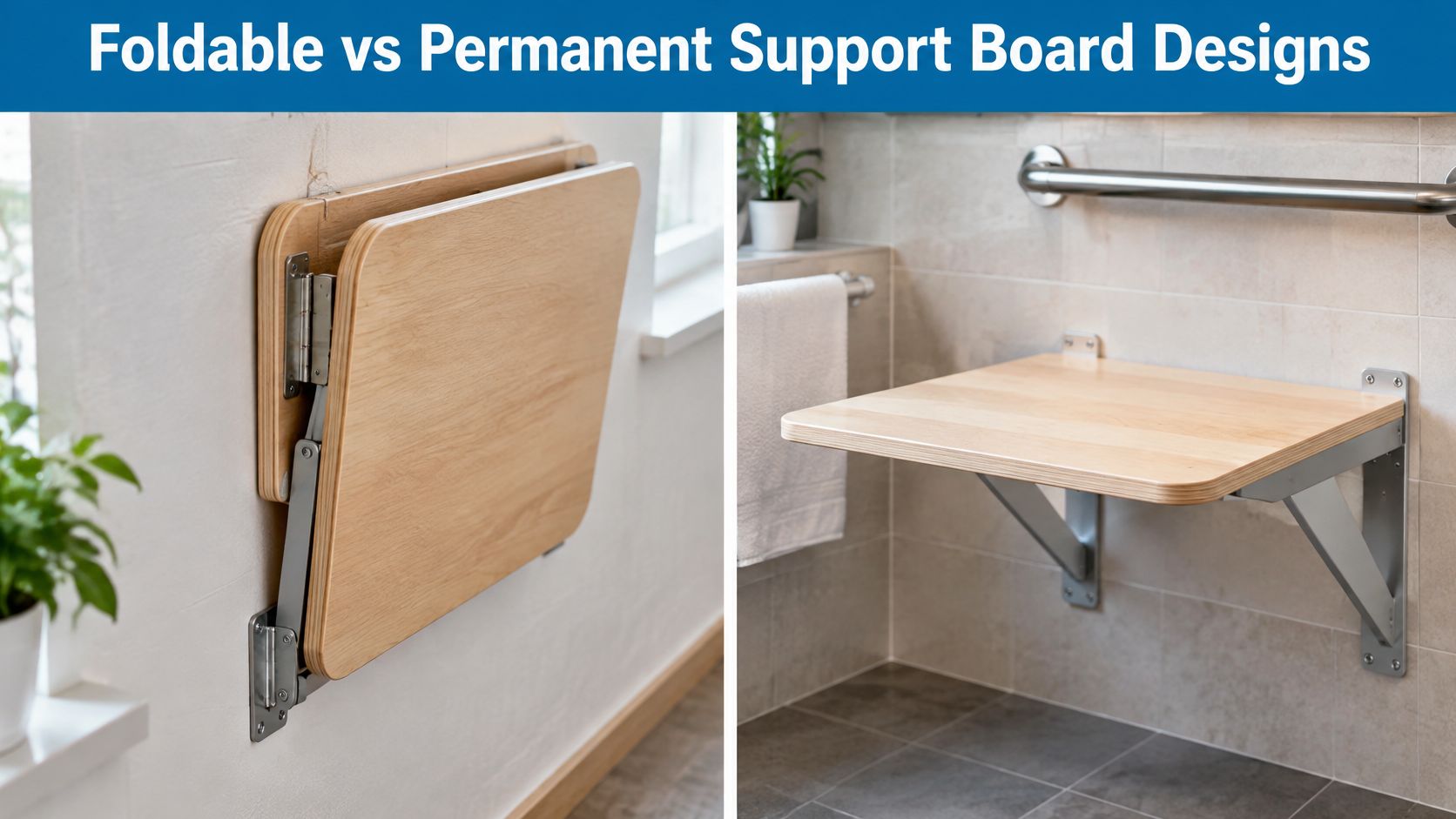
Foldable boards are built in connected sections that bend with the sleeper's fold lines or come out easily for storage. They're the default choice for renters, guest rooms that convert often, and anyone who can't modify the furniture. Setup is quick, removal is instant, and there's nothing screwed into a frame you may not own.
The trade-off is the fold itself. Segmented panels can feel slightly less monolithic than a single fixed sheet, and a removable version needs somewhere to live when the bed is closed. In a small apartment, that storage question is real, not trivial.
For a concrete example, Meliusly's SleeperSaver Classic is a foldable board made from reinforced plywood panels that sits between the pull-out frame and mattress to cover steel bars and distribute weight. It's one option in a category that also includes lighter twin-wall polypropylene panels, which are easier to carry but typically feel less planted under load.
Permanent Designs
Permanently installed boards attach to the frame and fold with the mechanism, so there's no storage step and no repositioning each time guests arrive. For a homeowner whose sleeper opens weekly, that convenience is substantial. The panel is always in the right place because it never leaves.
The cost of that convenience is precision. A fixed panel has to match the mechanism's fold geometry exactly, clear every hinge, and stay within the closed height budget. Installation takes longer, mistakes are harder to undo, and it's a poor fit for rental furniture or a sofa still under a warranty you don't want to disturb.
Choosing Between Them
- Open and close it often: Foldable, unless a permanent design is purpose-built for your exact mechanism.
- Renting or likely to move: Foldable and removable. Reversibility protects your deposit.
- Bed stays open for long stretches: Either works, so prioritize stiffness and coverage of the weak span.
- No storage space: Permanent, provided clearance checks pass.
- Uncertain about compatibility: Start removable. You can test the concept without committing the frame.
Durability follows use, not design labels. A foldable board handled carefully outlasts a permanent panel that's been forcing a latch closed for a year.
Compatibility and Safety What to Measure Before Buying
Most support board failures I hear about aren't product failures. They're measurement failures. The board was too thick to fold, too narrow to stay put, or long enough to ride up on a hinge. Twenty minutes with a tape measure prevents all three.
A board must be compatible with the mechanism's movement, not merely placed beneath the mattress. Clearance is often only about 4.5-5 inches for commercial and standard sleeper sofas, while some heavier-duty frames accommodate approximately 6 inches, according to hotel sleeper sofa guidance on mattress clearance. That same guidance notes that adding excessive thickness can raise the mattress and cushions, interfere with folding, or stop the sofa from closing.
Sofa Bed Measurement Checklist
| Measurement | What to Check | Typical Value |
|---|---|---|
| Closed clearance | Space for mattress plus board when folded | About 4.5-5 inches on standard frames |
| Usable deck width | Inside width between side rails, not mattress label size | Varies by manufacturer, measure directly |
| Weak span length | The bar-heavy or unsupported zone needing coverage | Usually the middle fold section |
| Hinge distance | Gap between proposed board edge and any pivot point | Board must clear all moving joints |
| Mattress thickness | Actual thickness under light compression | Counts against the same clearance budget |
| Edge overhang | Whether the board extends past supporting frame members | No overhang onto unsupported upholstery |
Don't order by Twin, Full, or Queen alone. Those labels describe approximate sleeping size, while frame width, bar spacing, and hinge positions vary by maker. If you need a reference for how sleeper sizes relate to room and frame dimensions, our breakdown of sleeper sofa dimensions helps you sanity-check your numbers before ordering.
Mechanism Type Changes the Rules
A tri-fold pull-out with a steel deck is the classic board candidate. A click-clack or jackknife sofa is a different animal, because the seat and back themselves become the sleeping surface and the center seam is the problem area. A board sized for a pull-out deck shouldn't be assumed to work on a fold-flat design without inspecting the platform and folding path first.
Mark the proposed board footprint with painter's tape on the open deck. You'll immediately see whether it crosses a fold line, sits on a pivot, or leaves the main pressure zone uncovered. That tape outline is the cheapest compatibility test you'll ever run.
A thicker mattress is not automatically safer or more comfortable. Support architecture matters as much as thickness, and a moderate mattress on a solid, level platform can outperform a thicker one draped over a wire grid.
For renters and hospitality operators, add one more criterion. The modification has to be reversible and repeatable by whoever makes the bed next, not just by you on a careful Saturday morning.
How to Install a Support Board Correctly
Good installation is mostly about bearing surfaces. A board only improves things when it rests continuously on parts of the frame that can carry load. Park it on weak upholstery or unsupported edges and you've moved the stress somewhere worse.
That principle is built into how seating is specified professionally. Government procurement guidance for upholstered seating performance identifies the support system, frame-member dimensions, spring type, spring spacing, and attachment method as design variables that materially affect performance. The same guidance supports the practical rule for boards. A board reduces localized flexure by bridging gaps and spreading occupant loads over a wider area, but only if it bears continuously on structurally sound surfaces, so installation should verify full-width contact, clearance from moving hinge assemblies, and compatibility with the bed's maximum span.
Installation Steps
- Prepare the deck: Open the sleeper fully, remove the mattress, and clear debris from the frame. Confirm the legs sit flat and the rails are straight.
- Position over the weak span: Center the board on the bar-heavy or dipping zone, usually under the torso and hips. It should sit flat without rocking on a single bar.
- Check bearing and clearance: Confirm the panel rests across stable frame members on both sides and clears every hinge and pivot. Smooth or covered edges matter here, since a raw edge can abrade the mattress underside.
- Replace the mattress squarely: Align it over the board so weight lands evenly, then lie down in several positions, not just the center.
- Run the close-and-reopen test: Fold the mechanism slowly. Stop immediately if you feel binding, hear scraping, see the mattress bunch, or find the latch no longer aligns.
Never force the frame closed around added thickness. If it resists, the panel is too thick, too long, or sitting in the fold path. Remove it and correct the fit rather than leaning on the sofa back.
After the First Night
Recheck position after the first few uses. Boards can migrate toward the foot of the bed if they're undersized or resting on a slope. For installed designs, recheck fasteners and contact points periodically, because repeated loading loosens joints even when the panel itself looks fine.
Also confirm the board isn't sealing off the mattress underside completely in a humid room. Lift it during regular cleaning, check for trapped moisture, and let everything dry before closing the bed for a long stretch.
Real-World Use Cases and When a Board Is Not Enough
A homeowner with a guest bed that developed a middle dip over a sound frame is the ideal case. The board bridges the weak span, the existing mattress becomes usable again, and the sofa stays in service. That's the repair working exactly as intended.
A renter needs the removable version of that story. A foldable panel goes in for a visiting parent, comes out afterward, and leaves the landlord's furniture untouched. A caregiver firming up seating or a sleeping surface for an older adult should aim for that level, medium-firm platform rather than the hardest panel available, since getting up from a surface that's too rigid creates its own problems.
Hospitality operators face a harsher version of the same math. Guests open, close, and sit on the edge of these beds constantly, so alignment, secure positioning, and the ability to remove the panel for mechanism inspection matter as much as first-night comfort. Our guide on how to make a sofa bed more comfortable covers the bedding and surface side of that guest experience once the foundation is sorted.
The limits deserve equal clarity. Support boards can improve perceived firmness by limiting foundation deflection, but they cannot compensate for fatigued foam or a structurally damaged sleeper frame, a distinction reflected in furniture standard EN 1728 on seating strength testing, which tests seating structure without assessing long-term durability of fillings. That source also describes a major furniture benchmark applying a 220-pound load to a seat and a 66-pound load to a back 50,000 times to assess retention of frame stability and cushion resilience. Repeated loading, not one careful sit test, is what eventually defeats these mechanisms.
So if the mattress stays dipped on the floor, the rail is bent, or the mechanism grinds empty, a board isn't the fix. Replace the mattress, repair the frame, or retire the sleeper. Spend on a board when the structure is sound and the platform is the weak link. That's when it earns its money.
If your diagnostic checks point to a sound frame with a sagging platform, Meliusly offers foldable and permanently installed sleeper sofa support boards, along with sofa cushion supports, bunkie boards, and bed slats for the same sagging problems elsewhere in the house. We've helped over 400,000 customers extend the life of furniture they already own instead of replacing it. Measure your deck, match the board to your mechanism, and give your guests a bed you don't have to apologize for.
Share this post
- Tags: mattress support, sleeper sofa support, sofa bed support boards, sofa sagging fix, support board