

Boards Under Couch Cushions That Stop Sofa Sag
Posted by Meliusly
Your favorite sofa may still look fine from across the room, but the cushion dips every time you sit in the same spot. Getting a new one feels like an expensive response to one sagging seat, while living with the dip makes relaxing, and sometimes standing back up, less comfortable.
A board under the cushions can help when the seating deck flexes and the sofa's frame is still sound. It won't fix every cause of sagging, though. The useful question isn't only whether the seat feels firmer afterward. It's whether the support is stable, comfortable, and safe for the people who use the sofa.
Why Boards Under Couch Cushions Get Searched
A sagging sofa can make a familiar room feel less welcoming. The seat looks deflated, almost like a worn shoe that's gone flat, and your usual place to sit has become a dip. The choice can seem stark: spend a lot on replacement furniture or keep putting up with a seat that no longer feels right.
Different people arrive at the same search for different reasons. Homeowners want to extend the useful life of furniture they already own. Renters often need a reversible fix that doesn't involve altering a sofa they don't own. Hosts may be tired of guests commenting on a sunken seat, while caregivers may be looking for a firmer place to sit that remains usable for someone with mobility limitations.
The fix depends on what's sagging. A cushion can lose its shape, the deck beneath it can flex, or the frame and suspension can be damaged. Those problems can feel similar when you sit down, but a board under couch cushions is suited to only some of them.
A fix for the support beneath the cushion
A properly fitted board can spread sitting weight over more of the existing seating structure and limit how far a flexible deck sinks. It doesn't add softness to tired foam or rebuild a damaged frame. Think of it as a way to change how the load is carried, not a way to make every worn part of the sofa new again.
That distinction matters if you're deciding whether a board is appropriate for your home. First, you'll need to understand what the board changes and how to fit it without creating a new problem. Then check whether the finished seat is comfortable and stable for the people who use it, especially anyone who relies on the sofa to help them stand.
The practical aim isn't maximum firmness. It's a usable, supported seat on a sofa that's still safe to use.
If the frame, webbing, and springs are intact, reinforcing a flexible deck may be a reasonable alternative to replacing the sofa. If they aren't, covering the sag can hide a defect rather than solve it.
How Seat Support Was Built to Flex
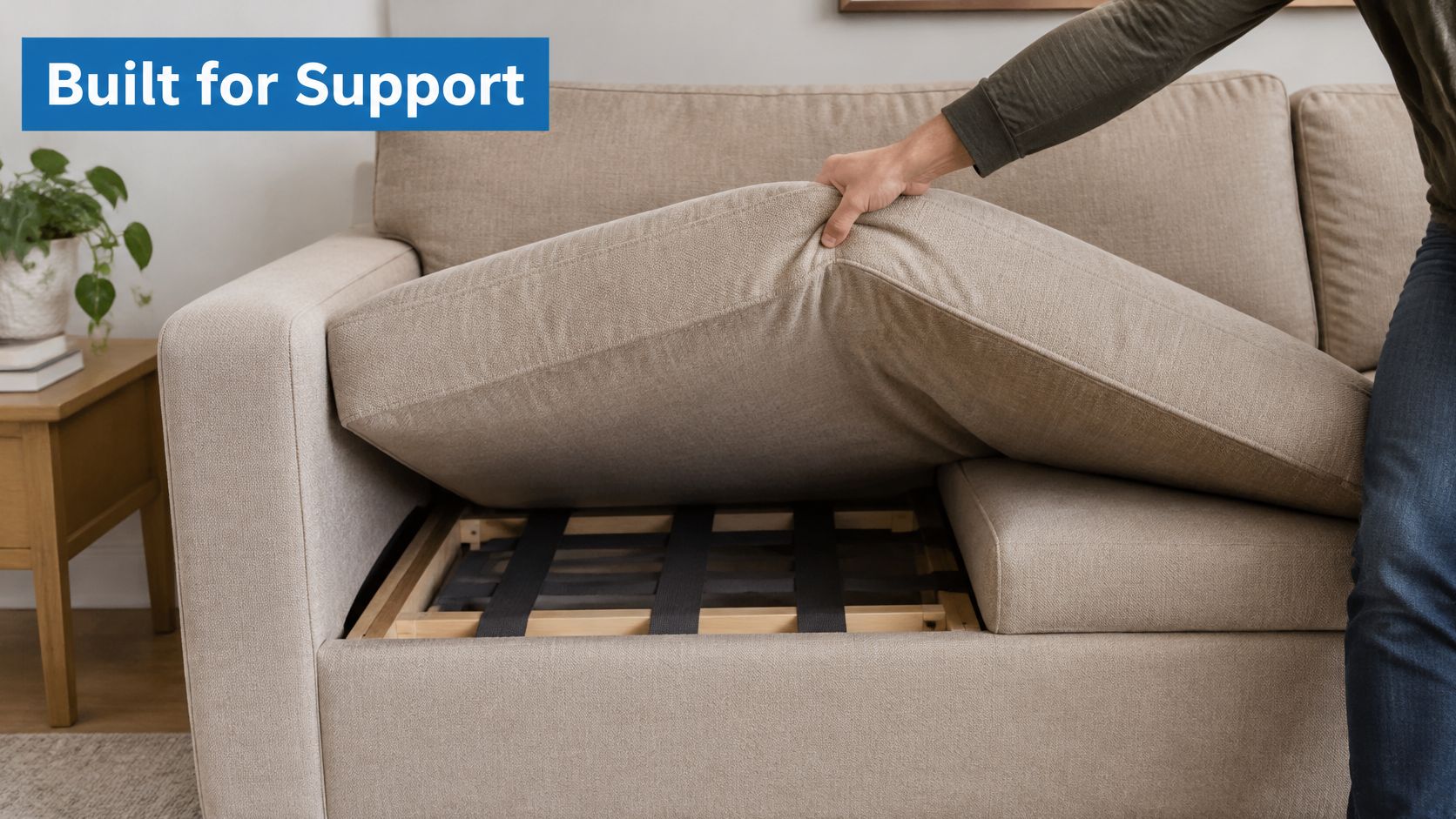
A cushion can look worn even when the problem lies underneath. In a traditional sofa, the seat works as a system: webbing or springs support the deck, padding softens the feel, and the frame carries the load. Each layer has a different job.
Webbing and springs flex under a sitter, then transfer weight toward the frame. Padding sits above them to cushion the body. These parts share the work, much like a small bridge whose surface, supports, and beams all contribute to stability. If one support layer sags, the cushion may dip even if its foam still has some life.
A history of upholstery construction describes how upholstery methods have changed over time. For a homeowner, the practical point is simpler: the seat beneath the cushion is designed to flex, but it should still be held by a sound frame and support system.
The cushion isn't the whole support system
Adding padding changes how a seat feels. It does not necessarily stop the deck beneath it from bending. A board works differently: it rests under the cushion and can spread weight across a wider area of the existing seat support. It supports the deck rather than replacing the springs, webbing, or frame.
That difference guides the keep-or-replace decision. If the frame is sound and the seat's support layer is flexing too much, a board may serve as a load-spreading retrofit. If the frame is cracked, loose, or unstable, the board can conceal a repair problem without fixing it. A firmer feeling alone does not show that the sofa is safe.
Before choosing a board, check what lies beneath the cushions and how those parts connect to the frame. This guide to sofa construction explains the main components and how they fit together. Understanding that layout helps distinguish a flexible deck from damaged support, so you can judge whether reinforcement is reasonable or professional repair is needed.
What a Board Changes Under the Cushions
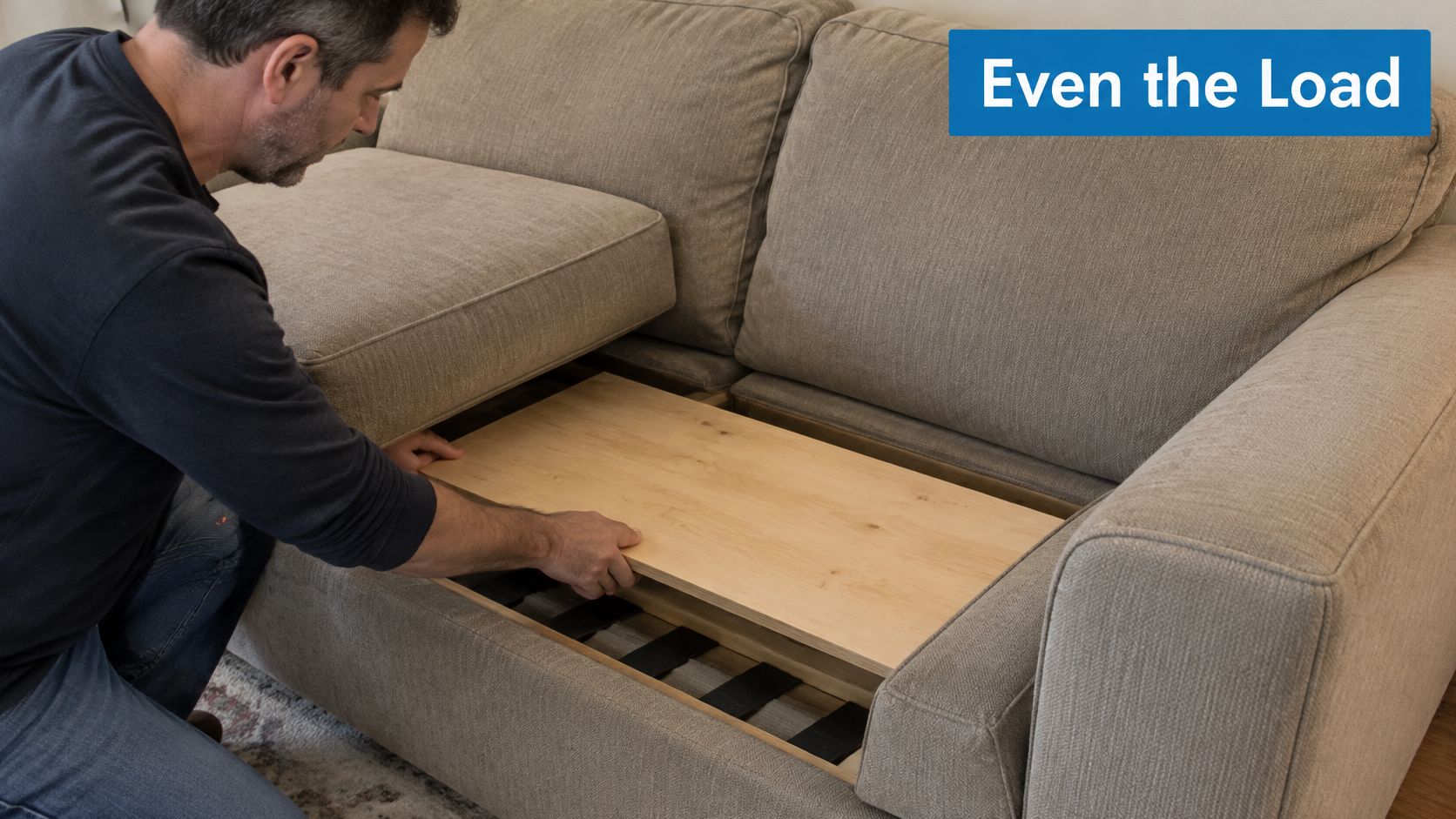
A board beneath removable cushions changes how sitting weight reaches the sofa. Instead of allowing weight to collect in a flexible or sagging area, the panel spreads the load across a broader support surface. It's a little like laying a firm tray over a soft hammock: the tray doesn't rebuild the hammock, but it can keep one person's weight from pooling in the middle.
That makes a board a load-spreading retrofit, not a structural repair. Neutral furniture-testing frameworks assess seating using static, fatigue, impact, and stability tests. North American seating assessments commonly include loads of at least 110 kg and repeated-cycle testing of seats, legs, and backrests, as described in furniture testing guidance from Eurofins.
What matters about the fit
The panel should span the supported seating width and rest flat on the frame or existing deck. If it's too narrow, its front or rear edge may concentrate pressure. If it overhangs areas without support underneath, the panel may bend or rock instead of distributing weight safely.
Before adding anything, inspect the frame, fasteners, webbing, springs, and places where the board would rest. A board can help with a flexible deck, but it can't restore permanently crushed foam, broken frame joints, or failed springs. If you find structural damage, don't treat a firmer seat as proof that the problem is fixed.
Stop if the structure can't safely receive the load. Test the fitted board gradually with distributed weight, not a single heavy load in one spot.
That stop rule is useful because a seat can feel more level while a hidden defect remains. The support works only when its load has a sound path into the sofa structure.
Fitting a Board Without Damaging the Sofa
A sunken cushion can tempt you to slide in a panel and sit down to see if it feels firmer. First check what the panel would rest on. A board spreads the sitter's weight across a wider area, much like a bridge distributes weight across its supports. That helps only if the sofa frame and suspension are sound.
Remove the seat cushions and inspect the webbing, springs, rails, and fasteners. If a rail is cracked, a spring is broken, or the suspension has failed, repair that damage before adding a board. A firmer seat can hide a fault without fixing the path that carries the load.
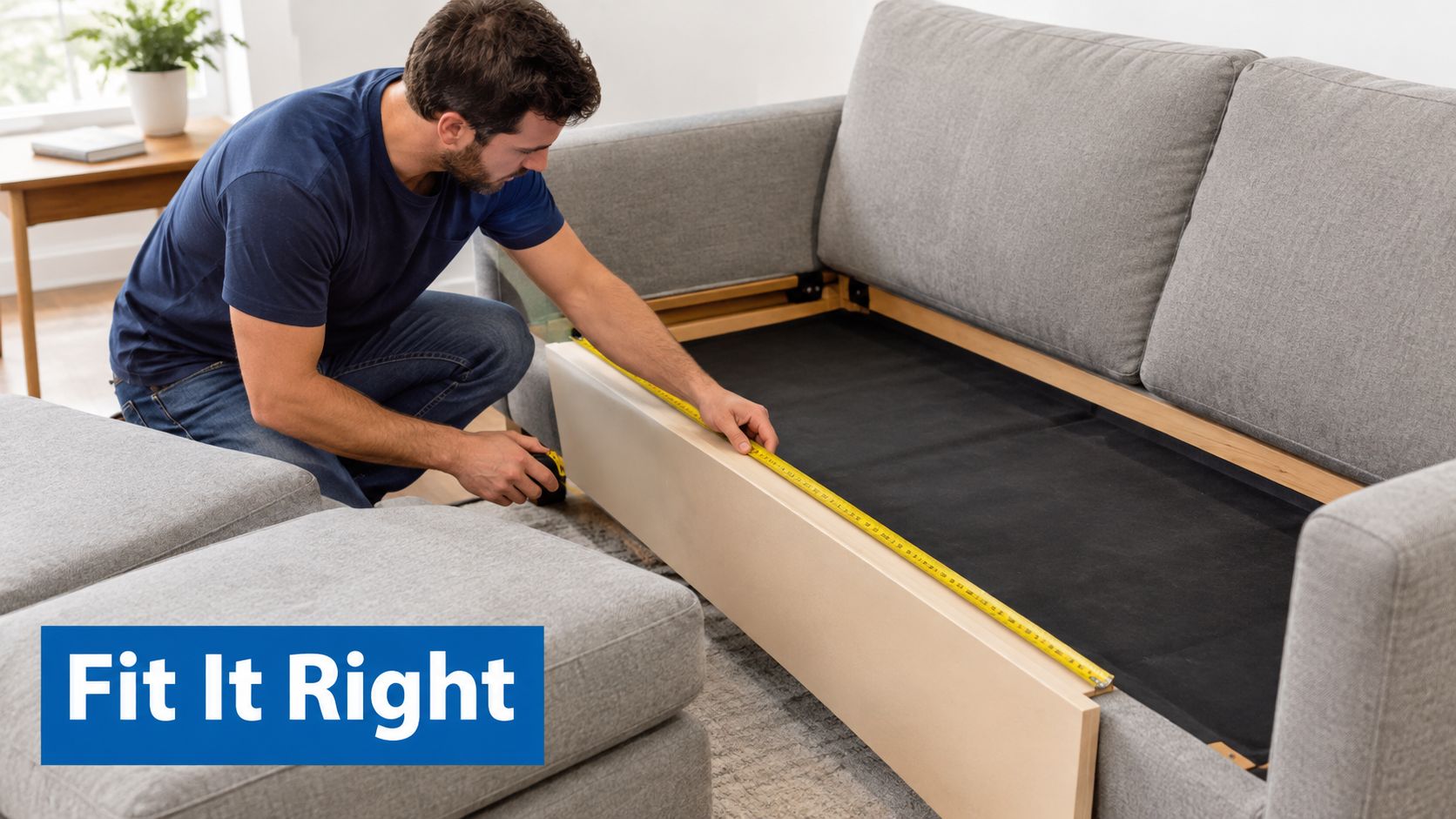
Measure the space beneath the cushions, including the inside width between the arms and the usable depth. Note any rails, hardware, or upholstery that could stop a panel from lying flat. Aim to cover the usable seating area and rest on supported parts of the frame, rather than placing a small panel only beneath the dip.
Choose a fit that sits flat
As a DIY starting point, choose a rigid panel that fits the sofa's supported area. Match its thickness to the available clearance and the way the seat transfers weight to the frame. A panel that is too thick may press against the upholstery or arms; one that is too thin may flex under load. There is no single thickness that suits every sofa. The furniture care guide discusses board fitting and protecting sofa surfaces.
Sand the edges to reduce rubbing. If the panel may scrape or squeak against the deck, a thin layer of foam or batting can cushion that contact. Check for clearance around springs, webbing, fasteners, upholstery, and moving parts before installing it.
Center the board and make sure it lies flat. Replace the cushions, then sit down carefully and check whether the seat tilts, the panel shifts, or the upholstery is pushed outward. Lift the cushions afterward to confirm the board has stayed in place. A quick improvement in firmness is not enough if the support rocks or the frame still shows damage.
For a sleeper sofa, first identify whether the problem is in the seat support or the sleeping surface. These are different structures and may need different repairs. The furniture repair guide offers additional guidance for inspecting sofa support and fitting a repair.
Keeping Firm Seats Safe for Everyday Use
A seat that feels firmer isn't automatically a seat that's easier or safer to use. For older adults, caregivers, and anyone with mobility limitations, the result also depends on seat height, stability, friction, and whether the cushion still distributes pressure comfortably. Age-friendly sofa design research identifies low seat height and soft cushions as possible barriers to standing, while also highlighting stability and edge safety as important considerations (research on age-friendly sofa design).
Check how the person uses the sofa
After installing a board, assess the finished seat as a whole. Ask whether the user can place both feet firmly on the floor, whether the board shifts or rocks, and whether cushion padding still feels adequate. Check the panel for sharp edges and make sure the sofa remains stable when someone sits down or gets up.
Cushion feel matters, too. Aging can stiffen cushions and reduce their ability to distribute pressure, so a very firm seat may feel more supportive at first while becoming less comfortable for someone who sits for longer periods. A board should limit an unwanted dip without turning the whole seat into a hard, poorly padded surface.
- Seat height: Measure the finished height and check that the user can still plant both feet on the floor.
- Movement: Confirm the board can't slide or rock when the seat is used.
- Edges and padding: Look for sharp contact points and keep enough cushion between the user and the support.
- Getting up: Notice whether the user can stand without pulling heavily on the sofa or losing balance.
Don't use a board to mask a damaged frame, and don't treat the sofa as a substitute for a grab bar or transfer aid. If the person pulls hard on the sofa to stand, or the installation changes their balance, stop and reassess. A sag fix that creates a new fall risk isn't a safe improvement.
Choosing a Board, a Repair, or a New Sofa
If the cushion sinks when you sit, a board may flatten the seat. The key question is what lies beneath it. A removable board can spread weight across a sound frame when the flexible deck or cushion support sags. It cannot mend a cracked frame, loose fasteners, broken springs, or a sofa that rocks. Those problems need repair, and replacement makes sense if the sofa cannot be returned to safe, stable use.
Use this as a keep-or-replace check:
| What you find | Better move | Why |
|---|---|---|
| The frame and springs are sound, but the deck flexes or the seat sags. | Try a removable support board. | It spreads the load and can be taken out later. |
| The frame is cracked, fasteners are loose, springs are broken, or the sofa rocks. | Arrange structural or upholstery repair. | A board cannot restore failed joints or components. |
| Repairs cannot restore safe, stable use. | Replace the sofa. | A firmer seat would not resolve the underlying risk. |
For renters, secondhand buyers, hotels, and short-term-rental operators, a reversible change may be preferable to permanent alterations. Homeowners can compare a cut-to-fit plywood panel with ready-made options. Meliusly offers sofa cushion support boards, as well as foldable and permanently installed supports for sleeper sofas. Choose a board only if the frame gives it a sound base; a quick increase in firmness is not proof that the sofa is repaired.
Reuse can make sense when the structure remains sound, but keeping a sofa is not worth concealing a failure that threatens stability. If the frame is in good condition and the upholstery is worn, consider whether recovering it is a better use of the sofa's remaining life. This guide explains when to reupholster a quality sofa. For repair options beyond a support board, see this DIY sofa repair guide.
Checking the Sofa After the Board Goes In
A cushion may feel firmer as soon as a board is installed, but that first impression only shows that the seat is better supported at that moment. The board spreads the load like a bridge deck, transferring weight to the sofa's frame. That works only if the frame and the points supporting the board are sound.
The U.S. General Services Administration's upholstered-furniture test applies repeated sitting action at 20 cycles per minute, then examines the furniture after each 25,000-cycle stage. Its initial loading arrangement uses 100 lbf at the rear and 50 lbf at the front (GSA upholstered-furniture test method). These are laboratory conditions, not a home test to copy. For a homeowner, the practical lesson is to check whether ordinary use makes the board shift, the frame flex or crack, or the seat sag again.
Make inspection part of using the sofa
Check the sofa after use and whenever it has been moved. Press the seat in several places and compare how it feels. A board that has slipped may leave one area unsupported, while a board pressing against a frame edge can cause damage over time. A firmer seat is a useful sign, not proof that the whole sofa is safe.
Furniture-quality research also offers a reason to inspect rather than judge a sofa by one symptom. A review summarized in a University of Limerick circular-economy report found that expected life for a good-quality U.S. sofa fell from 14.2 years in 1985 to 12.1 years in 1996 and 7.8 years in 2006. The cited Austrian consumer research found sofas were used for 8.6 years, against an expected 13.2 years of normal use, a 4.6-year gap (research on quality and durability in home furnishings). These figures describe furniture use, not a board's lifespan. Use them as context, and let the condition of the frame and support guide your decision.
Meliusly's sofa maintenance tips can help make inspection part of routine care. For a sleeper sofa, check that the mechanism still folds and opens without catching on the board. Inspect the frame this week. If the board has shifted, reposition it only if it can sit securely on sound supports. If you find cracks, rocking, or failed springs, stop using the board as a fix and arrange a repair or replacement. A board can spread weight, but it cannot make a damaged frame safe.
Share this post
- Tags: boards under couch cushions, couch cushion board, furniture repair, sagging couch, sofa support