

Recliner Neck Support Pillow: The Complete Setup Guide
Posted by Meliusly
You settle into a recliner for a film, a book, or a short rest, then notice the familiar pull at the base of your skull. The chair feels comfortable everywhere except where it matters most. Your head either falls backward, tips to one side, or gets pushed forward by a bulky cushion.
That problem rarely comes from softness alone. A recliner is a load-bearing system, and your neck needs the same things as any other supported structure: a stable foundation, the right geometry, and enough firmness to hold its position. A recliner neck support pillow can improve the setup, but only when it fits the chair, your body, and the angle at which you sit.
Why Neck Support Is a Structural Issue
A sofa with a weak foundation gradually loses its shape. The frame and cushions no longer distribute weight evenly, so the user sinks into an unstable position. Your neck can experience a similar problem in a recliner. If the headrest leaves a gap behind the cervical spine, the head has no reliable base and the surrounding muscles must keep correcting its position.
A pillow can bridge that gap, but it shouldn't act like a loose bundle of stuffing. It should support the area beneath the occiput and upper neck while allowing the head to remain level. If it's too thick, the skull moves forward and the chin drops toward the chest. If it's too thin, the head falls backward or sideways. Both outcomes disturb the neck's natural curve.
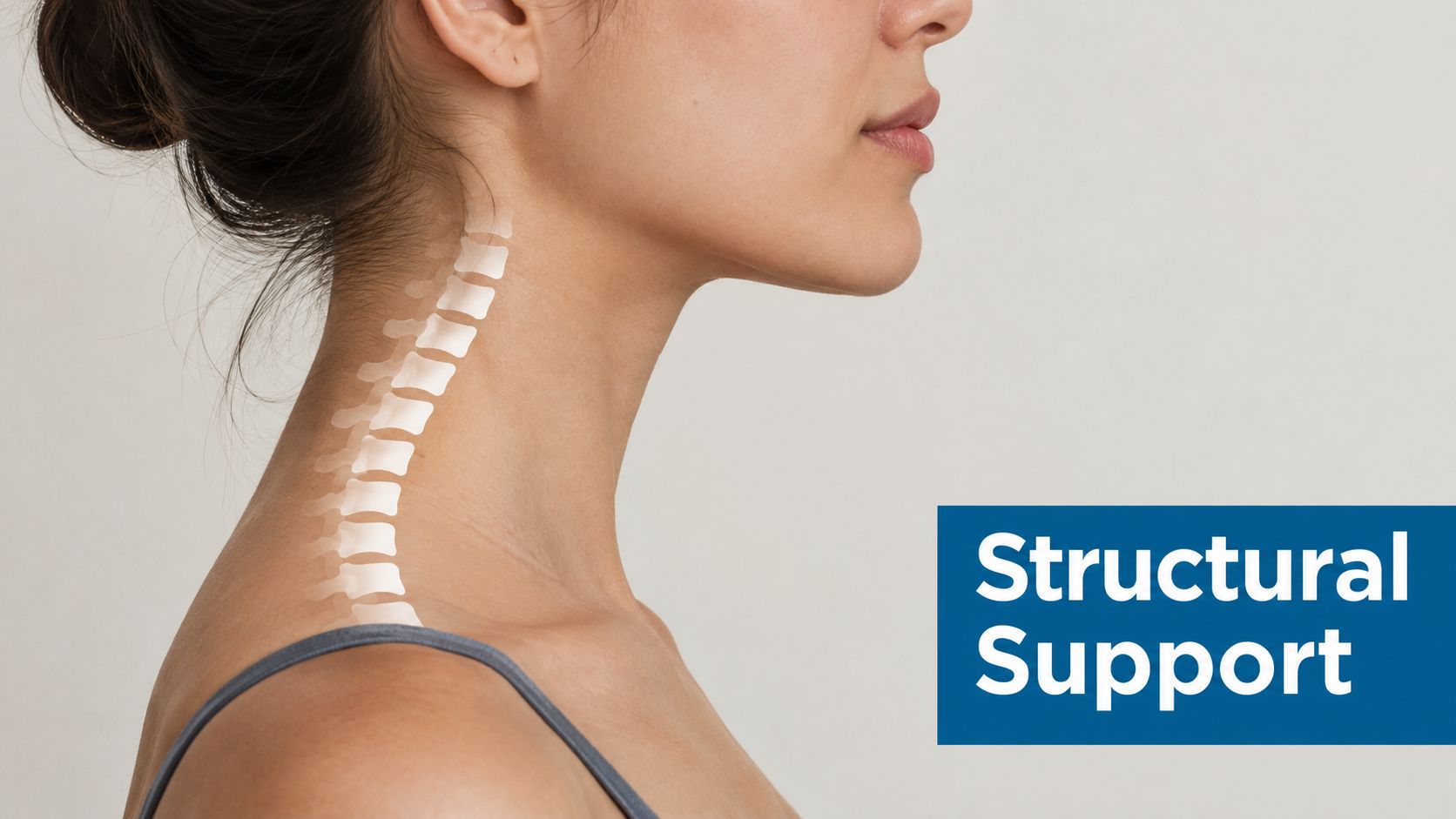
This is why I treat neck support as part of ergonomic seating, not as a decorative comfort accessory. The same principle applies when repairing a sagging sofa. A support board works because it restores the missing structure beneath the cushion. A neck pillow works when it restores the missing support behind the cervical spine. Meliusly's explanation of what ergonomics means in furniture use is useful context because ergonomics is ultimately about matching the furniture to the person's position and load.
The recliner changed the support problem
Recliners place the torso in a more open angle than an upright chair. As the back moves rearward, the head and neck need a headrest that follows them without forcing the skull forward. That design challenge helped shape modern built-in neck support.
A major historical milestone came in 1971, when Ekornes introduced Stressless® as the first recliner designed to meet the body's need for movement and support while seated, as documented in this recliner neck-support product reference. The brand later added its patented Plus™ system, which automatically adjusted headrest and lumbar support so users could read and watch television while leaning back. That shift normalized built-in cervical positioning instead of relying only on loose pillows.
Modern add-on pillows serve a different purpose. They fill the remaining space between the headrest and the neck, helping the chair accommodate a body it wasn't molded around. If you're comparing recliner use with sleep positioning, the guidance in this resource on the best sleep positions for neck pain can help clarify why neutral alignment matters across both settings.
Evaluating Height, Contour, and Firmness
A useful pillow has to engage your neck consistently. Evaluate it through three mechanical variables: height, contour, and firmness. None works in isolation. A high pillow with a poor contour can push your head forward, while a well-shaped pillow that collapses under load won't maintain support.
Height sets the head position
Start with the space the chair leaves behind your neck. In a semi-upright position, the pillow should fill that space without lifting your head above the natural line of your spine. Shorter users often need less overall bulk, while broader shoulders can create a larger gap between the seatback and the neck. Your recline angle changes the requirement too. A more reclined chair may need a pillow that follows the headrest rather than one designed for an upright seat.
A practical fit check is simple. Sit in your usual position with your shoulders fully against the backrest. Your head should rest without a forced chin tuck, backward tilt, or side-to-side wobble. If your neck feels strained after sitting, the pillow may be too high or too soft to hold its shape.
Guidance on pillow selection often uses a person's sleeping position as a starting point. This guide to finding your ideal pillow offers broader selection context, but recliner users still need to test the pillow against the chair's geometry rather than relying on a bedroom-pillow recommendation alone.
Contour controls movement
A horseshoe or U-shaped pillow can support the neck while limiting unwanted side movement. WebMD's guidance for reclined sleeping recommends a horseshoe shape because it helps prevent the neck from drooping or jolting to one side, as summarized in this recliner head pillow guide. The sidewalls can also help when someone naps and loses active control of head position.
A wedge has a different job. It fills a broader gap and may work when the recliner's headrest is unusually flat, but it can become intrusive if its front edge pushes the head forward. For reading or television, a lower, shaped cradle usually gives better positional control than a thick rectangular cushion.
Firmness determines whether support lasts
Soft fills feel inviting at first, yet they can compress under the weight of the head and leave the neck unsupported. Memory foam and latex generally hold a more stable contour than feather or low-resilience polyester fills. Independent guidance also reports that pillow height around 7 to 11 cm was associated with spinal alignment, pressure distribution, and reduced muscle tension, with latex showing the strongest evidence for sleep quality and comfort, followed by memory foam, according to the National Council on Aging pillow guidance.
Treat firmness as a stability requirement, not a preference. The pillow should compress enough to avoid pressure points, but it must recover instead of flattening. More material isn't automatically better. A supportive pillow keeps the head centered without creating a rigid, raised platform.
Measuring for a Proper and Stable Fit
Buying by appearance is a common mistake. The right recliner neck support pillow is sized against the user and the chair, much like a support board must span the correct area beneath a sagging cushion. A board that's too short leaves the weak point exposed. A pillow that's too narrow or shallow leaves the neck unsupported.
Measure before you shop.
- Record shoulder-to-ear distance. Sit upright with your shoulders relaxed. Measure from the top of the shoulder to the approximate center of the ear on the same side. This gives you a practical indication of how much height the side of your neck needs, especially if you tend to lean or sleep sideways in the recliner.
- Measure the headrest gap. Sit fully back in the chair and have another person measure the open space between the headrest and the back of your neck. Measure with the chair at the angle you use most often, not only when it's fully upright.
- Check the contact zone. Note where the pillow will touch your headrest, neck, and shoulders. A pillow that extends too far downward may interfere with the shoulders or compress against the upper back. One that's too wide can push your head forward instead of filling the cervical gap.
- Test the recline range. If you read upright but nap farther back, check both positions. The pillow should remain stable as the chair moves, or it should be easy to reposition without becoming a loose obstruction.
Fit rule: Your head should settle into the support. It shouldn't perch on top of it or slide away from it.
Seat depth also affects the result. If your pelvis sits too far forward because the seat is deep, your shoulders may lose contact with the backrest and the neck pillow will appear to be the problem. Meliusly's guide to seat depth and ergonomics explains why lower-body positioning can change the way the upper body meets the chair.
A neck pillow shouldn't compensate for a recliner that has lost its basic support. If your lower back or pelvis sinks, correct that foundation first, then reassess the neck position. For a broader approach to the backrest and lumbar area, this resource explains how to find a recliner back support that works.
Installation and Attachment Methods
A pillow that slides down is a failed support component, regardless of how well it's shaped. Recliner movement creates repeated changes in tension, so attachment matters almost as much as the foam inside. The best method depends on whether you want quick adjustment, strong retention, or minimal visual impact.
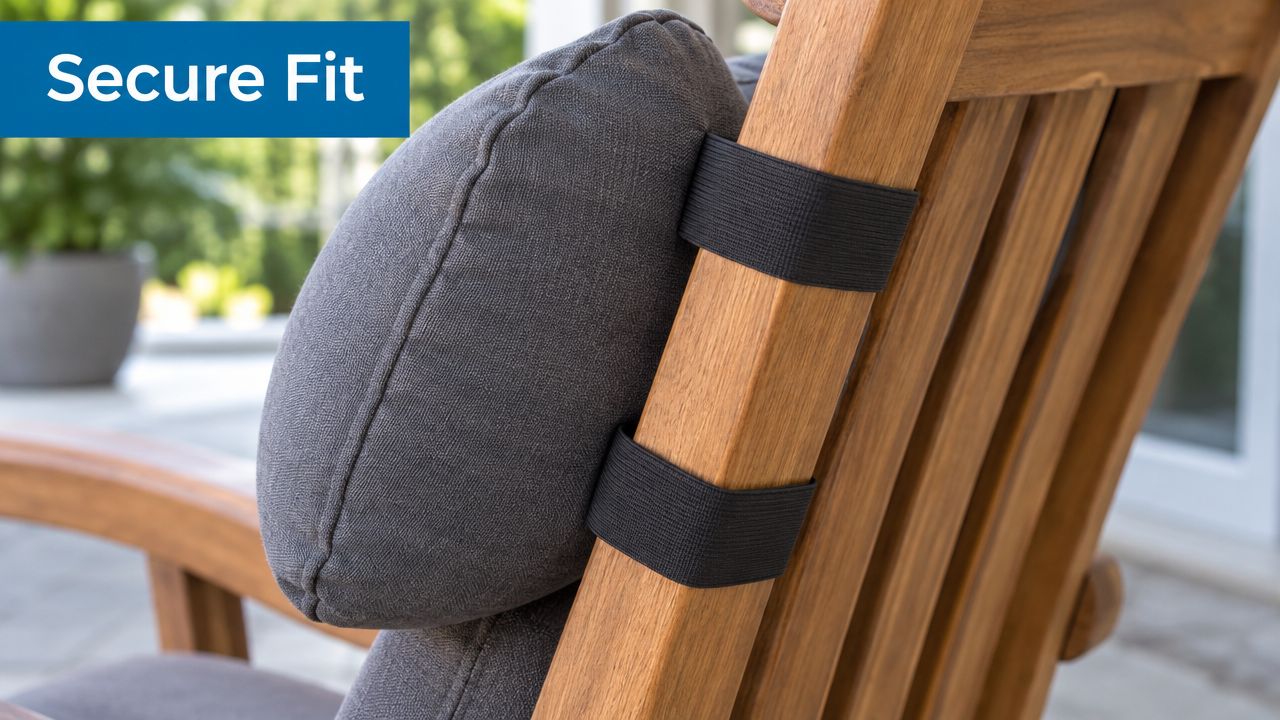
Compare the main attachment options
Straps offer the most useful balance for many recliners. Route them around the headrest or through an approved gap, tighten them until the pillow stays in place, and leave enough adjustment to center the support. Straps are practical when different people use the same chair.
Non-slip backs are simple and unobtrusive. They work best when the pillow rests against fabric with enough friction and when the chair doesn't move aggressively. They're less dependable on smooth leather or when the headrest angle changes frequently.
Velcro provides firm positioning and makes removal easy for cleaning. It can be effective when the attachment points are designed for the chair's upholstery, but don't press adhesive-backed fasteners onto valuable or delicate fabric without checking compatibility first.
Test before relying on it
Install the pillow while the chair is upright. Sit back, check that the head is centered, and then move through the recline positions you normally use. Watch for three failures: the pillow sliding downward, the sidewalls twisting, or the attachment pulling the headrest cover.
Do not tie anything around moving mechanisms or place straps where they could enter the recliner's joints. A neck pillow should follow the headrest without interfering with the chair's operation. Like a sleeper sofa support board, it needs a secure position, but it also needs clearance from moving parts.
Special Considerations for Older Adults
For an older adult, a recliner may serve as a regular resting place, a reading chair, or a practical alternative when getting in and out of bed is difficult. That makes small alignment errors more consequential. Someone with arthritis or reduced mobility may not reposition their head often, so a pillow that slowly slips can leave the neck unsupported for a long sitting period.
Consider a caregiver helping a parent settle into the chair. The first few minutes may feel fine, but the pillow gradually moves downward as the chair reclines. The head then tips back, the chin rises, and the person may tense the shoulders to regain stability. A caregiver may interpret the discomfort as a need for more padding, when the actual issue is a pillow that lacks retention or a chair that no longer supports the body evenly.
Use a slower fitting process:
- Start with the chair foundation. Check whether the seat has sagged, the back cushion has shifted, or the frame feels uneven.
- Keep the head centered. Avoid a pillow that forces rotation or leaves one side unsupported.
- Choose controlled firmness. Excessively soft filling can make repositioning harder because it doesn't provide a consistent reference point.
- Watch the transfer path. Straps and attachments must stay clear of handles, levers, and moving joints.
A neck pillow provides comfort support, not a diagnosis or treatment. People with persistent pain, recent procedures, significant weakness, numbness, or balance concerns should follow guidance from a qualified clinician rather than using a pillow to mask a medical problem.
Furniture condition belongs in the same assessment. A stable neck position is difficult to achieve when the seat collapses beneath the user. Repairing the underlying sag can make the pillow's job easier and may extend the useful life of the recliner instead of forcing an unnecessary replacement.
Care, Maintenance, and Longevity
A support pillow changes shape when it accumulates moisture, loses cover tension, or remains compressed in one position. Maintenance protects the contour that made the pillow useful in the first place. It also lets you catch attachment problems before the support shifts during use.
Follow a simple routine:
- Clean the cover according to its care label. Remove the cover when possible and wash it as directed. Don't soak or machine-wash foam unless the manufacturer specifically permits it. Excess moisture can be difficult to remove and may alter the material's performance.
- Inspect the foam after cleaning. Look for permanent flattening, torn seams, or a contour that no longer returns after normal use. A pillow that has become visibly uneven is no longer distributing pressure reliably.
- Rotate when the design allows it. Some pillows have a fixed contour and shouldn't be flipped. If both sides are intended for use, alternating them can reduce localized wear. Never reverse a shaped pillow if doing so places the support ridge in the wrong position.
- Check straps, Velcro, and stitching. Pull lightly on each attachment point. Replace or repair a loose connection before the pillow begins sliding. Inspect the recliner fabric as well, especially around the points where straps contact the headrest.
- Keep the chair itself supported. A pillow can't correct a collapsing seat. Check the recliner's cushion and base periodically, and use a compatible chair support when the seat has lost its foundation.
Meliusly's furniture care guide provides broader upkeep principles for sofas, chairs, and support components. Meliusly also offers a Sagging Chair Cushion Support for recliners, a board placed beneath the cushion to restore seat support without interfering with reclining mechanics. That kind of base correction complements a neck pillow because both address different parts of the same seating system.
A recliner should support the body from the seat upward. Select the pillow by measuring the gap, checking the recline angle, and testing stability, then maintain the chair's foundation so the alignment remains consistent.
Meliusly offers practical sofa, chair, and sleeper-sofa support systems for homeowners who want to correct sagging and extend furniture life without replacing the entire piece. Visit Meliusly to compare support options for your recliner, sofa, or bed foundation and choose the component that addresses the underlying problem.
Share this post
- Tags: ergonomic pillows, furniture comfort, Meliusly, neck pain relief, recliner neck support pillow