

What Are Ergonomics and How They Shape Home Comfort
Posted by Meliusly
You sit down after a long day, expecting your sofa to help you unwind. Instead, your hips drop into a soft hollow, your lower back rounds, and one shoulder gradually drifts higher than the other. After an hour, you're shifting positions, standing up carefully, or wondering why a piece of furniture meant for relaxing leaves you sore. The same problem can appear on a sleeper sofa when the mattress bends around its frame or on a bed whose slats no longer hold the mattress evenly.
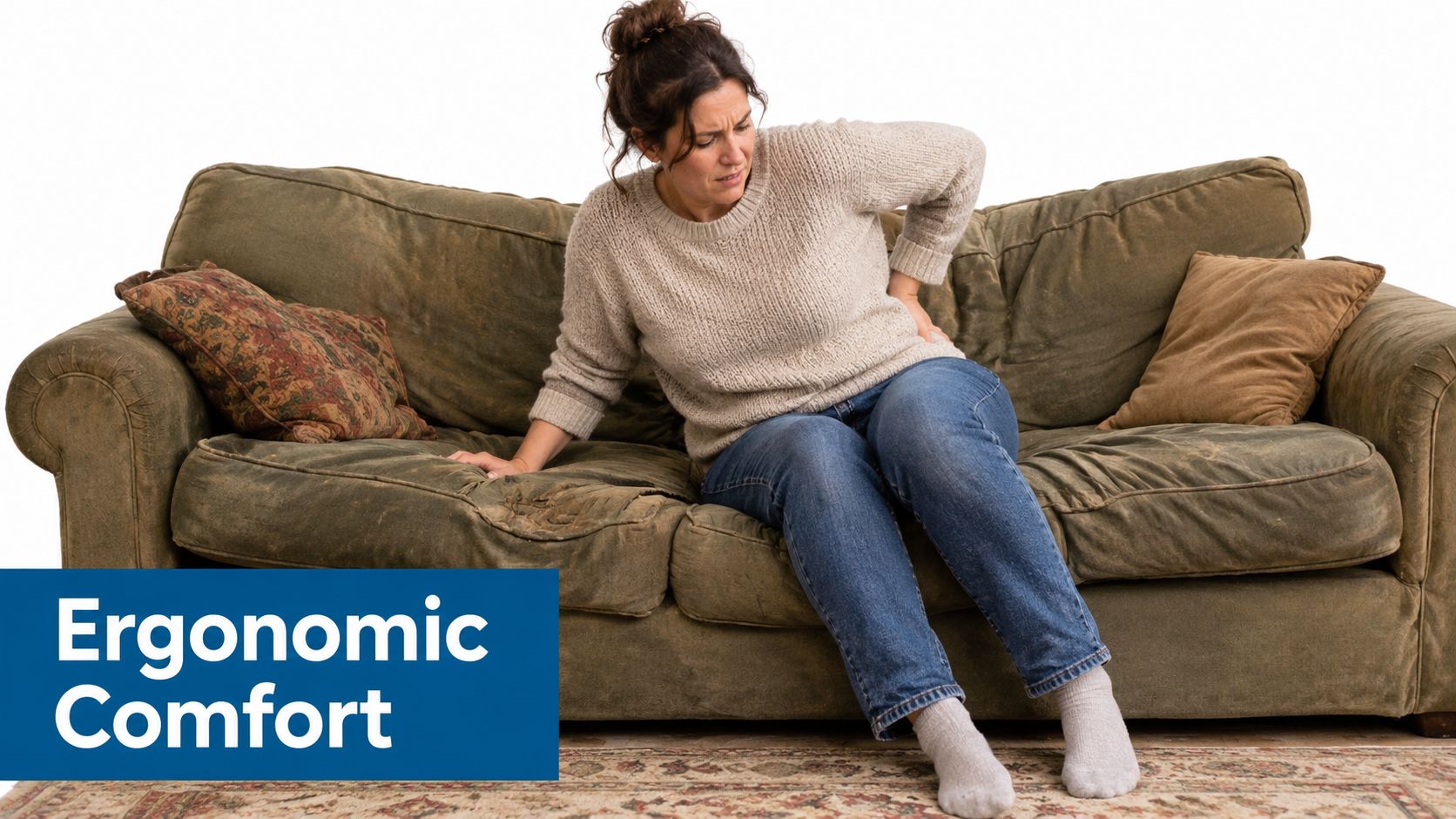
Ergonomics is useful because the word often brings office chairs, keyboards, and monitor height to mind, but the underlying idea applies anywhere your body meets a task or a physical environment. A sagging sofa can create the same basic mismatch as a poorly adjusted desk chair. The furniture asks your body to adapt to its defects instead of supporting your natural position.
The central idea is simple: good ergonomics fits the environment to the person, rather than forcing the person to fit the environment.
This guide answers what are ergonomics, why posture, pressure, body size, and time all matter, and how those principles apply to sofas, recliners, sleeper sofas, and beds. You'll also find practical ways to restore support without immediately replacing furniture. Meliusly has served over 400,000 customers with furniture support solutions designed to address sagging seating and sleeping surfaces, and the focus here is straightforward: understand the mechanics, identify the mismatch, and choose a sensible fix.
Introduction Why Your Sofa Feels Wrong After an Hour
A sofa can look perfectly usable while its internal support has changed. Cushions compress, suspension loses its evenness, and the base beneath the seat may allow the cushion to dip between stronger points. You may still be able to sit there, but your pelvis sinks first, your spine follows, and your muscles spend the evening making small corrections.
Those corrections are easy to miss because discomfort often builds gradually. You lean into an armrest, tuck one leg under yourself, or place a pillow behind your back. Each adjustment may feel helpful for a few minutes, yet the underlying surface still determines where your weight goes and how long you can remain there comfortably.
A sleeper sofa creates a different version of the same issue. Its mattress may fold over a frame, rest unevenly, or transmit pressure from structural parts below. A guest may describe the bed as lumpy, while the actual problem is that the support beneath the mattress isn't distributing weight consistently.
Ergonomics gives you a practical way to interpret these experiences. It isn't a promise that every seat will feel soft or that one ideal posture works for every person. It asks whether the furniture supports the body's size, shape, movement, and tolerance during the time you use it.
That perspective helps homeowners avoid an expensive first reaction. Replacing a whole sofa may be unnecessary if the main problem is a sagging seat surface. A non-permanent support layer, a better lumbar position, or a more even foundation can address the mismatch while preserving furniture you already own.
What Ergonomics Really Means Beyond the Office
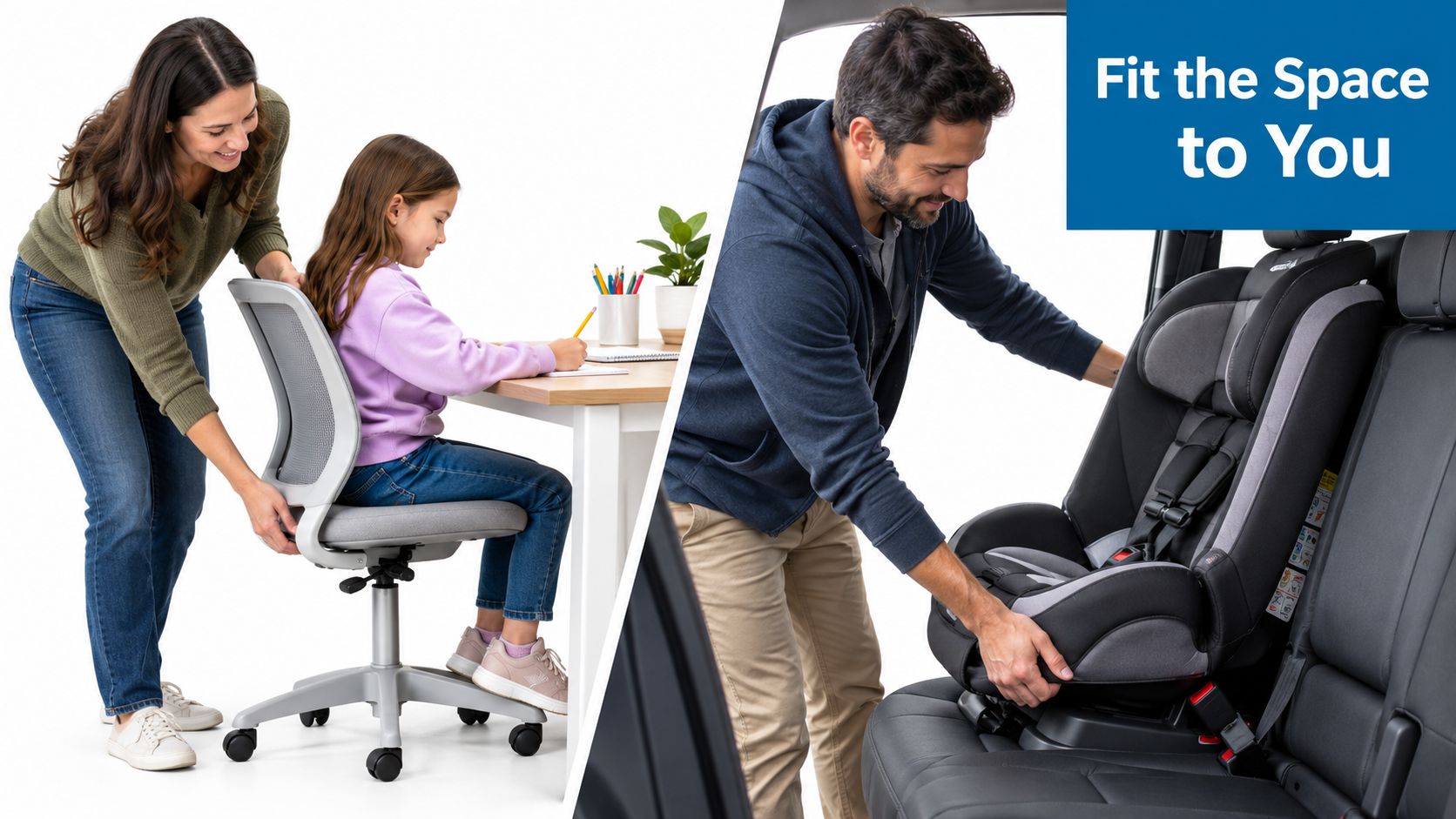
Ergonomics is the discipline of fitting a job, product, or environment to human capabilities. OSHA describes it as fitting a job to a person to reduce muscle fatigue and work-related musculoskeletal disorders, while the CDC and NIOSH describe the same basic approach as designing the task or job to fit the worker rather than forcing the worker to fit the job. See the OSHA ergonomics overview and the CDC and NIOSH explanation of ergonomics.
A simple analogy is footwear. If a shoe is too narrow, you don't solve the problem by asking your foot to become narrower. You change the shoe, choose a different size, or add an adjustment that gives the foot room and support. Furniture works similarly. When the seat depth, cushion height, or base support doesn't suit your body, the better response is to modify the environment where possible.
A discipline with a long history
The idea isn't a recent furniture trend. Bernardino Ramazzini described work-related complaints among cobblers and tailors in 1713, Wojciech Jastrzębowski first used the term “ergonomics” in 1857, and the first professional ergonomics society formed in the United Kingdom in 1949. ISO later formalized the field through ISO 6385, first published in 1981 and confirmed in 2016 as a foundational standard for ergonomic principles in work-system design. These historical details are summarized in Managing Ergonomics, Applying ISO 45001 as a Model.
That history matters because it shows that ergonomics isn't just a synonym for "comfortable." It combines observation, design, and occupational health to reduce harmful mismatches between people and the systems they use.
The living room is part of the system
A desk chair supports you while you work, but a sofa supports you while you read, watch television, talk with family, nurse a baby, recover from illness, or work from home. A recliner adds moving parts and changing angles. A sleeper sofa must support both sitting and sleeping.
In each case, ask three questions:
- What does the furniture ask your body to do? Does it keep you level, or does it make you slump, twist, or brace?
- Where does your weight go? Is it spread across the seat and back, or concentrated in one pressure point?
- How long do you stay there? A position that feels acceptable briefly may become tiring when held for a long period.
That's the home-comfort meaning of ergonomics. You're not trying to make a living room look like an office. You're making the furniture cooperate with the person using it.
Core Principles That Make Furniture Feel Right
Furniture comfort depends on several interacting principles, not on softness alone. A couch may feel plush when you first sit down but still place your pelvis too low, leave your lumbar area unsupported, or concentrate pressure beneath a small part of your body. Ergonomic design considers posture, anthropometrics, and biomechanics together.
Posture is about alignment, not stiffness
Posture describes how your body segments relate to one another. In a sofa, the seat height and depth affect your pelvis, the back angle influences your spine, and the cushion shape determines whether your legs and hips remain supported.
A seat that's too deep may leave you reclining backward to reach the back cushion. A seat that sags in the middle may rotate your pelvis backward, encouraging a rounded lower back. A back cushion that collapses can remove support precisely where you need it, even if the seat itself feels soft.
Good posture doesn't mean holding yourself rigidly. People move, change position, and use furniture in different ways. The ergonomic objective is to give the body a stable starting point so movement doesn't begin from a distorted or unsupported position.
Anthropometrics account for different bodies
Anthropometrics means considering human body dimensions and variation. A sofa designed around one body shape won't automatically suit every household member. One person may need more lumbar filling, while another may need a deeper seat or a firmer base.
This is why adjustable or supplemental support can be more practical than searching for one perfect cushion. A rolled towel, lumbar pillow, seat insert, or support board can change the relationship between your body and existing furniture without requiring a permanent alteration.
Biomechanics explains the load
Biomechanics looks at forces, movement, and how the body responds to them. When a seat dips, your weight doesn't disappear. It shifts toward the lower point, the front edge, or one side of the cushion. Muscles and joints then accommodate that change.
A sofa illustrates the interaction clearly:
- Seat depth affects posture. Excess depth can make you slide or recline.
- Back angle affects contact. A supportive angle can help distribute your upper-body weight.
- Cushion firmness affects force distribution. Excessive softness may allow a deep hollow, while an even supportive surface can reduce the need to brace.
- Base condition affects everything above it. A cushion can't fully correct a foundation that bends or sags beneath it.
The seat depth and ergonomics guide shows why seat dimensions deserve attention alongside cushion feel. The best result usually comes from balancing these levers rather than chasing one feature, such as maximum softness.
Duration completes the picture. A position can feel fine at first and become uncomfortable after sustained sitting, so furniture assessment must consider not only how you sit but how long the furniture holds you there.
How Posture Pressure and Time Affect Comfort
Your body can tolerate many positions briefly. Problems often appear when an awkward angle or concentrated pressure continues without enough change. ISO 11226:2000 addresses static working postures and says assessment should consider both body angles and time aspects, not shape alone. The standard's focus is the relationship between posture and duration, as described in the ISO 11226 standard summary.
That principle transfers directly to home seating. Slumping for a few minutes while tying your shoes isn't the same as sinking into a rounded position for an entire movie. A sleeper sofa that feels acceptable during a short nap may become difficult when someone spends a full night on an uneven surface.
Pressure reveals what your posture hides
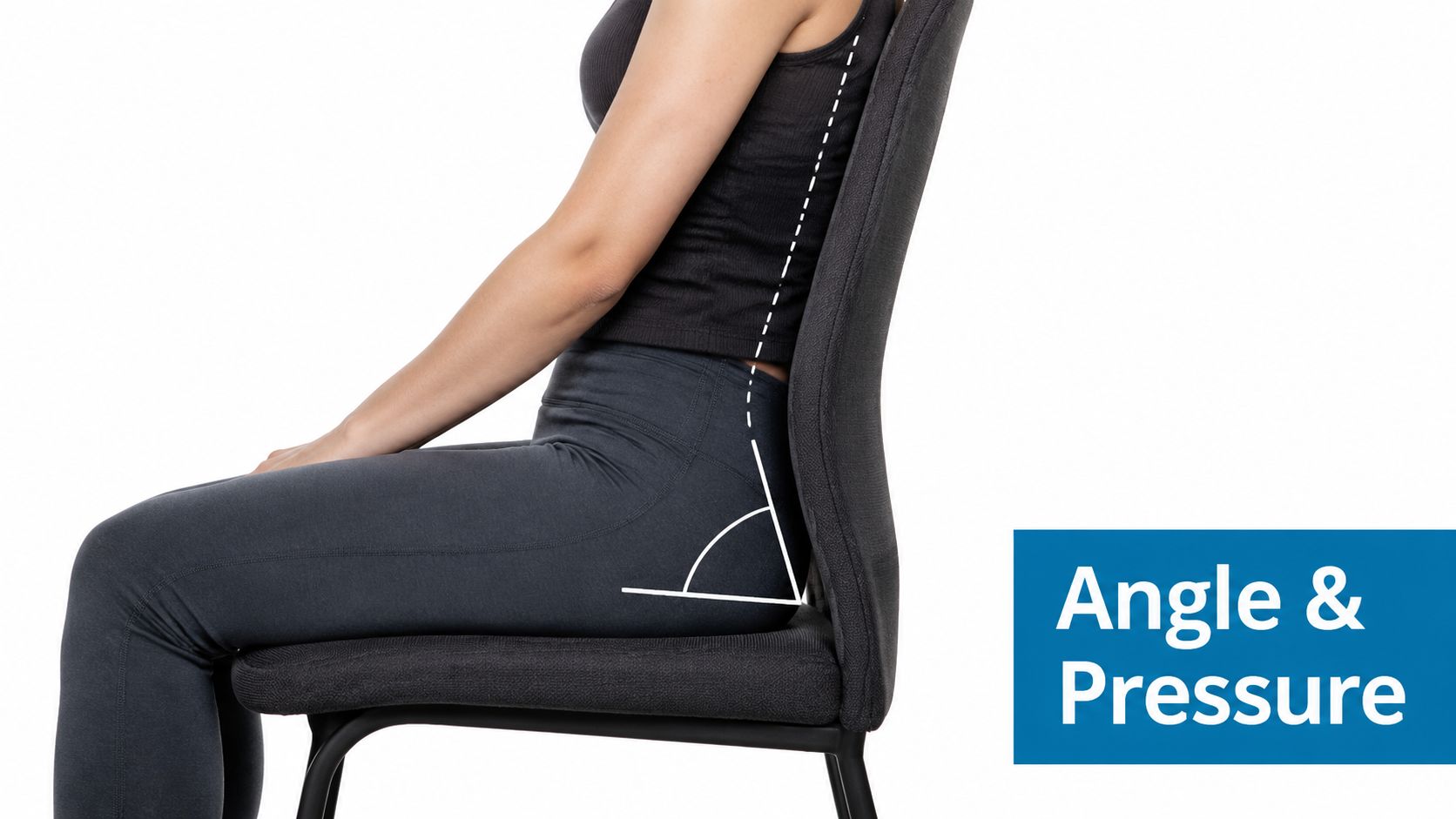
Pressure distribution is one of the less visible parts of sitting comfort. Research summarized in a paper on pressure distribution in seating explains that good seating concentrates peak pressure under the sitting bones and in the lumbar area. The same source notes that surface pressure can constrict blood vessels in underlying tissue, restrict blood flow, and create discomfort.
You may notice the result as numbness, a need to shift constantly, or soreness where the seat edge presses against your legs. These sensations don't identify one specific diagnosis, but they can signal that the furniture is placing force unevenly or preventing comfortable movement.
A sagging cushion changes the pressure map. Instead of supporting you across a broad, predictable surface, it lets your hips settle lower than your knees or places more load on one side. Your back may then lose contact with the support behind it, while your muscles work to keep you balanced.
Why even support matters
An even support surface doesn't force everyone into one posture. It gives your body a more reliable base from which to choose a comfortable position. On a sofa, that may mean reducing the hollow beneath the cushion. On a sleeper sofa, it may mean covering pressure from the frame and supporting the mattress more consistently.
Movement still matters. Stand up, change positions, and avoid treating any single posture as a permanent solution. Ergonomics reduces unnecessary strain by improving the environment, but it works best when the user can move and respond to changing comfort signals.
Ergonomics at Home Sofas Recliners and Sleeper Sofas
Office guidance often stops at desk height and monitor placement. Home ergonomics has a wider field because people use sofas and recliners for long, varied activities. A sofa may be a social seat in the afternoon, a television seat at night, and a temporary workstation during the week.
A sagging sofa cushion commonly creates a low center point. Your pelvis sinks, your knees may rise relative to your hips, and your torso rounds as you search for balance. A recliner can create a different mismatch when its angle rotates the pelvis backward or leaves the head and neck unsupported. For readers comparing different mechanisms and user needs, this overview can help you compare lift vs standard recliners.
A sleeper sofa adds the mattress and frame to the equation. If the mattress hammocks between support points or presses against the metal structure beneath it, the sleeper may experience both uneven posture and concentrated pressure. The sleeper sofa comfort guide offers additional context for evaluating that setup.
| Furniture Type | Common Mismatch Sign | Ergonomic Goal | Practical Fix Direction |
|---|---|---|---|
| Sofa | Hips drop into a hollow, or one side feels lower | Create a flatter, more even seating base | Check the cushion, base, and support beneath the seat |
| Recliner | Pelvis rolls backward, neck reaches forward, or feet feel poorly supported | Coordinate the seat, back, head, and leg positions | Adjust the recline angle, add targeted support, or assess another recliner style |
| Sleeper sofa | Mattress bends around the frame or creates pressure points | Keep the sleeping surface more consistently supported | Inspect the frame and add an appropriate support layer beneath the mattress |
| Bed | Mattress dips between slats or feels uneven | Maintain continuous, stable mattress support | Inspect slat spacing and use a compatible foundation solution |
The table isn't a ranking of furniture types. It's a troubleshooting tool. Look for the place where your body first loses support, then correct that point instead of adding pillows everywhere.
A pillow can fill a gap behind your back, but it won't necessarily stop a seat from collapsing beneath you. Likewise, a mattress topper may soften a sleeper sofa without correcting the uneven foundation below. Ergonomic improvement starts with the load-bearing surface.
Practical Ways to Improve Ergonomics Without Replacing Furniture
You don't need to start with a new sofa. Begin with a short inspection while the furniture is empty. Remove the cushions, look for a visible dip in the deck or base, and check whether the cushion itself has flattened unevenly. On a sleeper sofa, open the bed and inspect where the mattress contacts the frame.
Then sit in your usual position and notice the first point of failure. Do your hips sink immediately? Does your lower back lose contact? Do you feel a bar beneath the mattress? Does one side carry more weight? The answer tells you whether to focus on the cushion, the underlying base, or the sleeping platform.

Match the support to the problem
- For a dipping sofa seat: Measure the seating area and consider a sofa cushion support board that creates a firmer, more even base beneath the cushions. The couch cushion support board guide explains this approach without requiring a permanent furniture alteration.
- For a folding sleeper sofa: Look for a support board designed for the open bed platform, with the goal of reducing the feel of frame pressure and improving mattress support.
- For a mattress and bed frame: Check the slats and foundation before buying a thicker mattress. A compatible bunkie board or replacement bed slats may address movement caused by an uneven base.
- For a recliner: Use a cushion or lumbar roll only after checking whether the recline position itself is rotating your pelvis or leaving your head unsupported.
Meliusly offers sofa supports, sleeper sofa support boards, bunkie boards, and bed slats for homeowners who want to improve an existing furniture setup rather than replace it. The appropriate option depends on the furniture's dimensions, condition, and whether you need a removable or more permanent installation.
Combine physical support with habits
Evidence reviews support multi-component ergonomics programs, particularly combinations such as training with workstation adjustments or exercise, and participatory interventions that involve the user in choosing changes. A systematic review of ergonomic interventions found moderate support for these combined approaches in reducing self-reported discomfort and pain over the short to medium term. It also reported that sit-stand desks reliably reduce sitting time and may reduce low-back discomfort, while effects on diagnosed musculoskeletal disorders are generally small to moderate.
At home, the equivalent is simple. Improve the surface, adjust your lumbar position, and take brief movement breaks instead of expecting one support product to solve every issue. Test one change at a time so you can tell whether it improves your actual sitting or sleeping experience.
Choosing Support That Fits Your Body and Your Home
Good home ergonomics reduces the mismatch between your body and the furniture. It considers posture, pressure, body dimensions, and time, then addresses the earliest point where support fails. That might be a sofa base, a sleeper sofa frame, a worn mattress foundation, or a recliner angle.
Use this checklist before choosing a fix:
- Identify the surface: Decide whether the problem begins in the cushion, deck, frame, mattress, slats, or recline mechanism.
- Check the coverage: Choose support that covers the area carrying your weight rather than treating only one small pressure point.
- Consider firmness: Look for a stable, even surface, but remember that firmness should suit the person and the furniture.
- Match the installation: Renters and caregivers may prefer a removable solution, while a frequently used bed may justify a more fixed foundation change.
- Test the duration: Sit or sleep in the setup long enough to notice whether the original dip, pressure point, or slumping pattern returns.
A supportive adjustment should make your position feel easier, not force you into rigidity. If you're evaluating a new recliner instead of modifying an existing one, this guide can help you find a supportive recliner while keeping body support central to the decision.
Before replacing furniture, inspect what's beneath the surface. A properly chosen sofa support, sleeper sofa support board, bunkie board, or bed-slat solution can extend useful furniture life and restore a more dependable base for everyday comfort.
Meliusly offers practical support solutions for sagging sofas, recliners, sleeper sofas, and beds, including removable and permanent options for different home situations. Review your furniture's support points, choose the solution that matches the problem, and visit Meliusly to explore ways to improve comfort without replacing the furniture you already own.
Share this post
- Tags: ergonomic furniture, ergonomics benefits, furniture support, home ergonomics, what are ergonomics