

How to Fix Sofa Bed: Step-by-Step Guide and Support Boards
Posted by Meliusly
The sofa bed looks fine in the living room until someone opens it for the night. Then the mattress dips in the middle, a metal bar presses through, or the frame refuses to close without a fight. Replacing the entire sofa may be unnecessary. The reliable way to learn how to fix a sofa bed is to find the mechanical failure first, repair the load-bearing parts, then add the right support board for the way you use the bed.
A sleeper sofa is a small folding system, not just a sofa with a mattress inside. Its modern form developed from earlier convertible seating, with early designs exposing the bed frame and mattress when cushions were removed. The same basic principle remains today, a hidden frame must align, lock, and distribute weight correctly as it changes from seating to sleeping furniture. This history of sleeper sofas helps explain why a sagging bed often needs more than a softer mattress.
Diagnosing Common Sofa Bed Failures
Start with the bed empty. Remove the sofa cushions, pull out the mattress, and open the mechanism fully on a clear floor. Don't begin by buying a mattress or cutting plywood. First determine whether the failure is in the folding hardware, the deck beneath the mattress, or the cushioning above it.
The first test is mechanical. Open the bed slowly and watch each hinge, crossbar, leg, and locking point. The metal frame should travel evenly and sit securely in its open position. If one side stops early, rocks, twists, or fails to lock, the mechanism needs attention before any support board is installed. A board can spread weight, but it can't correct a bent frame or a lock that isn't engaging.
Next, inspect the deck and foundation from above and below. Look for broken screws, cracked wood, bent metal, stretched webbing, snapped sinuous springs, missing spring clips, and gaps where the mattress drops between supports. Press the deck with your hand in several areas. If the center yields while the ends still feel firm, the fabric or spring system may have lost tension. If a narrow ridge pushes upward, a crossbar may be carrying too much concentrated load.
| Symptom | Likely Cause |
|---|---|
| The middle sinks while the ends feel acceptable | Stretched deck webbing, a broken spring, or failed retaining clip |
| A hard line presses through the mattress | Unsupported gap or metal bar beneath the mattress |
| One side sits lower than the other | Bent mechanism, loose fastener, or cracked frame |
| The bed won't close smoothly | Support insert, frame component, or hardware interfering with the fold |
| The mattress looks flat but the bed still feels uneven | Foundation failure rather than mattress wear |
| The sofa creaks during opening or sleeping | Loose joints, worn hardware, or dry moving parts |
Test the mattress separately. Lay it on a clean, flat floor and check whether the same hollow or lump remains. If it feels reasonably even away from the sofa but sags on the open frame, replacing the mattress first won't solve the root problem. For a broader look at where seating and sleeper frames carry weight, use this sofa construction guide.
Practical rule: If the frame doesn't open, lock, and fold smoothly without the mattress, stop there. Repair the mechanism before adding any permanent support.
DIY repair is realistic when the damage is accessible and the frame remains square. A professional is the safer choice when the metal frame is bent, welds have failed, the locking system won't hold, or repairing one joint could release stored tension from springs. A sofa bed can be heavy and awkward, so stabilize it before reaching underneath.
Repairing the Mechanism and Frame
Once you've identified the fault, restore the original load path before treating comfort. The frame, hinges, deck, springs, and fasteners must carry weight evenly. Upholstery repair comes later because new fabric won't stop a cracked rail from moving.

Start with hardware and alignment
Use a flashlight, socket set, screwdriver, wrench, pliers, drill, wood glue where appropriate, a tape measure, and protective gloves. Support the open frame so it can't shift while you inspect the underside. Mark the location of loose joints before tightening anything, especially where a hinge connects metal to a wooden rail.
Tighten loose screws and bolts gradually. Make a small adjustment at one joint, then check whether the frame has returned to alignment. Continue with incremental quarter-turn adjustments rather than forcing a fastener tight in one movement. Overtightening can strip holes, crack wood, or deform a metal bracket, creating a second repair.
If a screw no longer grips, remove it and inspect the hole. A longer or wider replacement may work only if it won't interfere with the folding mechanism. When the surrounding wood is split, avoid driving a new screw beside the old one. Reinforce the rail with a properly fitted piece of plywood or a cut-to-size 2x4, keeping every added component clear of hinges, legs, and closing paths.
Restore webbing and springs
Webbing repairs require more than pulling loose fabric tight. Remove damaged material and install new high-tensile webbing in a basket-weave pattern, anchoring it securely to sound wood. Use a webbing stretcher and tension the strips until they're taut, but not so tightly that the wooden frame bows or twists. The deck should support weight without becoming rigid enough to distort the frame.
Sinuous springs follow a different repair path. A sagging spring may be broken, detached, or held by a failed retaining clip. Replace the damaged clip when the spring is intact, or replace the spring when its shape or metal has failed. Match the replacement to the existing system and secure it so the spring pushes upward evenly rather than creating a new high spot.
Reinforce a damaged wooden deck
A cracked deck needs structural support before upholstery or mattress work. Cut a plywood reinforcement or 2x4 to fit the damaged area, then dry-fit it with the bed both open and folded. The reinforcement must sit against solid material and avoid blocking the mechanism. Sand sharp edges and protect nearby fabric from abrasion.
A 1/4-inch plywood panel can serve as a secondary support layer when the mechanism remains intact, according to independent repair guidance on fixing a sagging sofa bed. That thickness is a practical benchmark, not a universal order. The correct panel is the one that supports the load while preserving clearance. Too thick or incorrectly positioned, it can stop the bed from closing. Too short, it can leave the main pressure zone unsupported.
Don't repair the upholstery yet. First open and close the empty mechanism several times, then place the mattress on it and test again. If the frame still twists, a bar remains exposed, or the mattress drops into a gap, move to a purpose-built support board rather than adding more padding.
For a more detailed repair reference covering webbing, spring clips, and incremental fastener adjustments, see this sofa bed repair kit guide.
Choosing Between Permanent and Foldable Support Boards
A support board becomes the next structural layer after the frame and mechanism are sound. It bridges gaps, distributes weight across the sleeping surface, and reduces the chance that the mattress will sink into the mechanism. The choice between permanent and foldable support depends less on appearance than on ownership, storage, and how often the sofa bed opens.
A permanent board suits an owned sofa bed that serves as a regular guest bed or daily sleeping surface. It remains installed, so setup is consistent and the support doesn't depend on remembering to place a loose panel every time. The trade-off is reduced portability and a more involved installation. You must check the folded geometry carefully and use fastening or mounting methods that won't obstruct hinges or damage the frame.
A foldable board works well for renters, occasional guests, and homes where the sofa bed must return to sofa configuration frequently. It can be positioned when needed, removed without altering the furniture, and stored in a closet or under another bed. Its weakness is also its convenience. It needs accurate placement each time, and a panel that shifts, folds unevenly, or doesn't cover the load zone won't provide dependable support.
| Feature | Permanent Board | Foldable Board |
|---|---|---|
| Installation | More involved, with clearance and mounting checks | Place and align when the bed opens |
| Stability | Consistent once correctly installed | Depends on accurate positioning |
| Ownership | Best for furniture you own | Useful for renters or temporary setups |
| Storage | May remain with the sofa | Easy to remove and store |
| Moving home | Less convenient | More portable |
| Long-term use | Suited to frequent, repeat use | Suited to intermittent or flexible use |
| Main risk | Incorrect mounting can block the mechanism | Incorrect placement can leave a gap or pressure point |
A board isn't merely a comfort accessory. It changes how the mattress transfers weight to the frame. Without it, a thin mattress may bridge a wide gap until a sleeper's hips compress it into the mechanism. With it, the load spreads over a broader, flatter support area.
Choose permanent support when you want a repeatable setup and don't plan to move the furniture. Choose foldable support when reversibility matters more than fixed installation. Either option fails if it is too thick, too short, or positioned over moving hardware instead of across the actual support zone.
Installing a Sofa Bed Support Board
Measure the open sleeping platform, not only the mattress label. Sleeper frames vary, and upholstery can make the usable area narrower than the mattress. Record the inside width, the front-to-back area requiring support, and the clearance available when the bed folds.
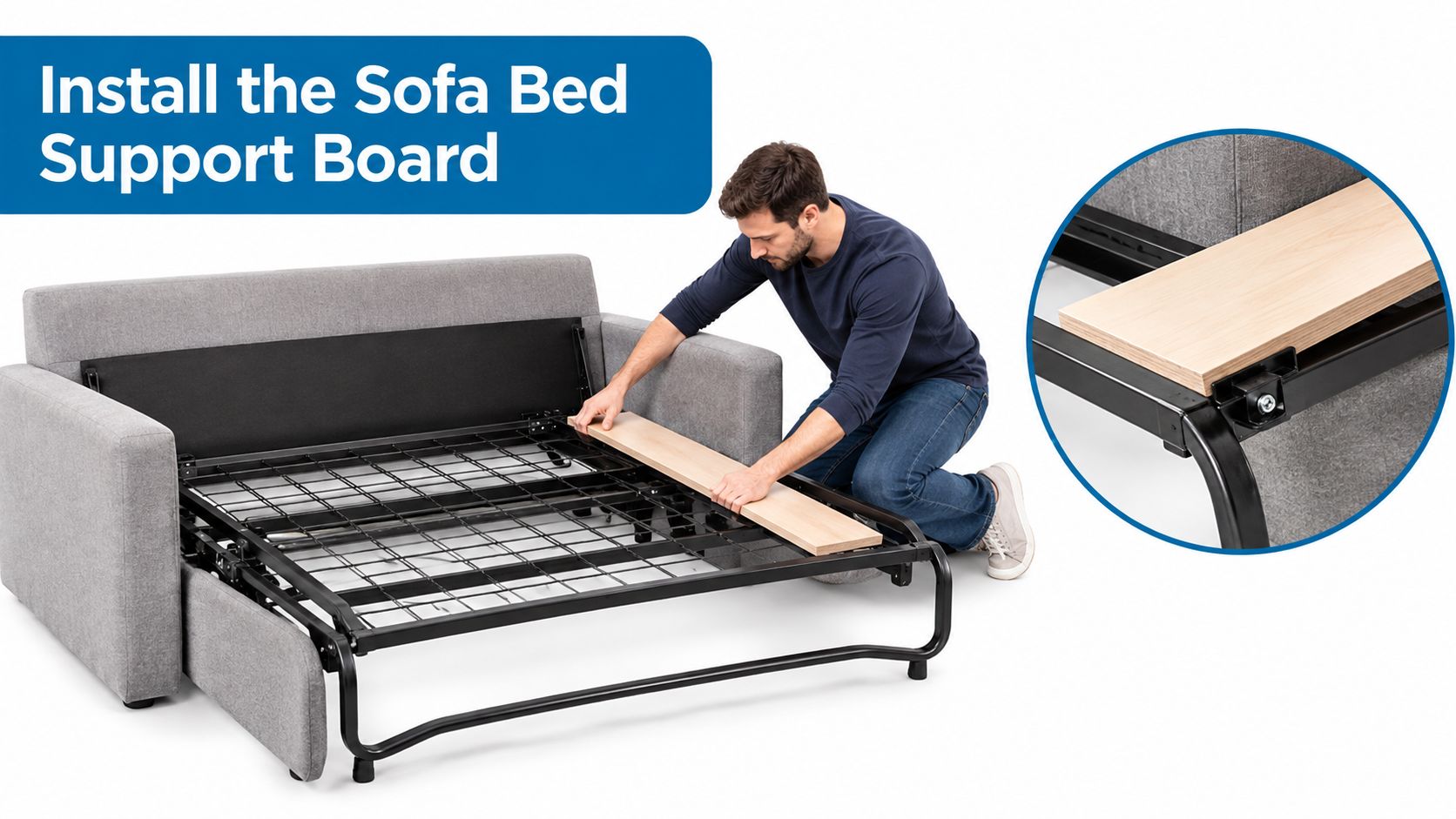
Installing a permanent board
- Open and strip the bed. Remove cushions and mattress so you can see the bars, deck, hinges, and frame rails. Vacuum debris from the support area because small objects can prevent a panel from sitting flat.
- Measure the load zone. Identify where the mattress drops or where a bar presses through. The board should bridge that area while resting on stable frame surfaces. It shouldn't sit directly on a moving hinge or interfere with legs and crossbars.
- Dry-fit the board. Place it without adhesive or screws. Check both the open and folded positions. The bed should move through its full range without catching, scraping, or requiring force.
- Choose the mounting method. Adhesive mounting can work when the surface is clean, dry, and suitable for it. Screw fastening provides a more fixed connection, but only use fasteners where they won't penetrate moving components or split the frame. Reinforce damaged wood before fastening.
- Secure without over-tightening. Tighten fasteners incrementally and keep the board flat. A warped panel or crushed frame rail can create uneven pressure under the mattress.
- Test under load. Reinstall the mattress, open and close the bed again, then lie across different areas. Listen for rubbing and check that the mattress doesn't slide toward an edge.
A permanent installation should feel invisible during sleep and uneventful during folding. If the bed closes less smoothly after mounting, remove the board and reassess its thickness, position, and contact points. Don't force the mechanism to prove that the installation is "close enough."
Installing a foldable board
- Open the sleeper completely and place the folded board over the identified support area.
- Unfold it slowly, keeping the panels aligned with the frame rather than the upholstery.
- Confirm that it sits between or across the appropriate metal bars without resting on a hinge or blocking the legs.
- Center the board from side to side and check that the main load zone is covered.
- Replace the mattress and make a final clearance test before adding bedding.
- Fold and store the board flat or in its intended folded position when the sofa returns to seating mode.
The most common sizing mistake is choosing a board that matches the mattress name but not the actual frame. A panel that's too short leaves the pressure zone exposed. One that's too thick can prevent smooth closure. Rounded or protected edges also matter because raw, sharp surfaces can catch upholstery during repeated setup.
For additional guidance on positioning support beneath a sleeper mattress, see this sofa bed support board installation guide. If you're also comparing how a board affects mattress comfort and foundation support, this resource on better sleep with a board offers useful context.
Meliusly sells both permanently installed sleeper sofa support boards and foldable options, including support systems intended to reduce contact with the bars beneath the mattress. Compare the frame dimensions, storage needs, and installation requirements before choosing one.
Maintaining Your Sofa Bed Long-Term
A repaired sofa bed needs a simple maintenance rhythm. Rotate the mattress regularly so the same sleeping zone doesn't carry every load, and inspect the hinges, locks, screws, webbing, and spring clips seasonally. Open and close the bed before guests arrive, even if it hasn't been used recently.
Watch for early warnings: a new center dip, a bar becoming noticeable, uneven locking, fresh creaking, cracked wood, or a board that no longer sits flat. These signs mean the load path has changed. Addressing them early is easier than waiting until the mattress develops a permanent hollow or the frame twists out of alignment.
A support board protects a usable mattress, but it can't compensate for a mechanism that keeps moving underneath it.
Repair remains a practical alternative to replacement in a substantial furniture service market. SquareTrade data summarized by Furniture Today reported that 82 million Americans spent an estimated $23.5 billion replacing and repairing damaged furniture, with an average repair cost of $287, while sofas represented 34% of reported damage incidents. Furniture Today's summary also links this demand to an established repair and reupholstery category. Those figures support a repair-first mindset, but not an endless-repair mindset. Replace the sofa bed when the frame is severely distorted, the mechanism can't lock safely, or repeated repairs cost more than a sound replacement.
For fabric tears, persistent odors, damaged cushions, or upholstery that needs specialist treatment, review these signs you need a pro for upholstery before attempting a cosmetic repair. A qualified technician can also help when springs are under tension or the frame requires welding.
Meliusly provides sofa support solutions, sleeper sofa support boards, foldable boards, bunkie boards, and bed slat supports for homeowners who want to extend furniture life instead of replacing usable pieces. Visit Meliusly to compare support options, check the fit for your sofa bed, and choose a practical next step after repairing the mechanism.
Share this post
- Tags: fix sagging couch, furniture support boards, sleeper sofa support, sofa bed maintenance, sofa bed repair