

Cushion Supports Chairs: A Complete Guide to Better Seating
Posted by Meliusly
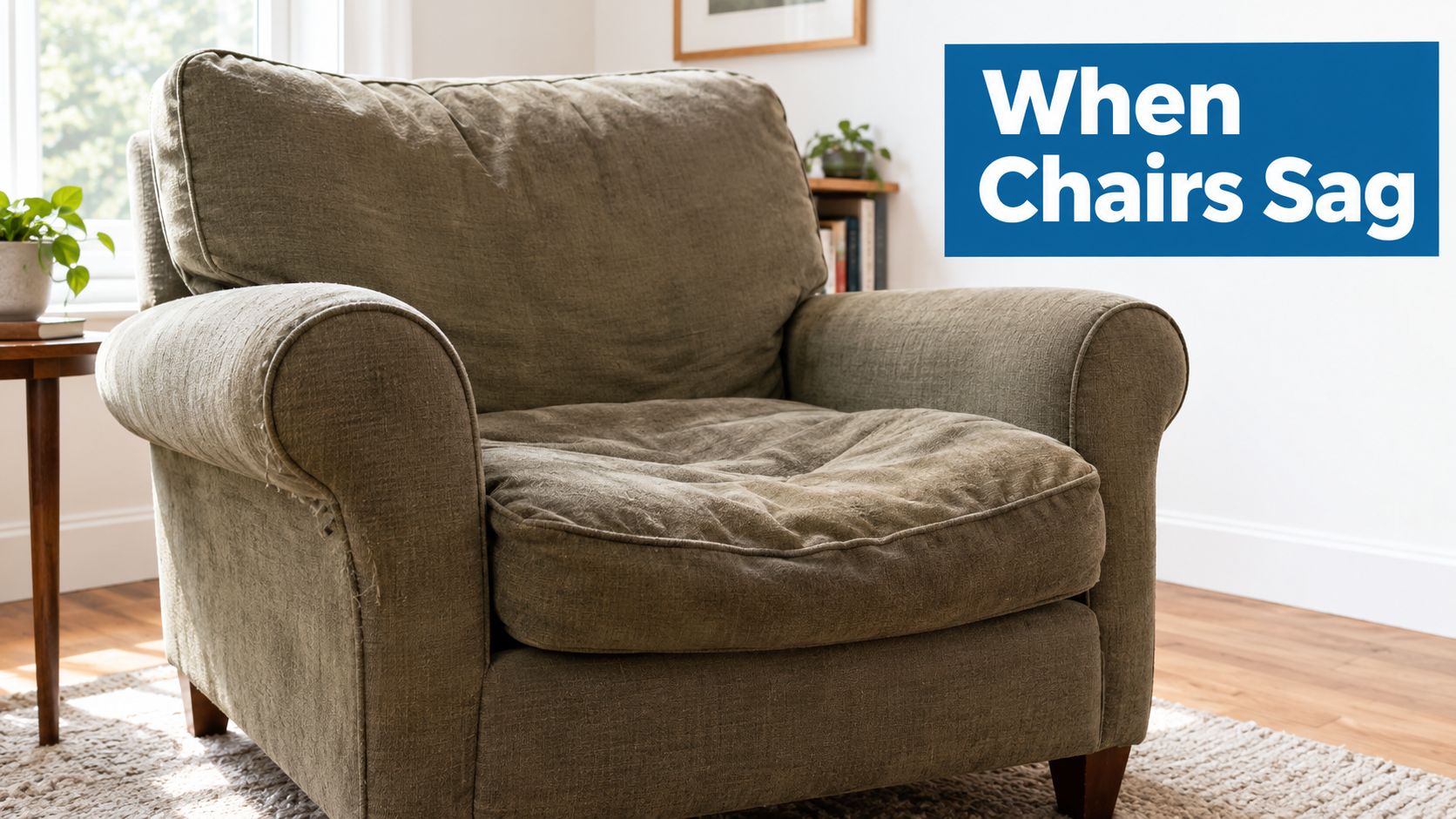
You settle into your favorite chair, and your hips drop into the hollow you've learned to avoid. You shift sideways, tuck a cushion behind your back, and wonder whether the chair needs replacing. Before you shop for another one, identify what's giving way: the padding, the foundation beneath it, or the structure holding everything together.
When a Favorite Chair Starts Letting You Down
A chair can look respectable while feeling completely different from the day you brought it home. The upholstery might be intact, but you feel a hard rail beneath your thighs or find yourself leaning toward an armrest. These are useful clues, not an automatic replacement order.
Consider an upholstered armchair with a removable cushion. If the cushion looks reasonably even when you lift it out, but the surface underneath dips noticeably, adding more padding probably won't address the main problem. You need to investigate the foundation before buying another cushion.
Start with observation, not a purchase
With the chair unoccupied, remove only the cushions designed to come off. Use a flashlight to examine the exposed seating area without pulling apart attached upholstery.
- Look for a hollow: Is the underlying platform lower in the middle, or does the cushion itself retain a depression?
- Check for asymmetry: Compare the sides for uneven height, detached supports, or displaced padding.
- Notice movement: Does the whole chair rock, or does only the seating surface flex?
- Record the discomfort: Feeling a front rail suggests a different problem from tipping toward an armrest.
Don't deliberately bounce on a questionable chair to see whether it holds. If you find a cracked member, separated joint, or unstable base, stop using it until someone qualified evaluates the damage.
Practical rule: Diagnose the part that moves before buying the part that feels soft.
For a homeowner, the useful question isn't whether the chair has become uncomfortable. It's whether the defect is local and repairable. A sound chair with a tired seating foundation presents a different decision from a chair whose legs or joints no longer hold it steady.
What Cushion Support Really Means
The cushion and the support have different jobs. The cushion is the yielding layer you sit on. The support is the foundation beneath it, which transfers seating loads toward the chair's structure.
Think of a padded bench. Its padding can feel soft while the platform underneath remains firm. Remove the platform, and the same padding can't perform the same job. In an upholstered chair, that foundation might be a seat panel, webbing, springs, or another construction hidden beneath fabric.
Traditional upholstery already separated these jobs
Furniture makers have long worked with both padding and foundations. A historical survey of American easy chairs records approximately 4-inch boxings in eighteenth-century English cushions, 5- or 6-inch boxings in Louis XV cushions, and stitched upholstery foundations in New York and Philadelphia by the 1790s.
Boxing means the cushion's side band, not a rigid box inside it. Those historical dimensions describe cushion construction, not a recommended thickness for your chair.
The practical lesson is the relationship between layers. Substantial padding didn't eliminate the need to retain stuffing and construct a dependable foundation. A modern support board follows that same basic principle when it provides a suitable base beneath a separate comfort layer.
| Part of the chair | Its job | What to investigate |
|---|---|---|
| Cushion | Yield beneath the body | Persistent flattening or uneven padding |
| Foundation | Carry the cushion and occupant's load | Sagging, detached webbing, or displaced springs |
| Frame and joints | Hold the assembly together | Cracks, separation, or movement |
| Cover | Contain and finish the upholstery | Bunching, tension, or concealed damage |
Searchers often combine these separate problems into a single phrase like “cushion supports chairs.” Naming the affected layer makes shopping more precise.
A support insert is a foundation intervention. It isn't replacement foam, and it isn't a repair for a broken frame. Likewise, new foam addresses a cushion problem, but it shouldn't be expected to bridge an unsupported opening.
How a Chair Distributes Your Weight
When you sit, your weight passes through the cushion and foundation into the frame. The frame transfers that load through the base or legs to the floor. Each connection along that route matters.
At the body's surface, pressure isn't uniform. The coccyx, sitting bones, outer hips, and backs of the thighs are useful areas to consider, although a chair shouldn't be expected to load them equally.
A 1984 study of wheelchair users assessed 66 participants on their own cushions and classified 79% as having effective cushions under its pressure criteria, provided persistent soft-tissue redness was absent. The thresholds below belong to that study, not to a universal household seating prescription.
Pressure Zones and What a Healthy Chair Should Do
| Pressure Zone | Location on the Body | Maximum Healthy Pressure | What Goes Wrong When Support Fails |
|---|---|---|---|
| Coccyx | Tailbone | Below 20 mmHg, study criterion | An unfavorable seat contour may concentrate contact |
| Ischial tuberosities | Sitting bones beneath the pelvis | Below 65 mmHg, study criterion | Excessive compression may leave too little cushioning |
| Greater trochanters | Outer hip regions | Below 70 mmHg, study criterion | Uneven seating may create localized loading |
| Posterior thighs | Backs of the thighs | Below 80 mmHg, study criterion | A poorly matched front edge may create concentrated contact |
The column heading doesn't make these universal safe limits. You can't establish pressure-injury safety by comparing a household chair with historical research thresholds, and you can't measure interface pressure by touch.
Why a hammock-shaped seat feels different
A deflected foundation changes the surface supporting the cushion. Instead of compressing over a reasonably consistent base, the padding follows a hollow. Depending on the person and construction, that can change pelvic position and create localized pressure.
The cover is part of the assembly, too. Watch for fabric pulled tightly across a depression or bunched beneath a cushion rather than assuming the visible surface reflects the underlying shape.
For fit from front to back, our seat-depth ergonomics guide offers a separate check. A level seat can still be unsuitable if its depth prevents the user from sitting comfortably against the backrest.
Dining Chairs, Recliners, and Armchairs Compared
A dining chair with a hard seat panel needs a different diagnosis from a recliner with moving hardware. Choose the intervention around the chair's construction, not just its name.
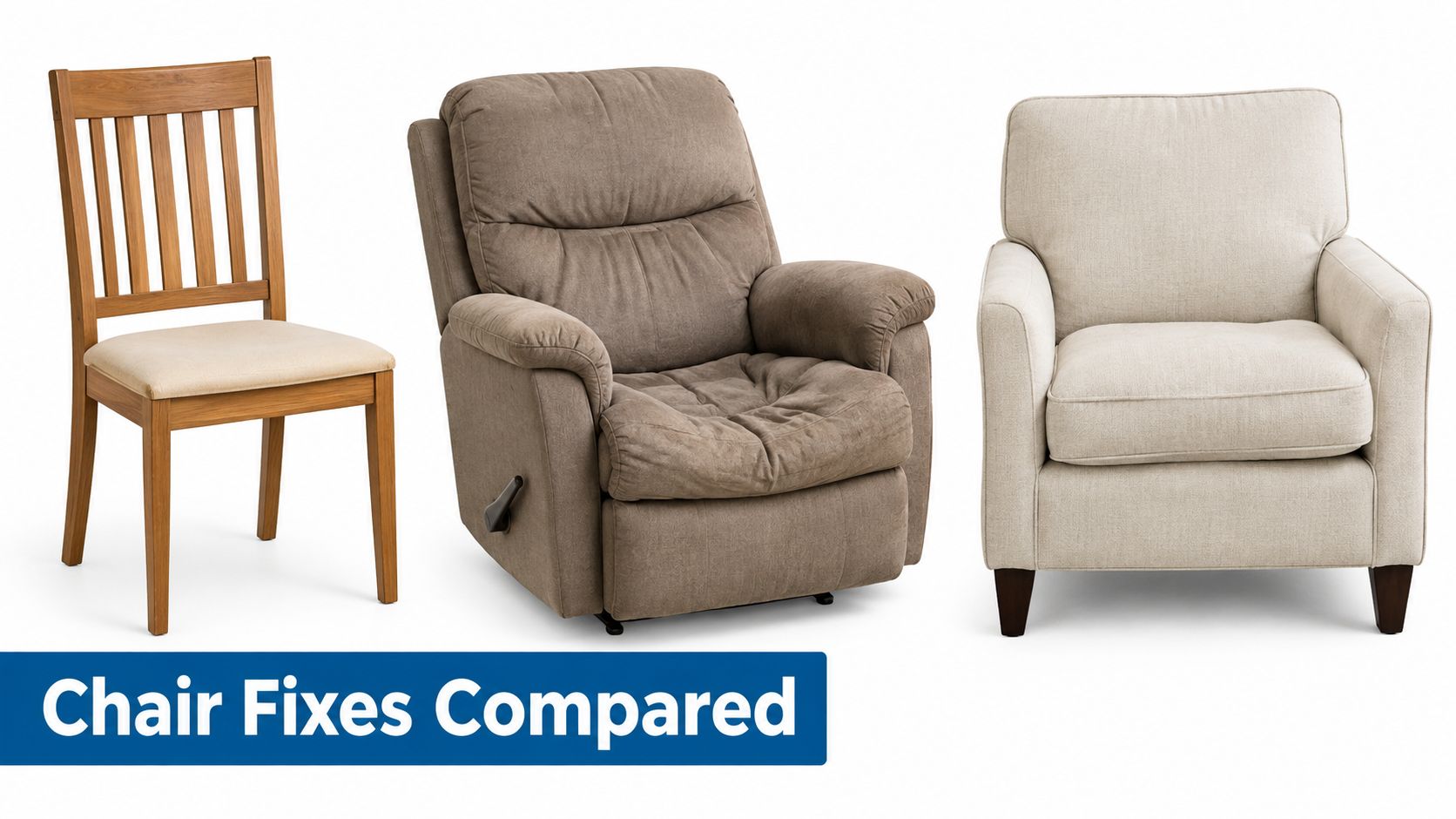
Dining chairs need a panel-versus-padding check
If the seat panel is intact and your discomfort comes from compressed foam, another rigid layer won't restore the padding. Cushion repair or reupholstery is the more relevant route. If the panel is damaged, investigate its repair or replacement rather than concealing it.
Where an insert is appropriate, check the resulting relationship to the table. Restoring a seat shouldn't leave your thighs pressed against the underside.
For households comparing replacement seating or operators evaluating dining-room options, Simply Hospitality's commercial dining chairs NZ guide provides a relevant shopping resource. Keep that comparison separate from diagnosing the chair you already own.
Recliners need clearance as well as support
A recliner's seat and moving mechanism must coexist. Don't assume a rectangular insert is compatible just because it fits beneath the cushion.
- Inspect the seating platform: Look for the actual source of the depression.
- Respect moving components: Keep any proposed support away from hinges, linkages, wiring, and the footrest mechanism.
- Treat leaning separately: A backrest or base that moves unevenly needs investigation beyond the cushion.
If you can't inspect the mechanism safely, use the manufacturer's guidance or a furniture technician.
Deep upholstered armchairs present another challenge: the cushion may look substantial while its webbed or sprung base has changed shape. A pilot study of pressure-relief cushions in the home environment found that the same cushion performed differently on a non-standard armchair surface than on a controlled test surface.
That finding supports a practical buying rule: evaluate the cushion on its actual chair. Performance on a showroom bench doesn't settle whether the combination works in your living room.
Choosing and Installing the Right Support
Begin with a tape measure, flashlight, and a sketch of the exposed seat. Measure the usable foundation, not the outside width between upholstered arms. Note tapering sides, raised rails, and any components that an insert must avoid.
Our chair cushion pad guide can help distinguish a comfort-layer purchase from an under-cushion support purchase. Make that distinction before comparing products.

Match the insert to its bearing surfaces
An insert needs suitable places to transfer its load. Covering a depression doesn't establish that the surrounding upholstery or rails can carry the resulting forces.
For a DIY plywood or MDF proposal, make a cardboard template before cutting anything. A template helps check shape, but it doesn't establish structural suitability. If you can't identify sound bearing surfaces or select an appropriate panel, ask an upholsterer rather than guessing.
- Measure the available footprint: Include the front and rear widths if the seat tapers.
- Check the edge treatment: A cut panel shouldn't present sharp corners or rough surfaces to upholstery.
- Avoid improvised fasteners: Don't drive screws or staples into concealed chair components.
- Verify product specifications: Compare dimensions, intended use, installation requirements, and return terms before ordering.
A purpose-made support board is an alternative to cutting a panel yourself. However, don't assume that a sofa support, sleeper sofa board, or bed-foundation component is interchangeable with a chair insert. Each must suit its intended installation.
Test the assembled chair, not just the board
Reinstall the cushion without trapping loose fabric. Check that the insert lies as intended, doesn't project beyond its support area, and doesn't shift during ordinary use. For a recliner, verify clearance according to the furniture and support manufacturers' instructions before anyone sits down.
Then assess seated height, foot contact, table clearance, and ease of standing. Don't select cushion material by density or thickness alone.
A 2025 ergonomic-cushion study involving 40 male participants used pressure mapping to validate a viscoelastic-foam design with increased contact area and more uniform pressure distribution. That supports evaluating geometry, material, and loaded shape together, not treating extra thickness as a guaranteed improvement.
When Firmer Support Is Not the Answer
A chair can feel more solid without becoming more suitable for its user. That distinction matters especially for people with reduced sensation, limited mobility, or a history of pressure injuries.
Current clinical seating guidance calls for selection based on pressure-redistribution needs, body size and weight distribution, posture, asymmetry, mobility, and personal care goals. It also warns that replacing a worn cushion with a new version of the same model can sometimes increase pressure.
That's a reason to assess function rather than replace on age alone. It's also a reason not to treat a furniture support board as a medical seating product.
A stable foundation and effective pressure redistribution are different requirements. Someone may need both.
Separate a furniture defect from a seating need
A visible dip beneath an unoccupied cushion points toward a furniture problem. Persistent discomfort despite an apparently sound chair raises a different question: does this seating arrangement suit the person?
Home inspection can help identify damaged furniture, but it can't diagnose the cause of pain or establish that skin is protected. For an older adult or disabled user who depends on a particular seat, involve an occupational therapist, seating specialist, or another appropriate clinician before changing the setup.
- Persistent numbness: Stop treating the change as something the user needs to get used to.
- Skin discoloration: Seek clinical advice, especially when discoloration persists or the person has reduced sensation.
- New pain or sliding: Reassess the arrangement rather than adding another layer.
- Harder standing or transfers: Don't trade easier sitting for a less manageable exit.
Make changes cautiously
For someone without identified clinical seating risks, a cautious trial still makes sense. Compare ordinary activities before and after the change: sitting upright, reaching a side table, repositioning, and standing.
For higher-risk users, follow the clinician's advice on testing, posture checks, movement, and skin monitoring. Don't rely on comfort alone when the person may not reliably feel excessive pressure.
The right amount of firmness is individual. A board may address foundation deflection while leaving a separate pressure-management need unresolved.
Repair, Replace, or Reverse a Sagging Chair
Choose the least extensive intervention that leaves the chair structurally sound and appropriate for its user. That might mean a removable insert, foundation repair, reupholstery, or replacement. Price matters, but it shouldn't be the only deciding factor.
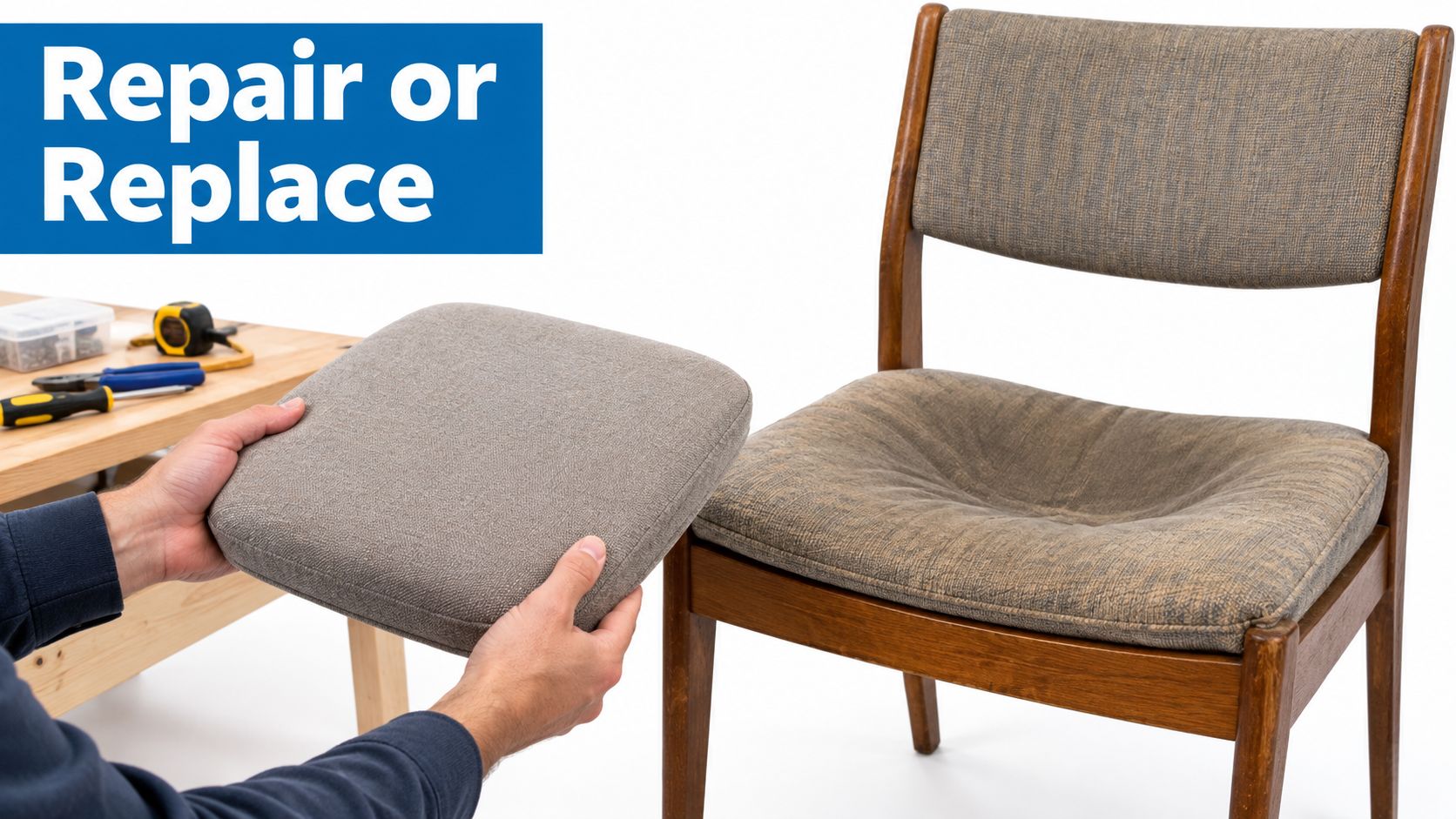
Use condition to choose the route
| Route | When to consider it | What must be resolved |
|---|---|---|
| Reversible support | A compatible foundation problem in an otherwise sound chair | Fit, secure positioning, and user suitability |
| Structural repair | Repairable joints, rails, or foundation attachments | Competent assessment and repair |
| Reupholstery | A worthwhile structure with worn padding or upholstery | Scope, cost, and remaining condition |
| Replacement | Damage or unsuitable geometry makes restoration impractical | Safe removal and a suitable replacement |
Expected remaining service life is a judgment, not a promise. Ask an upholsterer what would remain worn after the proposed repair. Keeping a frame while replacing failed components can avoid discarding the entire chair, but preserving unsafe furniture isn't a responsible waste-saving measure.
Our DIY furniture repair guide can help you separate approachable maintenance from work requiring professional skill.
Reversible fixes matter for renters
The 2025 National Renter Survey estimates that 10.2 million adult renters need or live with someone who needs accessibility features; at least 65% of renters needing mobility features lack them, and 43.7% report that landlords are typically unwilling to add accessibility features when asked.
A removable furniture intervention may be useful within those constraints, but it isn't a substitute for needed home accessibility features. In furnished accommodation, obtain permission before altering supplied furniture. Keep original components, avoid permanent fasteners, and check return-to-original-condition requirements.
Also verify that the modified chair remains steady, leaves necessary floor and mechanism clearance, and can still be moved through the doorway or stored as needed.
Before keeping the fix: Check ordinary entry and exit, not just how the chair feels once you're settled.
Durability involves more than surviving a brief sit. An Institute of Industrial and Systems Engineers commercial-seating summary describes 100,000 seat-center loading cycles, followed by 20,000 cycles at each front corner. These commercial tests aren't a home inspection procedure, but they illustrate why repeated loading and edge condition deserve attention.
A support insert doesn't certify the chair or increase its original load rating. Keep it only when the complete assembly remains suitable, not merely because the middle feels firmer.
Meliusly has served over 400,000 customers with furniture support solutions, including chair and sofa supports, sleeper sofa support boards, bunkie boards, and bed slats. Visit Meliusly to compare the appropriate support options with your chair's measurements and construction, and ask for help checking compatibility before you buy.