

How to Make Couch Cushions Firm
Posted by Meliusly
You sit down with a coffee, expecting the corner seat that used to hold you up, and instead you sink until your knees are higher than your hips. Getting up takes a push off the armrest. The cushion looks fine after you fluff it, but five minutes later it's flat again. That pattern is exactly where wasted money comes from, because you guess at how to make couch cushions firm instead of checking which layer failed.
Why Couch Cushions Lose Their Firmness
A sagging seat usually has one of two causes. The foam inside the cushion has degraded, or the foundation underneath it is yielding. Those problems feel similar when you're sitting, but they need completely different repairs.
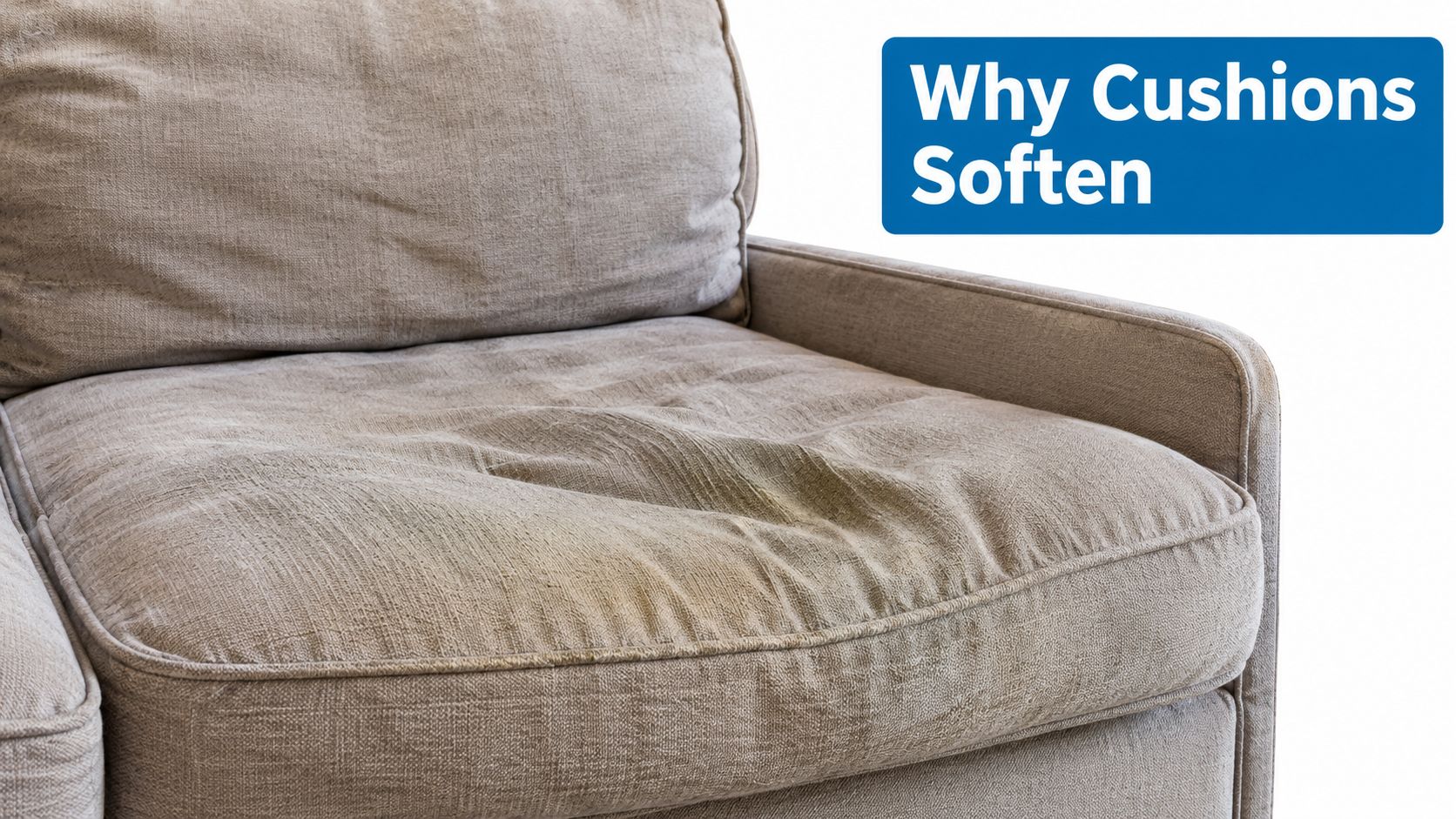
Consider a common case. A homeowner orders expensive high density foam, stuffs it into the cover, and the seat still feels soft. The new foam isn't defective. The buyer chose the wrong property.
Density Is Not Firmness
Density and indentation force are separate foam properties. Density measures the mass of foam in a given volume and primarily predicts durability, and it doesn't by itself determine how firm a cushion feels, while firmness is evaluated with an Indentation Load Deflection (ILD) test that records the force required to compress a sample by 25%, as explained in Make Bespoke's upholstery foam guidance. That same guidance places everyday sofa seat cushions broadly around 35 to 50 ILD, with 36 to 45 ILD characterized as firm and suitable for firm seat bases or foam beneath a softer top layer.
In practical terms, you can buy a heavy, long lasting foam that still compresses easily. You'll get service life without support. That's the most expensive misunderstanding in cushion repair.
Practical rule: Choose density for how long the foam should last. Choose ILD for how firm it should feel.
The Base Does Half the Work
Foam only works if the deck, springs, or webbing below it holds position. When that foundation stretches, even a sound cushion drops into the gap and feels tired. People then blame the insert, replace it, and watch the new insert sink in the same spot.
A lasting fix addresses the weakest layer first. If foam has permanently lost thickness, replacement makes sense. If the platform gives way, you need support underneath. Mixing up those two jobs is why many DIY repairs disappoint within weeks.
Diagnose the Problem Before You Fix It
Don't order anything until you've run four simple tests. They take minutes, they don't require dismantling the sofa, and they separate a cushion failure from a base failure with surprising reliability.
Test the Cushion Off the Sofa
Place the suspect cushion on a hard floor and sit on it. A cushion that feels soft, stays compressed after someone stands up, or has lost its loft points toward degraded foam or fiber filling, while a hammock shaped seat can indicate stretched or broken webbing beneath the cushions, according to Elystra Living's guide to sofa sagging causes. If the cushion feels supportive on the floor but collapses back on the sofa, the insert probably isn't your main problem.
Next, swap positions. Move the bad cushion to a firmer seat and move a good cushion into the sagging spot.
- Depression follows the cushion: The insert has compacted or the filling has shifted. Focus inside the cover.
- Depression stays in the same seat: The deck, springs, or webbing under that position has weakened.
- Both seats sink the same way: Compare wear across the sofa. Uniform softness often means general foam fatigue rather than one broken support.
Inspect Underneath Without Tearing Anything Apart
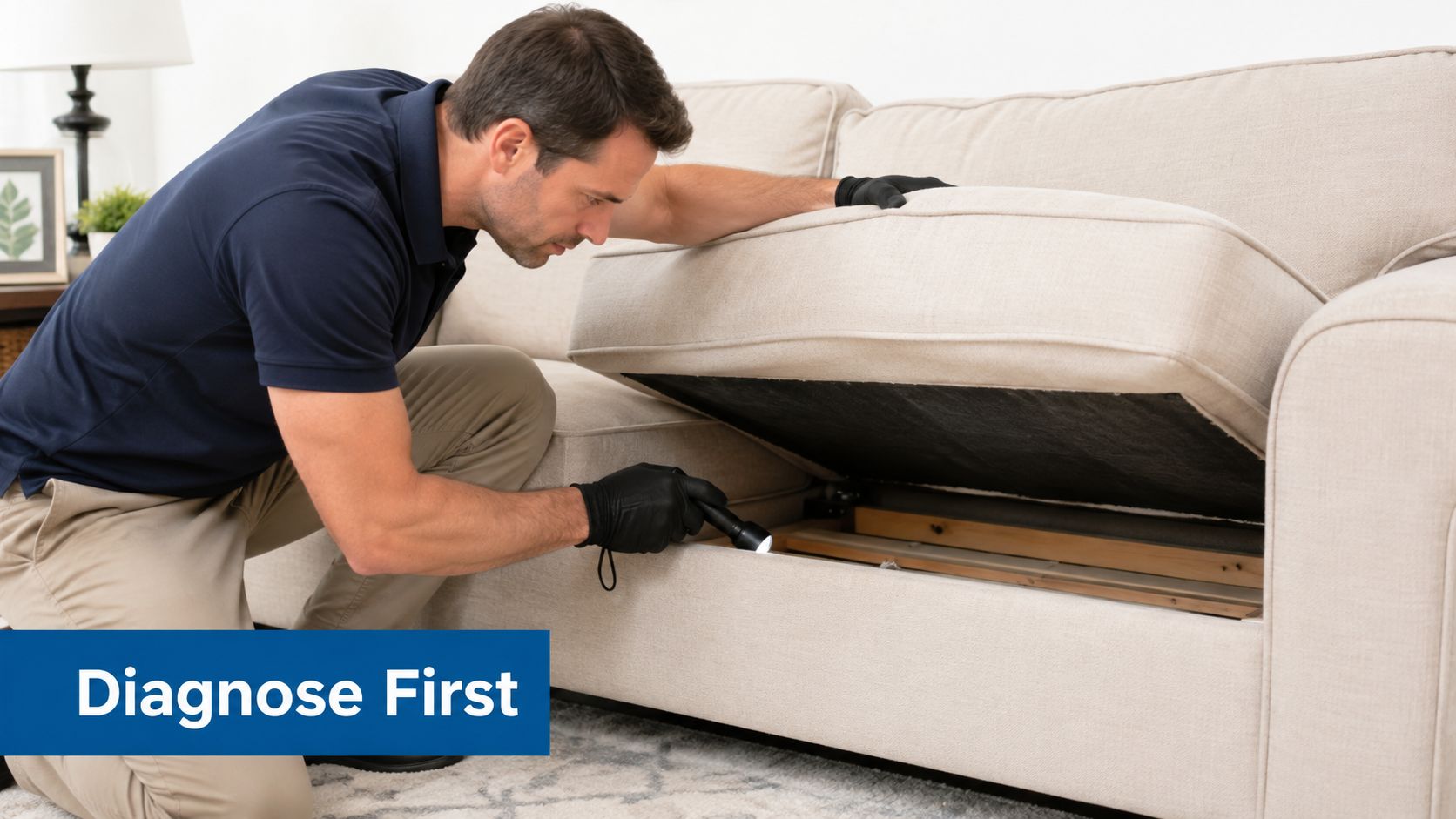
Remove all seat cushions and press firmly across the exposed deck with both hands. You're feeling for consistency. A healthy deck resists evenly. A failing section drops noticeably, feels springy in a loose way, or lets you feel gaps between supports.
Then look under the sofa if access allows. Check for stretched webbing, detached springs, or a visibly bowed platform. You don't need to remove the dust cover for an initial diagnosis. Uneven deck height and the swap test usually tell you enough.
Adding denser foam over a failing base can feel firmer for a short time, but it leaves the structural problem in place and often creates uneven wear on the new insert.
That distinction also protects renters. If the base is weak but the frame is sound, a reversible support under the cushions can help without upholstery work. If springs are broken or webbing has torn, that's a structural repair, and stuffing more material into the cushion won't solve it safely.
Three Ways to Make Cushions Firmer
Once you know which layer failed, three approaches cover most sofas. They aren't interchangeable. Each one fixes a specific failure and does little for the others.
Support Under the Cushion
A support board or rigid layer sits between the cushion and the deck. It bridges weak springs or stretched webbing so the cushion has a flat, even platform. Installation is fast and reversible, which makes it useful for renters and for testing whether base support solves the sink.
It won't restore a crushed foam core. If the insert is flat on the floor, a board underneath only gives you a flat cushion on a hard surface. One example in this category is the Meliusly couch cushion support board, which slides under existing seat cushions to create a more even foundation. Plywood cut to size works on the same principle, though it needs sanded edges and careful fitting.
Foam Replacement Inside the Cushion
Replacing the insert is the correct move when foam has permanently compressed, crumbled, or lost rebound. You remove the cover, measure the old core, and install new upholstery foam matched by density and ILD. It's more work than sliding in a board, but it's the only option that restores the cushion itself.
Adjusting Loose Filling
Fiber filled cushions lose loft when filling clumps or migrates. Adding polyester fill, redistributing bunched material, or replacing flattened batting can improve fullness and surface feel. This works best when the cushion still has structure but looks wrinkled or hollow. It won't add real support to a collapsed foam core, and overstuffing can strain seams and zippers.
| Approach | Best For | What It Fixes | Effort |
|---|---|---|---|
| Support board under cushion | Weak deck, springs, or webbing | Uneven sink and hammock effect | Low, reversible |
| Foam replacement | Permanently compressed insert | Lost rebound and thickness | Moderate, measuring required |
| Filling adjustment | Fiber cushions with lost loft | Wrinkles, clumping, hollow feel | Low to moderate |
Match the method to your floor test. If the cushion passed on the floor, start underneath it. If it failed on the floor, start inside it. Choosing in that order is the simplest way to make couch cushions firm without buying the wrong materials first.
Replace the Foam for a Lasting Fix
Foam replacement rewards careful measuring more than force. Rush the dimensions and you'll get wrinkles, strained seams, or a cushion that won't sit flat in the frame.
Measure Before You Order
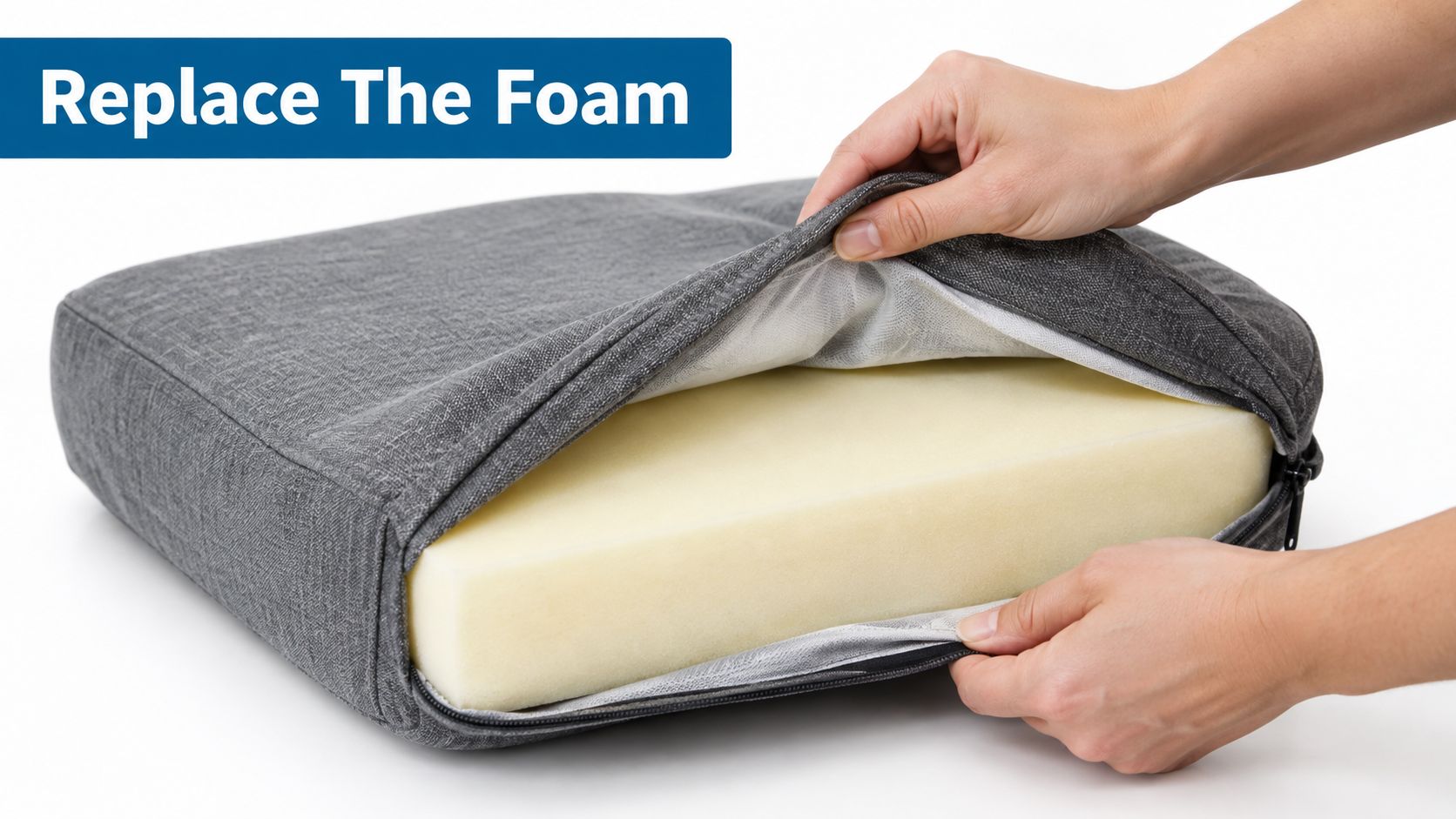
Remove the cover and measure the existing insert in its relaxed state. Check width, depth, and thickness, then inspect the shell, zipper, and seams for distortion. If the cover has stretched or the zipper is failing, new foam alone won't produce a clean result.
Replace collapsed foam with upholstery grade foam at approximately 1.8 to 2.5 lb/ft³ density and select firmness independently using ILD, with about 28 to 35 ILD as a practical starting range for everyday seating and roughly 36 to 45 ILD for a noticeably firmer seat, as detailed in Willis Furniture's custom upholstery foam guidance. Cut the replacement slightly oversize, typically around 1/2 inch in width and depth for a snug fit, while preserving the original thickness unless the cover and frame can accommodate a change.
For anyone comparing core materials and wrap options in more depth, this guide to couch padding for cushions covers how padding choices affect feel and fit.
Wrap It Before You Insert It
Wrap the new core in a thin layer of polyester or Dacron batting before sliding it into the cover. The wrap fills small wrinkles, softens sharp foam edges, and reduces friction that can wear the fabric from inside. Skipping it often leaves a boxy, creased look even when the foam dimensions are right.
- Compress the foam to insert it: Fold or roll it gently rather than forcing corners through the zipper opening.
- Work the corners into place: Reach inside and seat each corner fully so the cushion doesn't twist.
- Let it settle before judging: Sit on it for a short period, then recheck for shifted batting or uneven edges.
Pitfall to avoid: A label that says high density tells you about durability, not sitting firmness. If the ILD is low, the cushion will still feel soft.
If you want a firmer result than the original, raise the ILD in a controlled way instead of jumping to the hardest foam available. A seat that's too rigid concentrates pressure and gets uncomfortable quickly, even though it technically solves the sag.
Reinforce the Sofa Base for Extra Support
When your swap test shows the sag stays in the seat position, work on the foundation. The goal is simple. Give the cushion a level platform that doesn't drop under load.
Add a Support Layer Under the Cushions
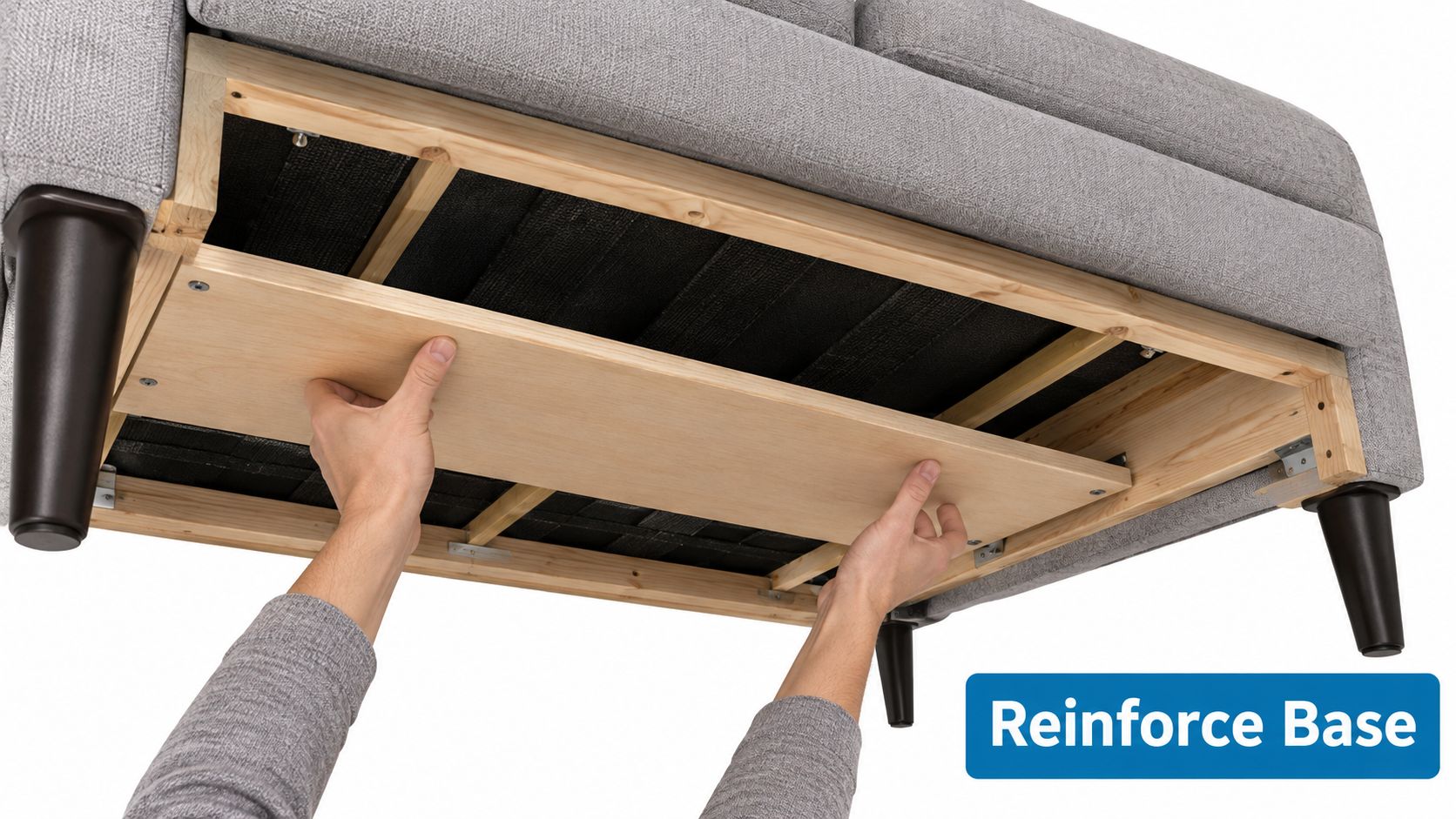
Remove the cushions, clean the deck, and measure the seating area inside the frame. Measure the deck itself, not just the cushion, because a panel that's too small can shift and one that's forced in can sit unevenly. Center the support, replace the cushions, and sit in every position to check for ridges or tilt.
Foam can provide structure, resilience, and recovery after loading, while the deck, springs, webbing, or other foundation beneath it determines how much the cushion sinks, a relationship described in Britannica's history of upholstery and covers. That's why a properly sized support layer works when the foundation is yielding, and why it should preserve enough cushioning above it so the seat doesn't become uncomfortably rigid.
If you're evaluating board styles and placement, this overview of support boards for sofas explains how different designs fit standard sofas and sectionals.
Know When Webbing or Springs Need Real Repair
A support board bridges a weak deck. It doesn't reattach a broken spring or retension torn webbing. If you can see damaged webbing, hear a loose spring shift, or feel a sharp drop in one narrow area, a structural repair may be the safer path.
- Reversible support is enough: The frame is sound, the deck is generally soft, and the seat feels even once a panel is installed.
- Call a professional: Springs are detached or poking through, webbing is torn, or the frame creaks and twists under weight.
- For renters and hosts: A removable board improves firmness without altering the sofa, which keeps the fix non destructive.
Don't screw or staple anything into a frame you haven't inspected. Fastening into cracked wood or a sleeper mechanism creates a bigger problem than sagging.
Choose the Right Fix for Your Situation
Use your test results as a decision path rather than a shopping list. Flat on the floor means the insert needs work. Supportive on the floor but sinking on the sofa means the base needs work. A visible hammock across the deck means you should not expect filling adjustments to hold.
Firm Does Not Mean Uniformly Hard
Comfort also depends on cushion geometry. Cornell ergonomics guidance recommends a cushion that is firmer and thicker toward the back while becoming less firm and thinner toward the front, and it describes a layered construction using a softer top layer at roughly 25% ILD over a firmer bottom layer at roughly 65% ILD, with a firmness ratio greater than 2.6 associated with better support quality in Cornell's sitting ergonomics notes.
That layered logic explains a common mistake. Putting the hardest foam on top creates pressure points. A firm base with a thinner, softer comfort layer usually feels supportive and still tolerable for long sitting. Keep the original dimensions through any modification so the cover fits and the cushion sits correctly in the frame.
The best result is rarely the hardest seat you can build. It's a stable base, a resilient core, and a surface layer that distributes pressure.
The same diagnose first thinking applies to other household repairs. Knowing when to fix power tools instead of replacing them, for example, depends on identifying whether the fault is a worn consumable, a repairable component, or a core failure. Sofas reward that same discipline. Spend on the failed layer, not on the most visible symptom.
Repair Instead of Replace and Save Money
A sofa with a sound frame and decent upholstery is rarely finished just because the seat has gone soft. In most cases, the failure is limited to foam, filling, webbing, or deck support, and each of those can be addressed for far less effort than replacing the whole piece.
Repair also keeps usable furniture out of disposal and preserves a size and style that already fits your room. The savings only hold if you diagnose correctly, though. Buying foam for a base problem, or a board for a crushed insert, turns a smart repair into two purchases.
Start with the floor test, then commit. That's how to make couch cushions firm in a way that lasts, and this DIY sofa repair guide is a useful next step if your inspection reveals more than one worn component. Fix the weakest layer, preserve the cushion dimensions, and you'll usually get a seat that feels supportive again without starting over.
If your diagnosis points to a weak sofa base rather than a worn out insert, Meliusly offers sofa supports, sleeper sofa support boards, bunkie boards, and bed slats designed to restore a firmer, more even foundation under your existing cushions. Visit us to find a reversible support sized for your sofa and extend the life of the furniture you already own instead of replacing it.