

Types of Sleeper Sofas and Support Fixes
Posted by Meliusly
You pull the cushions off the sleeper sofa, unfold the bed, and discover that your guest is about to sleep directly on a metal bar. The sofa still looks fine from the outside, but the mattress feels uneven, the center sags, and closing the frame takes more effort than it used to.
That experience is common because the mechanism underneath a sleeper sofa controls its comfort and aging pattern. A pull-out bed, futon, click-clack sofa, sectional sleeper, and hidden pop-up design may look similar in a showroom, but each transfers weight differently and develops different problems. If you understand the structure, you can choose the right type, diagnose the actual failure, and often restore comfort without replacing the entire piece.
Understanding Sleeper Sofa Mechanisms and History
A sleeper sofa's history helps explain why its internal parts matter so much. The modern category didn't evolve as one continuous design. A U.S. patent for a folding bed was filed by Leonard C. Bailey on July 18, 1899, followed by Rudolf Coopersmith's Davenport bed patent in 1905. The patent for the modern sofa bed was issued in 1925, and the Castro convertible appeared as another important milestone in 1931. These developments place the familiar pull-out sleeper in the 20th-century history of convertible furniture, rather than in the tradition of centuries-old bedding, as outlined in this history of sofa beds.
A pull-out sleeper hides a mattress and metal frame inside the sofa shell. A futon-style sofa uses a folding mattress-and-frame arrangement, so the cushions themselves often serve as both seating and bedding. Those aren't cosmetic differences. They determine where weight travels, how much clearance the furniture needs, and which components wear first.
Why the outside can look healthy
Suppose a guest lies down and complains about pressure across the middle of the bed. The upholstery may still be clean and the wooden arms may feel solid. Inside, however, a deck bar may have bent slightly, a hinge may no longer sit squarely, or the mattress may have softened where it repeatedly folds.
On a fold-down design, the hinge line and center seam take a larger role in the sleeping surface. On a pull-out model, the steel bed deck carries the load after the frame leaves the sofa cavity. The visible sofa shell isn't always the part that needs repair.
Repair principle: Identify the conversion mechanism before buying a replacement mattress, support board, or new sofa.
That diagnosis prevents an expensive mismatch. A rigid board that works beneath a pull-out mattress may not suit a click-clack cushion system, while a thicker replacement mattress can stop a folding frame from closing. The practical difference between a sofa bed and a sleeper sofa is also worth understanding before shopping, and this sleeper sofa versus sofa bed comparison explains the distinction in everyday terms.
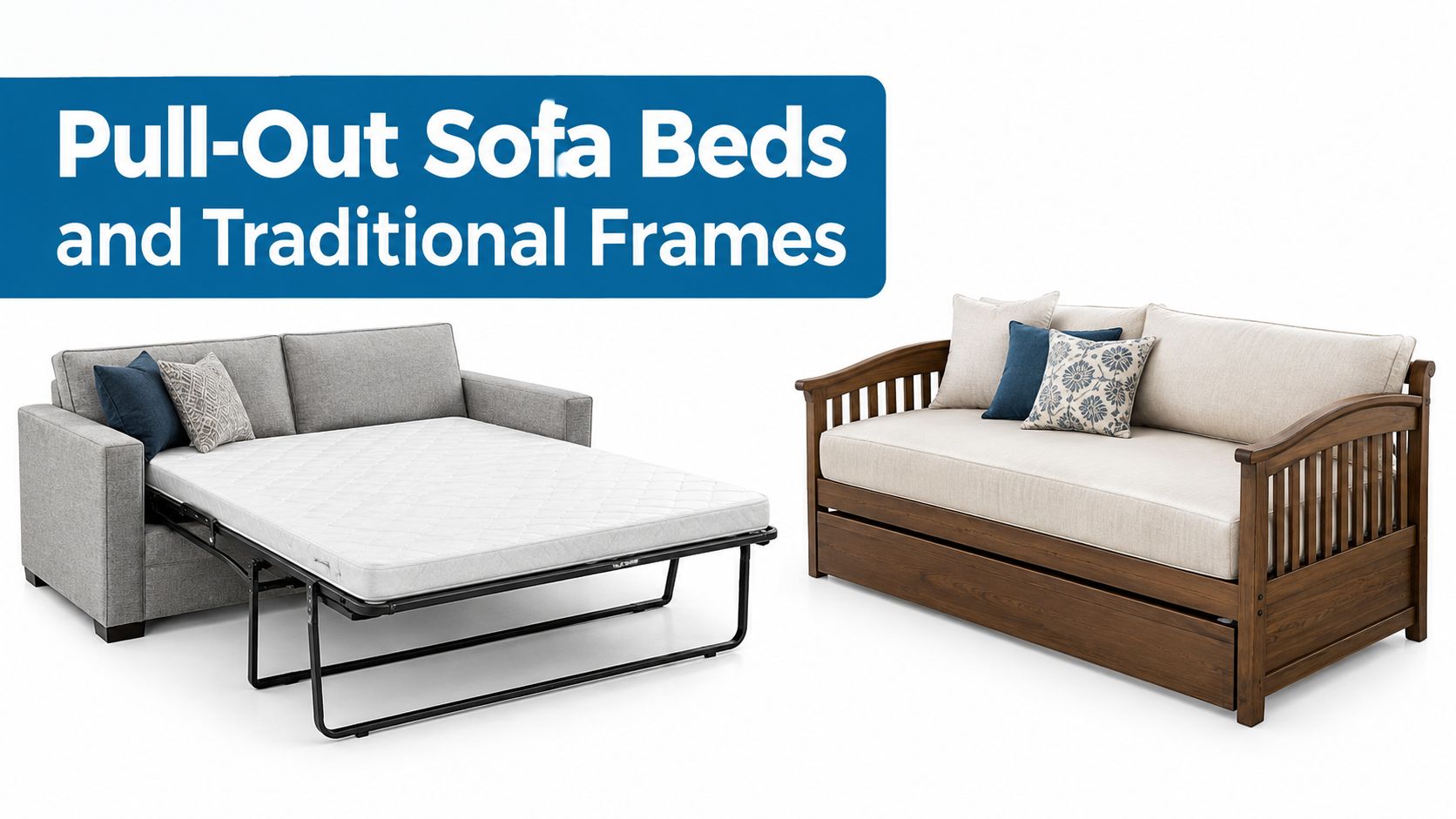
Pull-Out Sofa Beds and Traditional Frames
The traditional pull-out sofa remains the most bed-like option because it stores a separate mattress inside the couch. Remove the seat cushions, lift the handle, and the folded metal frame rolls or unfolds forward. The finished sleeping surface is typically a full or queen size and is usually around 72 inches long, according to this sleeper sofa construction guide.
How the load moves
In sofa mode, your weight travels through the seat cushions, springs or webbing, the sofa rails, and the main frame. Once you pull the bed out, that path changes. The sleeper mechanism extends beyond the upholstered base, and the steel support deck and folding legs become the primary load-bearing structure.
That shift explains why the mattress and mechanism can fail while the sofa shell remains intact. Repeated opening, closing, and loading can bend deck bars, loosen hinge points, or fatigue the frame joints. The outer upholstery doesn't carry the same concentrated loads, so it may show little evidence of the problem.
Common symptoms include:
- A bar-shaped pressure point: A bent deck bar or insufficient padding can press through the mattress.
- A sagging center: The mattress may have softened, or the deck may no longer support it evenly.
- Uneven legs: A folding leg that doesn't lock or contact the floor correctly can tilt the sleeping surface.
- Rough conversion: Misalignment, debris, or a bent component can make the frame drag against the sofa cavity.
- A sofa that won't close: An over-thick replacement mattress, shifted bedding, or distorted frame can block the folding path.
A sleeper sofa support board can help when the mattress is usable but the deck feels harsh or flexible. Positioned between the opened frame and mattress, it spreads pressure across a broader surface and reduces direct contact with individual bars. It won't straighten a severely bent mechanism or repair a broken hinge, but it can address the uncomfortable interface that guests feel.
What works and what doesn't
A board should fit the open frame without interfering with folding legs, hinges, or the sofa's closing movement. Before installing one, remove bedding, inspect the deck, and cycle the mechanism slowly. Look for sharp edges, loose fasteners, bent rails, and legs that fail to sit flat.
Don't treat a support board as a cure for every mechanical fault. If the frame is twisted, the locking hardware is damaged, or the mattress is too large for the cavity, repair or correct that issue first. For a mattress that feels hard against the frame but still folds correctly, a purpose-designed support layer is a more targeted fix than replacing an otherwise serviceable sofa. This guide on making a pull-out couch more comfortable covers the comfort problem from that practical angle.
Futons and Click-Clack Convertible Designs
Futons follow a different path from pull-out sleepers. Japanese futons originated as traditional bedding placed on tatami mats and rolled away during the day. One consumer history places that origin over 400 years ago, while Western futon furniture emerged in the United States in the early 1970s or became prominent around 1980. William Brouwer is credited with a futon sofa-bed adaptation based on a folding frame in 1982, according to this guide to futon origins.
Western futon sofas use a folding mattress-and-frame system. They don't hide a separate bed inside a deep sofa base. That makes them lighter, more approachable in compact rooms, and generally easier to convert, but it also means the sleeping material spends its life doing two jobs.
Futons versus click-clacks
A classic futon often has a thick, flexible cushion that folds as the frame changes position. A click-clack sofa uses a hinged backrest that drops flat beside the seat. Both designs create a platform without deploying a separate mattress, but their comfort depends almost entirely on the cushion construction and support beneath it.
| Design | Main advantage | Main weakness |
|---|---|---|
| Futon-style sofa | Compact, flexible, and straightforward to convert | The seating cushion also absorbs sleeping wear |
| Click-clack sofa | Fast conversion and efficient use of floor space | The hinge line can create a hard or uneven center |
| Pull-out sleeper | Separate mattress and a more conventional bed surface | More hardware, weight, and potential mechanical failure |
The center seam is the critical inspection point. When the sofa is new, the cushions may bridge that fold comfortably. With use, foam can compress near the hinge, the fabric can loosen, and the support beneath the seam can become less even. A guest then feels a ridge, trough, or hard line exactly where the body needs consistent support.
Managing the fold
Start by opening the sofa fully and checking whether the two cushion sections meet at the same height. Press across the seam, not just at the ends. If the center drops noticeably, the problem may be cushion fatigue or a weak support surface rather than the hinge itself.
A thin, flexible comfort layer can reduce the sensation of the seam, but avoid adding so much material that the sofa cannot return to its seating position. For renters, a removable solution is usually preferable because it doesn't require drilling into the frame. For a heavily used unit, inspect the hinge fasteners and frame rails before adding padding. A softer topper won't correct a loose hinge or a sagging structural member.
Futons work well when floor space is limited and overnight use is occasional. They make less sense when guests stay frequently, when sleepers need a separate mattress feel, or when the sofa is already showing deep compression at the fold. Choose the design for its mechanism, not just its lighter appearance.
Sectional Sleepers and Hidden Mechanisms
A sectional sleeper combines a larger seating layout with a bed mechanism, often placing the sleeper in the main sofa section or using a chaise that extends into the sleeping area. The extra modules create useful seating and storage, but they also introduce more places for alignment problems to develop.
The first mistake is measuring only the sofa's closed footprint. A sectional can fit comfortably against a wall and still block a walkway, cabinet, or door when the bed opens. A chaise extension may need a clear path across the room, while a pop-up or hidden platform can require vertical clearance around cushions, shelving, and nearby tables.
Measure the deployment zone
Use a simple sequence before ordering a replacement part or moving the furniture:
- Measure the closed sectional. Record width, depth, height, chaise position, and the location of walls or obstacles.
- Open the sleeper completely. Don't estimate from the mattress label. Measure the actual space occupied by the deployed frame.
- Check the floor contact. Confirm that every folding leg or support point reaches a stable surface.
- Inspect alignment. The extended frame should sit squarely with the sofa body, not pull sideways toward the chaise or wall.
- Photograph the open mechanism. Images of the hinges, rails, and support points make it easier to match a board or replacement mattress later.
A hidden pop-up mechanism may look simpler because the bed rises from within the sofa or slides from a concealed compartment. In practice, it still depends on accurate clearances. A platform that rises into a low shelf, lamp, or wall-mounted fixture can be damaged even when the mattress itself fits.
Measure replacement parts correctly
When sizing a replacement sleeper mattress or support board, measure the frame at both the head and foot. If those widths differ, use the smaller measurement so the component clears the tightest point when the mechanism closes. This installation guidance appears in sleeper sofa replacement measurement instructions.
Measure the mechanism, not just the old mattress. Upholstery can compress, and an old mattress may have changed shape. The frame determines whether the replacement will open and close safely.
Sectionals also distribute weight unevenly when one person sleeps across the main section and another sits or leans on the chaise. Watch for a frame that rocks, a connector that separates, or a seat deck that dips near the transition between modules. A support solution should reinforce the affected area without preventing the sectional from separating for cleaning, moving, or conversion.
Mattress Thickness and Support Trade-Offs
A sleeper sofa can feel comfortable in the showroom yet become difficult to close after a thicker replacement mattress is installed. The mattress must fold, slide, and fit inside a restricted cavity, so its thickness is governed by the frame and mechanism rather than comfort preferences alone. Most sleeper mechanisms accommodate about 4 to 5 inches of mattress thickness, while some premium or heavier-duty frames handle around 6 inches, according to this sofa-bed mattress comfort guide.
A thicker mattress may improve cushioning, but it can also press against hinges, rails, or the interior upholstery. That added resistance accelerates wear and may leave the sofa partly open. Thickness only helps when the frame was designed to accept it. Check the closed clearance and the full folding path before ordering a replacement.
The better place to add firmness
If the mattress feels harsh or sags between deck bars, improve the base beneath it. A sleeper sofa support board can bridge gaps, spread body weight across the frame, and reduce the sensation of metal bars without changing the mattress dimensions required for folding.
The mattress and the support layer perform different jobs. The mattress supplies cushioning and surface comfort. The layer below it determines how evenly that cushioning is held. Replace a mattress with deep, permanent compression. If it remains resilient but feels uneven over the metal deck, reinforce the base first. Review this sleeper sofa mattress support guide for fit and placement considerations.
| Mechanism type | Maximum mattress thickness | Best support solution |
|---|---|---|
| Standard pull-out mechanism | About 4 to 5 inches | A correctly sized support board beneath the existing mattress |
| Premium or heavier-duty pull-out frame | Around 6 inches | Confirm frame clearance, then add support if the deck remains uneven |
| Futon or click-clack design | No separate standard pull-out limit | Inspect the cushion, hinge line, and platform before adding a removable comfort layer |
A stored mattress may also retain smoke or stale odors. Clean and ventilate it before replacing the entire sleeper. This guide explains how to get smoke out of a mattress when the material remains structurally sound.
Before buying a board, measure the frame at both ends and use the smaller width if the dimensions differ. A piece that fits at the head but catches at the foot can stop the sofa from closing. Install the mattress and board together, operate the mechanism through its complete movement, and stop if the handle meets resistance. Forcing it can bend hardware or shift the support out of position.
Choosing the Right Sleeper and Extending Its Lifespan
The right sleeper depends on how the furniture will be used, not on the label attached to it. A futon or click-clack design suits a compact apartment where quick conversion and a small footprint matter most. A pull-out sleeper is the better fit when guests stay overnight often and you want a separate mattress. A sectional sleeper makes sense when everyday seating and a bed must share one room, provided the open footprint works.
Vacation-rental operators and frequent hosts should pay particular attention to the parts guests contact directly. A smooth mechanism, even deck, and stable legs matter more than decorative details once the sofa is opened. In a private home, occasional use may justify a simpler design, but poor support can still turn a usable sofa into an uncomfortable bed.
Repair before replacement
A sagging sleeper sofa doesn't automatically belong at the curb. First separate the likely causes:
- Soft mattress: Replace the mattress if it has lasting body impressions or has lost its structure.
- Exposed deck bars: Add a compatible support layer after checking that the frame is straight.
- Loose or bent mechanism: Tighten, repair, or replace damaged hardware before improving comfort.
- Sagging sofa seating: Use an appropriate sofa support under the cushions, not a sleeper board in the wrong location.
- Worn upholstery: Clean and repair the cover when the frame and mechanism remain sound.
Meliusly serves over 400,000 customers and offers furniture support solutions including sofa supports, sleeper sofa support boards, bunkie boards, and bed slats. Its SleeperSaver boards are designed to sit between the sofa bed frame and mattress, with options for common Twin, Full, and Queen sleeper configurations. For upholstery maintenance, owners working with leather can also consult this guide to leather cleaning pros before assuming surface wear means replacement is necessary.
A targeted support fix costs less disruption than moving a large sectional out of the home, disposing of a sound frame, and buying another mechanism with the same hidden weakness. Inspect first, measure carefully, and reinforce only the component that has failed.
Meliusly offers SleeperSaver support boards and other furniture support solutions for sagging sofas, sleeper beds, chairs, and bed foundations. Visit Meliusly to match your sleeper's frame and sleeping surface with a practical support option before replacing the entire sofa.
Share this post
- Tags: fix sagging sleeper, pull out sofa, sleeper sofa support, sofa bed mattress, types of sleeper sofas