

Lumbar Support Cushion Memory Foam: Complete Guide
Posted by Meliusly
A memory foam lumbar support cushion can reduce focal pressure by conforming to the body, with a clinical study recording left armpit pressure of 38.17 ± 10.39 mmHg versus 67.93 ± 14.67 mmHg and iliac-spine pressure of 43.32 ± 13.70 mmHg versus 50.77 ± 20.94 mmHg compared with a traditional cushion, but only if the foam is dense enough to resist over-compression. For sustained sitting, choose high-density foam that supports the lumbar curve instead of allowing the pelvis to roll backward.
Why does a chair feel comfortable at first, then leave your lower back tired after a long sitting session? The problem often isn't a lack of padding. It's uneven pressure. A cushion that collapses under your weight can feel soft while failing to hold your pelvis and lumbar spine in a useful position.
That distinction matters in furniture as much as it does in a lumbar pillow. A memory foam lumbar support cushion can improve the contact between your back and the chair, while a sagging sofa seat or weakened chair base concentrates load in the wrong places. Meliusly has served over 400,000 customers with practical furniture support solutions, including sofa supports, sleeper sofa support boards, bunkie boards, and bed slats. The same engineering principle runs through all of them: distribute force, preserve shape, and fix the support layer before replacing the whole piece.
Understanding How Memory Foam Works
A lower back presses against a chair in a small, uneven area. The lumbar curve leaves gaps, while the pelvis and ribs can create concentrated loading points. A cushion changes that contact pattern by filling the gap and spreading the load across more of the back.
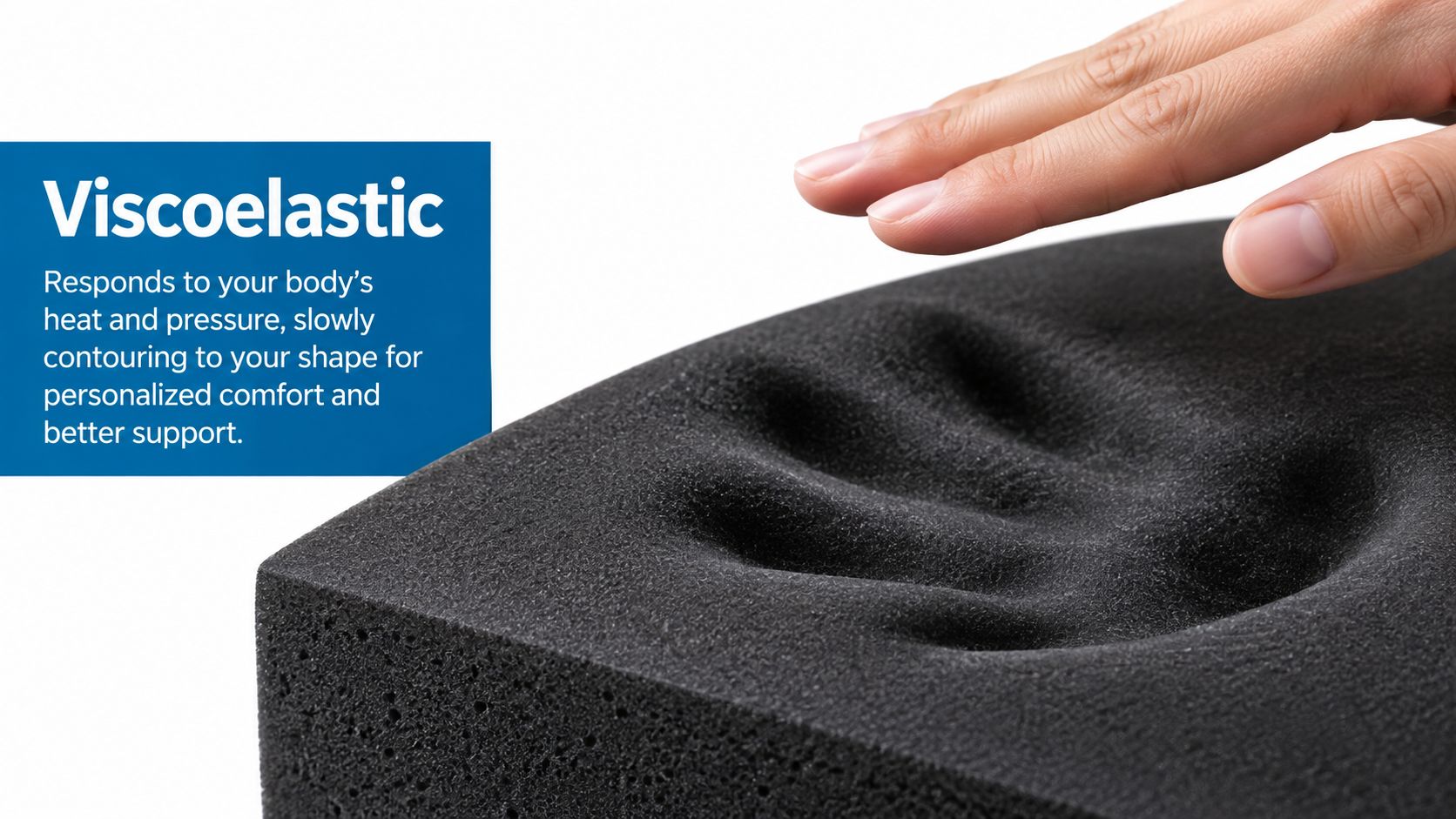
Memory foam is viscoelastic. In plain language, it responds slowly rather than snapping immediately back to its original form. Under body heat and pressure, the material gradually contours to the lower back. Traditional polyfoam rebounds quickly, much like a rubber ball returning after impact. Memory foam behaves more like honey slowly spreading across a surface, although it remains a solid foam rather than a liquid.
That slow response creates a larger chair-to-back contact area. The foam doesn't merely add softness. It gives under prominent areas and supports the spaces around them, reducing the chance that one small region carries too much force.
Pressure relief isn't the same as posture correction
A clinical sitting study of a memory-foam chest-lumbar cushion found lower interface pressures than a traditional cushion. The measured left armpit pressure was 38.17 ± 10.39 mmHg compared with 67.93 ± 14.67 mmHg, with P < 0.0001, while iliac-spine pressure was 43.32 ± 13.70 mmHg compared with 50.77 ± 20.94 mmHg, with P = 0.0004 (clinical study of memory-foam pressure distribution). The authors concluded that the memory-foam design improved comfort and pressure distribution.
For a lumbar cushion, the engineering target is therefore a balance. The foam must have enough give to reduce focal loading, but enough resistance to preserve posterior support and spinal alignment.
Practical rule: Softness is useful only when the cushion stops your lower back from taking the full load in one concentrated area.
A cushion that compresses too easily can let the pelvis roll posteriorly, flattening the natural lumbar lordosis. A cushion that barely compresses may create pressure rather than relieve it. High-density foam is commonly favored for sustained sitting because it resists shape loss under repeated loading. The right product should feel supportive within the first few minutes, not merely plush.
Comparing Memory Foam to Other Fill Materials
Could the softest cushion also shorten a chair's useful life? The answer depends on how the fill manages pressure and how well the furniture beneath it carries the load. A dining chair used occasionally may need modest padding, while an office chair, driving seat, or recliner needs material that keeps its form through repeated sitting.
The practical comparison is how each material reacts under load, returns to shape, and spreads contact pressure. A cushion works like a small load-distribution system: it should reduce concentrated force without allowing the back or seat to sink until the support below takes over.
| Material | Durability | Cost | Best For |
|---|---|---|---|
| Memory foam | Generally maintains a contoured shape when properly supported, though it can soften and compress over time | Usually higher than basic fiberfill or standard polyfoam | Sustained sitting, pressure distribution, and shaped lumbar support |
| Polyfoam | Varies widely by density; resilient grades rebound quickly, while lower-quality grades can lose support sooner | Often moderate to low | General seat padding, temporary use, and applications needing faster rebound |
| Latex | Resilient and responsive, with a springier feel than memory foam | Often higher | Users who want immediate rebound and less sink-in sensation |
| Fiberfill | Can feel soft initially but tends to shift and flatten more readily than structured foam | Usually low | Decorative cushions, occasional seating, and light-duty comfort layers |
Why density matters more than the label
“Memory foam” describes how a material responds, not its complete quality. A thin, low-resistance layer may contour comfortably at first, then compress too far under sustained load. Ergonomic guidance explains that memory foam can improve the chair-pillow-back interface for lumbar alignment, support, and force dissipation, while excessive give can undermine that support (ergonomic guidance on lumbar support pillows).
Latex suits users who dislike slow contouring. It rebounds promptly when they shift position, but its springier response does not distribute pressure in quite the same enveloping way. Polyfoam can fit furniture where cost and quick recovery matter more than a precise contour. Fiberfill provides initial softness, yet its fibers can migrate and flatten, making it better for occasional comfort than a structured support core.
When the upgrade makes sense
Memory foam is a sensible choice when a cushion will carry the back repeatedly and a defined contour matters. Paying for slow-conforming foam has less value in a seat used briefly or mainly for appearance.
Look below the cushion, too. Foam can spread contact pressure, but it cannot restore a collapsed sofa deck or weakened chair base. If the supporting structure sags, a Meliusly support solution can address that base while the foam layer manages comfort and contact. This separation of jobs matters: changing the top layer will not correct a foundation that has lost its ability to carry weight.
Choosing the Right Size and Firmness
The correct lumbar cushion has to fit both the person and the chair. Start by measuring the available backrest area, including the distance between the seat and the point where the lower back needs support. A cushion that's too tall can push the shoulders forward. One that's too short may support the pelvis without reaching the lumbar curve.
Chair depth matters too. A thick cushion takes up usable seating depth and can move the body toward the front edge of the seat. Before buying, measure from the front of the seat to the backrest, then account for the cushion's thickness. Test the intended sitting position with a folded towel or firm blanket to see whether your knees, feet, and desk height still feel natural.
Match firmness to the load
A smaller or lighter user may prefer moderate contouring, while a heavier user or someone sitting for extended periods generally needs more resistance to compression. The purpose isn't to select the hardest foam available. It's to find material that compresses enough to spread pressure without allowing the lower back to lose contact.
The best lumbar cushion leaves you supported, not suspended in a pocket of foam.
Use the chair's purpose as a guide:
- Desk chair: Favor a defined shape and enough firmness to maintain the lumbar curve while your arms reach the keyboard.
- Recliner: Choose a profile that follows the reclined back without forcing the pelvis forward. Guidance on how to choose a recliner for back can help you assess the chair itself, not just the added cushion.
- Dining chair: A thinner, less intrusive cushion may work better because the seat depth and upright posture are already constrained.
- Driver's seat: Secure attachment matters as much as foam feel. A cushion that shifts changes the pressure pattern every time you enter or exit.
For a larger seat surface, see the practical guidance in this chair cushion sizing resource. If a cushion feels comfortable only when you lean away from it, it's probably too aggressive in shape or too soft at the core.
Real-World Applications for Home Furniture
A home office chair often shows the clearest benefit. The seat may still be structurally sound, but the backrest offers little lumbar contour. Adding a memory foam cushion creates a shaped interface between the user and the chair. It doesn't turn a damaged frame into a new one, but it can make a serviceable chair more usable.
A sofa presents a different problem. If the back cushions have flattened, a lumbar cushion can improve the contact at the lower back. If the seat deck or cushion support has sagged, the user may still sink too far even with good lumbar padding. In that situation, a support board beneath the seat addresses the load-bearing layer, while the lumbar cushion adds localized comfort.
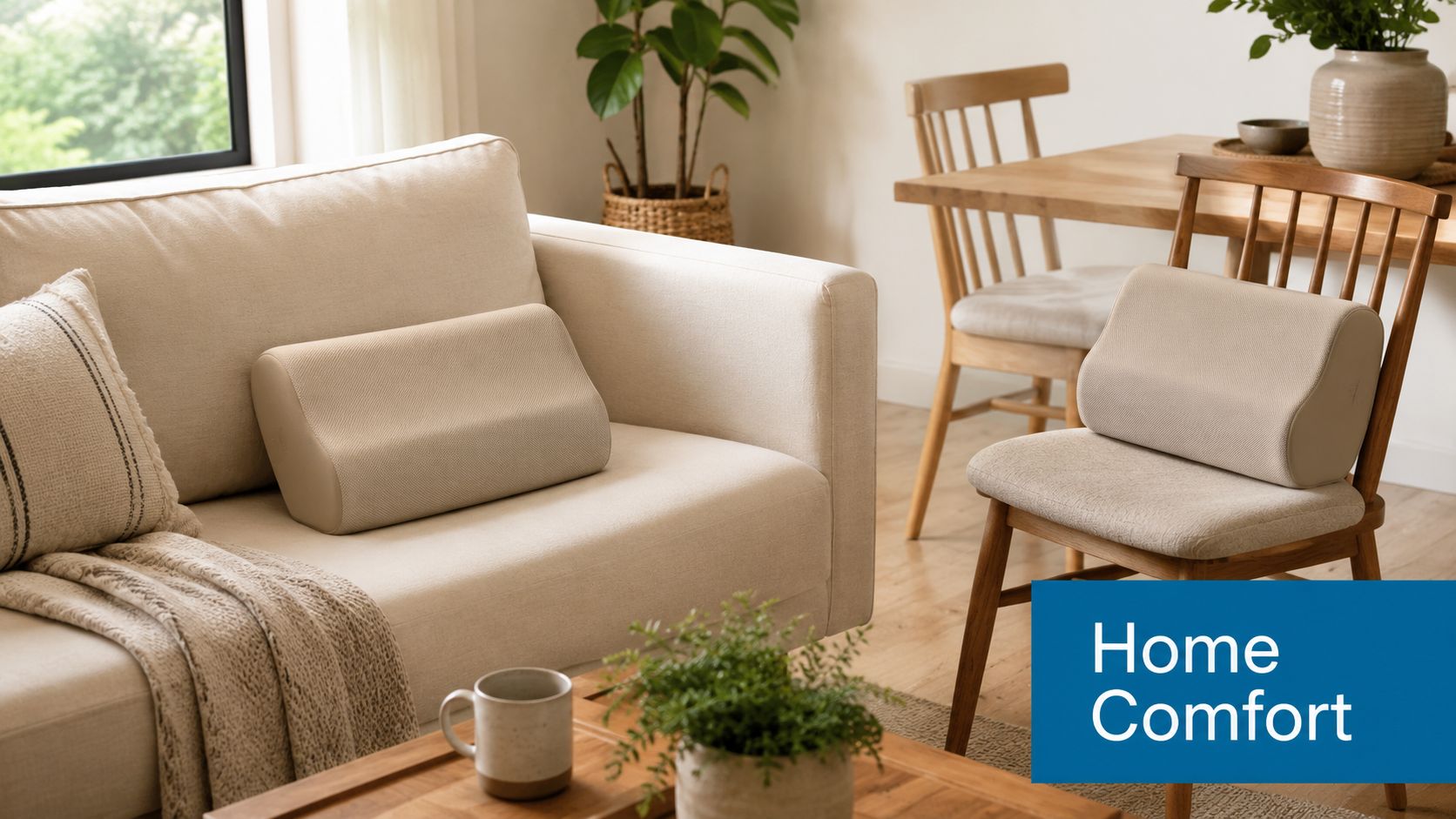
Three useful home setups
- Home office: Place the cushion at the belt-line area, then sit fully back so the foam supports rather than pushes the pelvis forward. This office chair cushion and lumbar support guide provides related setup context.
- Sofa: Use a removable cushion when the seat is basically sound but the back feels hollow. It can be repositioned for different users without modifying the upholstery.
- Recliner or dining chair: Secure the cushion so it doesn't slide during transfers or position changes. A removable solution suits renters and households that don't want permanent alterations.
A lumbar cushion can also reduce the temptation to sit twisted or perched on one side of a sagging seat. That change may improve perceived comfort during reading, television, or desk work, though comfort improvement shouldn't be presented as proof that a cushion corrects posture. Readers seeking broader strategies to find effective back pain relief should consider the whole sitting setup, including movement and chair fit.
Maintaining Your Memory Foam Cushion
Memory foam lasts longer when you protect its structure and cover. Follow the care label first. For routine cleaning, remove the cover if possible and wash it according to the manufacturer's directions. Spot-clean the foam with a small amount of mild solution, avoid soaking it, and let it dry completely in a ventilated area before replacing the cover.
Don't use harsh solvents, abrasive cleaners, or aggressive scrubbing. These can damage the cover or alter the foam surface. Avoid direct sunlight for prolonged periods, especially during storage or drying, because heat and ultraviolet exposure can affect materials over time.
Keep compression predictable
Rotate the cushion periodically if its design allows it, but don't flip a contoured lumbar cushion in a way that puts the shaped side against the chair. Instead, change its position slightly or alternate it between compatible seats so the same edge doesn't take every load.
Ventilation matters after long use. Let the cushion air out rather than sealing it immediately in a damp bag. For storage, keep it flat or in the orientation recommended by the manufacturer, away from moisture, sharp objects, and heavy items that could deform the foam.
Clean the cover often, but treat the foam itself as a structural component, not a washable sponge.
For broader upholstery routines, these furniture maintenance tips from Eco Clean Solutions offer useful general context. Meliusly's furniture care guide can also help you evaluate the surrounding sofa, chair, and support components.
Final Tips for Maximizing Comfort and Longevity
Could a lumbar support cushion fix a sagging sofa or chair? Only if the furniture beneath it still provides a sound load path. Memory foam can contour to the lower back and spread pressure, but it cannot restore a collapsed seat deck or raise a cushion that has lost its support. Repair the structure first, then use the lumbar cushion to refine comfort and posture.
Use this checklist before buying or installing one:
- Measure first: Check the backrest height, seat depth, and space available for the cushion.
- Choose resistance, not maximum softness: The foam should conform to the body without allowing the pelvis to roll backward.
- Match the profile to the chair: Recliners, desk chairs, dining chairs, and sofas create different relationships between cushion thickness and seat depth.
- Secure the cushion: Straps or a stable cover reduce movement, especially on recliners and smooth upholstery.
- Check the furniture below: Sagging seats and weak decks require structural support. Sofa supports, chair support boards, sleeper sofa support boards, bunkie boards, and bed slats solve different furniture problems. They are not substitutes for a lumbar cushion.
- Maintain the cover and foam: Clean gently, ventilate thoroughly, and store the cushion without lasting compression.
- Judge the result by function: You should sit back, keep your feet supported, and use the chair without repeatedly repositioning your lower back.
Evidence supports measured expectations. One controlled study comparing no backrest, compressed sponge, and memory-foam back cushions found no statistically significant difference in erector spinae muscle activity after 30 minutes of typing. Comfort ratings did improve significantly with cushions (controlled study of back cushions and muscle activity). A separate study of a lumbar pillow with a cut-out for posterior pelvic tissues involved 28 male participants. After a 30-minute sitting trial, lumbar posture was 2.88° closer to neutral than with a standard chair (study of a lumbar support pillow with a pelvic cut-out). A cushion may improve comfort and change pressure or position, but it is not a universal posture cure.
Pressure transfer explains why the furniture base matters. In a mattress-integrated lumbar-support study, inflation increased lumbar contact pressure and decreased pelvic pressure, with lumbar results of F1,9 = 70.028, p < 0.001 and pelvic results of F1,9 = 47.967, p < 0.001 (biomechanical study of lumbar and pelvic pressure transfer). Improve the load path first, then choose foam that preserves comfortable support.
Meliusly offers support products for sagging sofas, chairs, sleeper sofas, beds, and other furniture, including sofa supports, chair support boards, sleeper sofa support boards, bunkie boards, and bed slats. If the cushion feels comfortable while the furniture underneath still collapses, visit Meliusly to find a support solution for the existing piece.