

How to Get Urine Stains Off Mattress Fast and Odor Free
Posted by Meliusly
You notice the damp patch when you're changing the sheets, or you catch the smell before you see the stain. It's easy to reach for a scrub brush and attack the mark, but that often makes the problem worse. The safest approach is fast, controlled, and low-moisture: remove the bedding, blot thoroughly, apply a light treatment, and give the mattress enough time to dry.
Fresh urine and an older odor need different levels of treatment. A new accident is mainly a moisture-control problem. A dried or recurring smell can require an enzyme cleaner because residue may remain below the surface. The mattress foundation matters too. Poor airflow underneath can slow drying, while sagging can create low spots where moisture and odor remain trapped.
What to Do Right After You Find a Urine Stain
A child has an accident overnight. A pet finds the bed during a stressful moment. You pull back the sheet and discover a cool, damp area that has already started spreading through the fabric. The first reaction is usually to scrub hard, but pressure and friction can drive urine farther into the mattress cover, foam, and padding.
Strip off the sheets, protector, and other bedding immediately. Put washable items aside for laundering, then press clean white towels or paper towels firmly into the affected area. Replace the towels as they become damp. Blotting removes liquid; rubbing redistributes it. Guidance from mattress-care sources consistently places immediate blotting ahead of every treatment step because rubbing can push urine deeper into mattress fibers and foam. Protect-A-Bed stain tips also provides useful mattress-specific advice for handling spills and stains without aggressive scrubbing.
Why speed changes the job
A mattress has more depth than a sheet or mattress pad. Liquid can move below the visible surface, especially in foam and padded comfort layers. The longer fresh urine remains undisturbed, the more important it becomes to control the amount of cleaning solution you add.
Keep the area small and work from the outside edge toward the center. That reduces the chance of spreading the wet boundary into clean fabric. Don't pour cleaner directly onto the mattress. A spray bottle or lightly dampened cloth gives you better control.
Practical rule: Remove as much liquid as possible before adding any cleaning solution.
Fresh accidents usually respond to careful blotting followed by a light treatment. If the odor returns after drying, or the same spot has been treated repeatedly, stop treating it like a simple surface stain. Set-in residue needs a different approach, covered later in this guide.
What You Need Before You Start Cleaning
Gather everything beside the bed before you begin. Interrupting the process to search for towels or a vacuum often leads to rushed blotting, excessive spraying, or bedding being replaced before the mattress is dry.
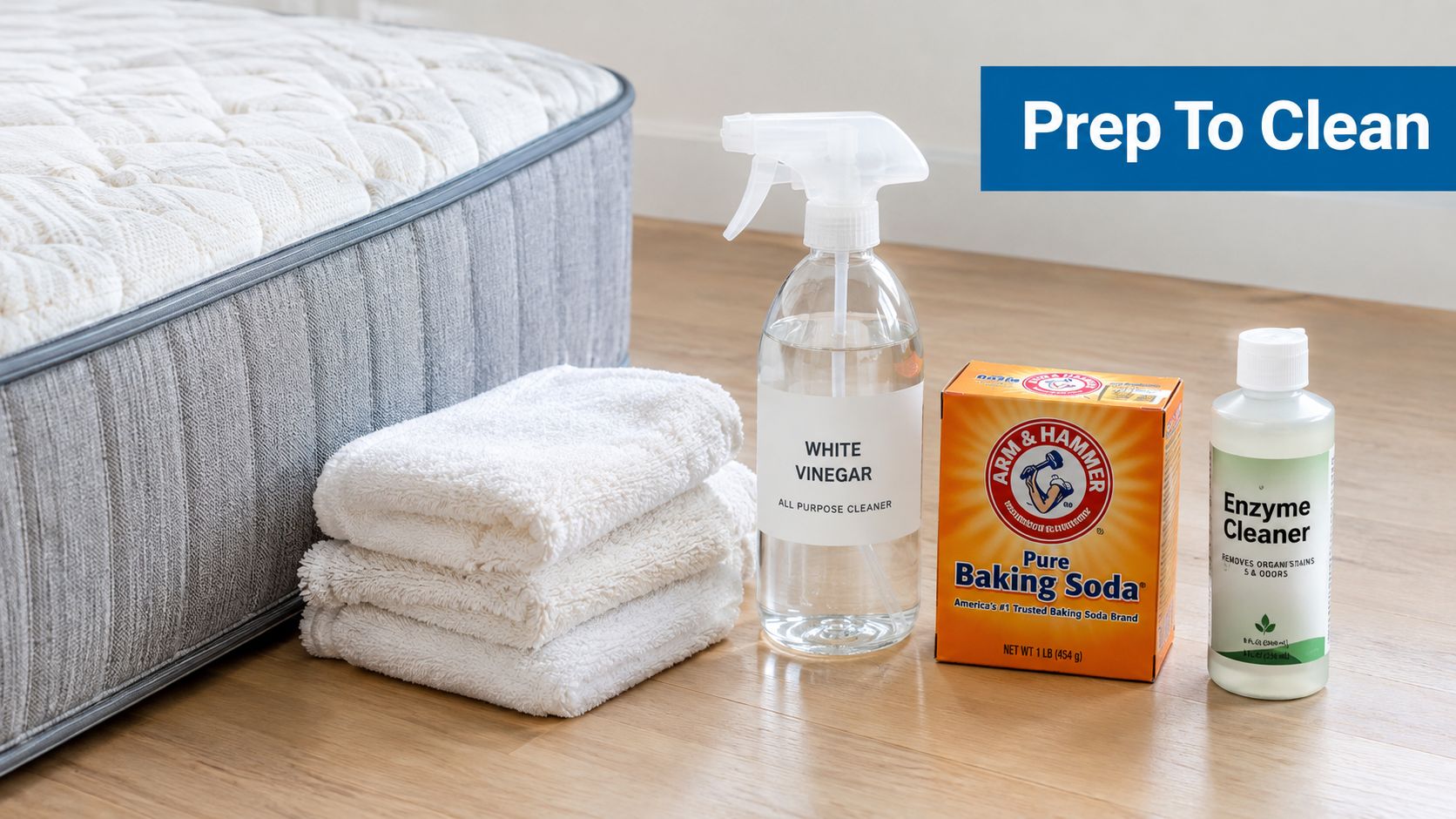
The basic kit
- Clean white towels or paper towels: White material makes it easier to see what you're lifting and avoids transferring dye.
- White vinegar and water: An equal-parts solution is suitable for many fresh surface stains when applied lightly.
- Baking soda: A thick layer can absorb remaining moisture and odor while the mattress dries.
- A spray bottle: It helps distribute a small amount of solution instead of flooding one area.
- Mild dish soap: Keep it available for a small amount of surface cleaning when needed, but don't saturate the mattress with suds.
- A vacuum: Use it after the baking soda has dried and finished its absorbing work.
- An enzyme cleaner: Choose a product labeled for urine, especially when the stain is dried, repeated, or associated with a persistent smell.
Before treating a visible area, test the cleaner on a hidden section or an inconspicuous edge. Check the mattress care label and the cleaner label first, particularly with memory foam, pillow-top materials, or specialty covers. For broader furniture-care habits that also protect beds and upholstered pieces, consult this furniture care guide.
Products to leave out
Don't use chlorine bleach, strong solvents, or heavily fragranced sprays as a shortcut. Bleach can damage fabric and may create unpleasant chemical residue, while fragrance often masks odor instead of removing its source. Steam also deserves caution. Heat and moisture can penetrate foam, and memory foam may dry slowly after a deep wetting.
Set up ventilation before you spray. Open a window if practical, position a fan so air moves across the mattress rather than blowing liquid into another area, and leave enough room around the bed to work without leaning or kneeling on the wet patch.
How to Get Urine Stains Off Mattress Without Spreading Them
For a fresh stain, the sequence matters more than force. Begin with the bedding removed and use dry towels to press out as much urine as possible. Work repeatedly over the damp area until the towel picks up less moisture. Avoid scrubbing, circular rubbing, or pressing the liquid toward the mattress edge.
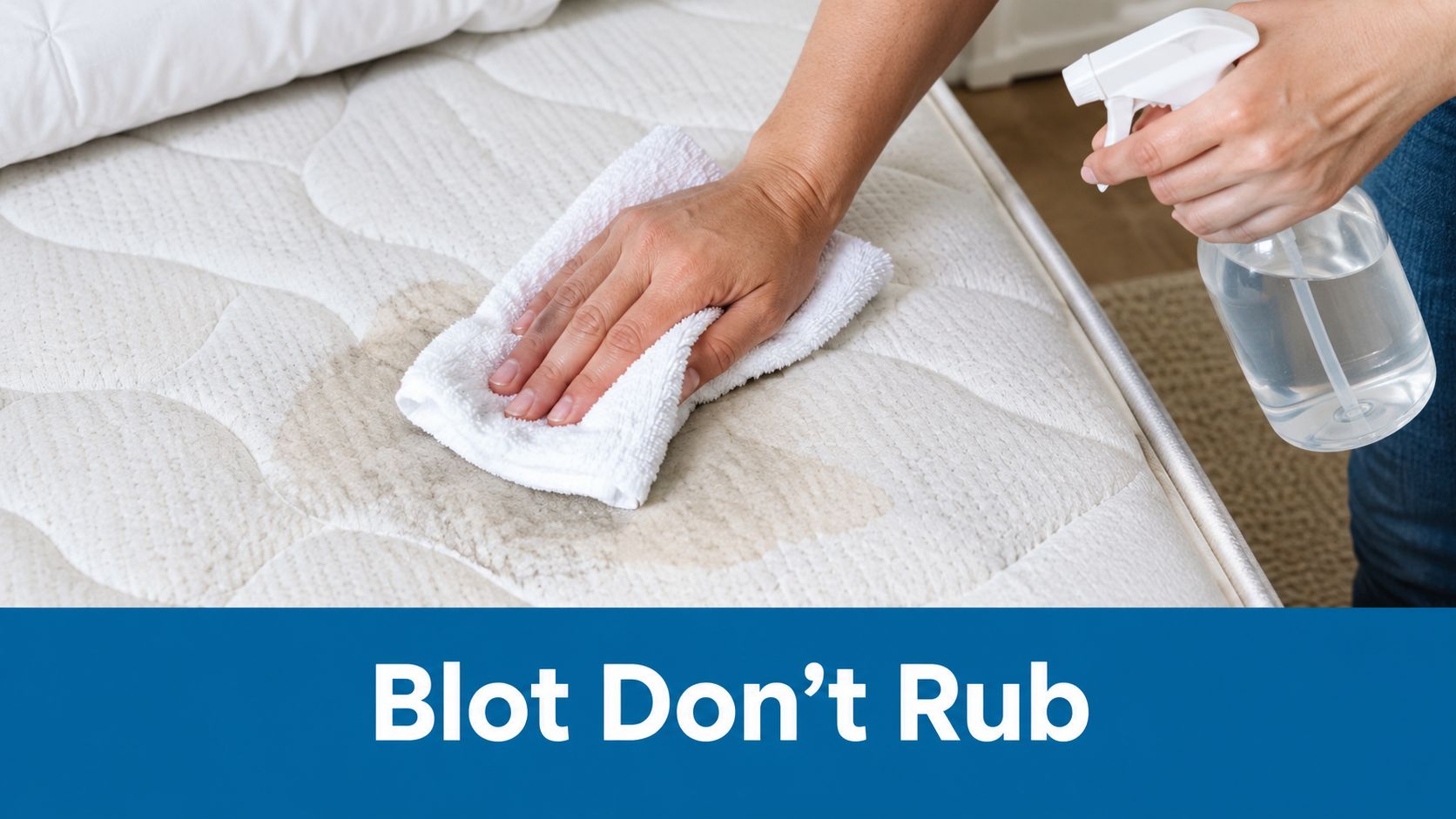
Use a light treatment, not a soak
Mix equal parts water and white vinegar in a clean spray bottle. Mist the stained area lightly, or apply the solution to a cloth and dab it onto the surface. The goal is to dampen the affected material without sending liquid into the mattress core.
Let the solution sit for about 10 to 15 minutes, then blot the area again with fresh towels. Guidance from mattress and cleaning sources commonly places liquid-treatment dwell time in the 5 to 15 minute range, allowing the solution time to work before you remove it. Mattress-care guidance from Tom's Guide explains the broader blot, treat, and dry sequence for urine on a mattress.
Don't keep spraying because the stain still looks visible. Surface discoloration and deep odor aren't always solved by adding more liquid. Over-wetting can carry residue deeper into the mattress core and lengthen drying, which is why controlled application is more useful than trying to flush the area.
Let baking soda handle the remaining moisture
Once you've blotted the vinegar solution, cover the damp area with a thick layer of baking soda. Extend it slightly beyond the visible boundary, but keep the powder concentrated enough to vacuum easily later. Leave it in place for at least 8 hours, then vacuum slowly and thoroughly when the mattress is dry.
Some mattress-care instructions allow covered drying for 24 to 48 hours when wetness or odor persists, particularly where padding has absorbed liquid. Mattress Warehouse's urine-cleaning process follows the same general pattern of removing bedding, blotting, treating, deodorizing, and vacuuming.
The most common mistake is over-wetting. A mattress can't dry efficiently when the cleaner has reached deep foam and the bed has been covered again.
Keep the room ventilated while the powder sits. Don't remake the bed until the mattress feels dry across the treated area and no damp smell remains. If you're dealing with broader moisture concerns in washable fabrics, Florida homeowners mold laundry advice offers useful context about drying contaminated household materials, although a mattress needs especially restrained moisture use.
Tackling Dried or Stubborn Urine Stains and Lingering Odor
A dried stain can look minor and still smell strongly when the room warms up or the mattress is compressed. The reason is residue below the surface. Uric acid crystals can remain after the visible wetness disappears, and ordinary vinegar treatment may not fully break down a repeated or set-in deposit.
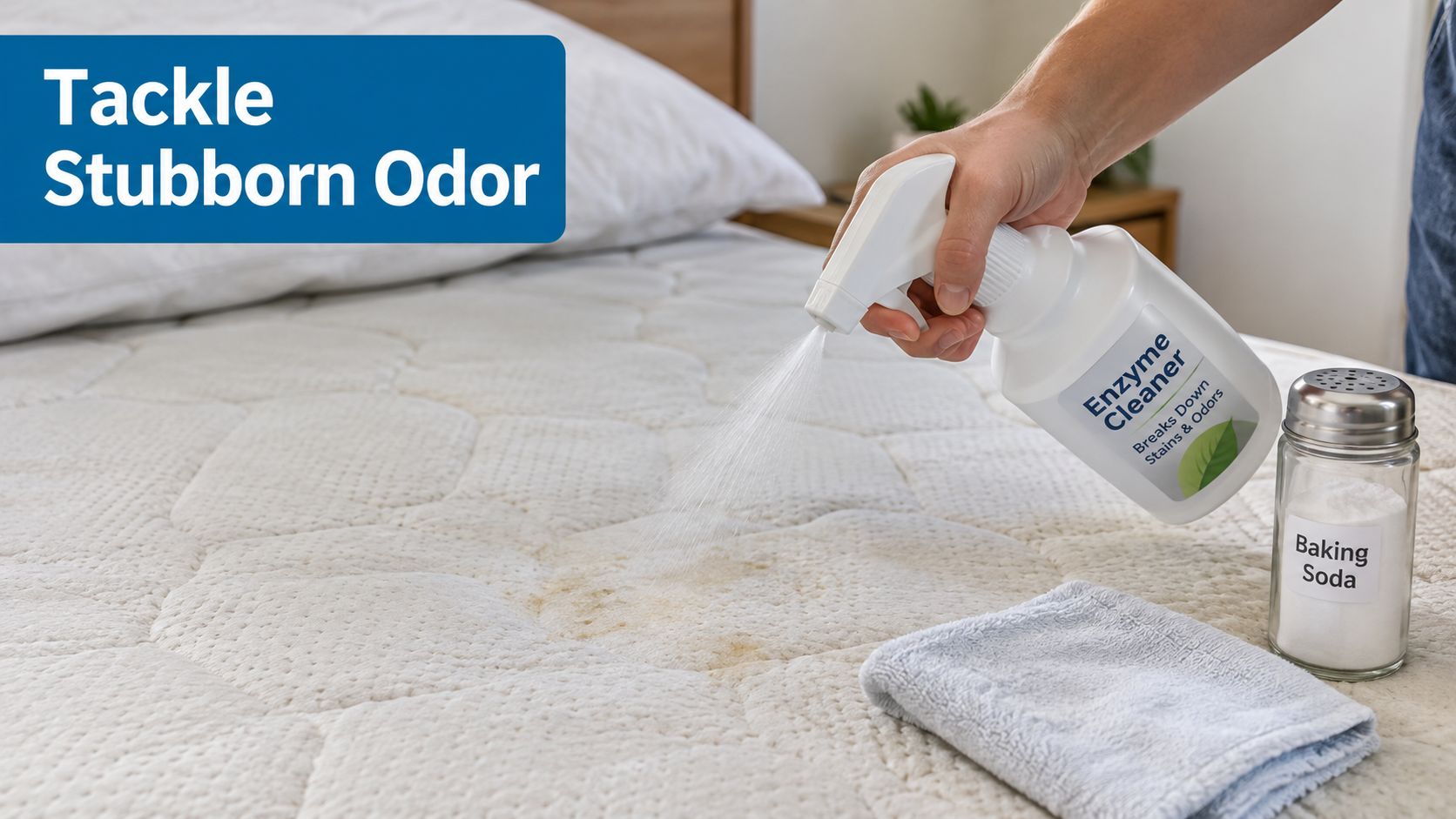
For an older spot, lightly rehydrate the surface first if the product instructions call for it, but don't recreate the original accident. Apply an enzyme cleaner labeled for urine and follow its stated dwell time. Enzymes are the more relevant choice when lingering odor points to urine residue rather than a simple surface mark. Blot after the product has had time to work, then use baking soda again for odor and moisture absorption.
Choosing between DIY solution and enzyme cleaner
Vinegar and water are useful for a fresh, localized accident when you can remove most of the liquid promptly. An enzyme product makes more sense when the stain is old, the smell returns after drying, or the same area has been treated repeatedly.
| Situation | Best Option | Why It Works |
|---|---|---|
| Fresh accident with visible moisture | Light vinegar-and-water solution | It supports surface odor treatment after thorough blotting. |
| Dried stain with recurring odor | Urine-specific enzyme cleaner | It targets residue associated with persistent urine smell. |
| Light surface discoloration without deep odor | Controlled DIY treatment | It avoids adding a stronger product than the situation requires. |
| Repeated spot with moisture below the cover | Enzyme cleaner, used sparingly | It addresses the likely source while limiting additional saturation. |
Apply only enough enzyme cleaner to reach the affected material according to the label. Different formulas have different contact requirements, so the bottle's instructions take priority over a generalized timetable. Afterward, blot instead of scrubbing and allow extended ventilation.
For related guidance on urine treatment around upholstered surfaces and pet accidents, this guide to pet-friendly carpet care can help you think through residue, odor, and product selection without treating every stain as identical. You can also follow this dedicated guide on removing urine odor from a mattress for additional odor-focused considerations.
Know when to stop
Repeat a restrained treatment only when the area has dried enough to evaluate. If the smell is diminishing, let the mattress finish drying before doing more. If you keep adding liquid without allowing drying time, you may push residue deeper and make the problem harder to diagnose.
For deep absorption, baking soda may remain covered for 8 hours or as long as 24 to 48 hours in persistent cases, as reflected in established mattress-care guidance. Vacuum only after the powder has finished drying the treated area.
Drying Sanitizing and Protecting Your Mattress After Cleaning
Cleaning isn't finished when the stain fades. The mattress must dry through its cover and comfort layers before you put sheets back on. Foam and padding can retain liquid below a surface that feels dry, so use moving air and patience rather than direct heat.
Place the mattress where air can reach the treated area. Open a window when weather allows, and use a fan to move air across the surface. If the bed frame allows it, improve airflow around the mattress underside as well. A supported, ventilated base gives moisture a clearer route out than a mattress resting against a damp or obstructed surface.
Match the method to the mattress
Memory foam needs particularly careful moisture control because its dense structure can dry slowly. Hybrid mattresses contain several layers, so a spill may travel differently through the fabric, foam, and spring assembly. Pillow-top mattresses can hold liquid in the upper padding even when the lower cover feels dry.
Vacuum away every trace of baking soda once the treated section is dry. Use the vacuum's upholstery attachment if available, and move slowly across seams and edges. Don't apply more powder or cleaner until you've checked the surface and odor after drying.
Dryness is a condition, not a clock. The area should feel dry, smell neutral rather than damp, and remain dry after firm pressure is applied with a clean towel.
Avoid hair dryers, space heaters, and concentrated heat unless the mattress manufacturer specifically permits them. Direct heat can affect some foams and coverings, while rapid surface heating may leave deeper moisture behind. Skip aggressive sanitizing sprays too. A careful clean, complete drying, and a washable protective layer are safer than trying to disinfect a mattress by saturating it.
A waterproof but breathable protector can separate future accidents from the mattress cover. For sleeper sofas and compact sleeping surfaces, this sofa bed mattress protector guide offers relevant protection considerations.
How to Keep Your Mattress Fresh and Prevent Future Stains
The most affordable mattress-care strategy is to prevent liquid from reaching the comfort layers. Use a waterproof, breathable mattress protector that fits securely and can be removed for washing. It should feel comfortable enough to stay on the bed, because protection that gets removed during everyday use can't help during an accident.
Wash bedding regularly and respond to spills as soon as you find them. Keep clean towels and a suitable cleaner in an accessible place so the first response doesn't depend on a late-night search through storage. If a stain happens, remove the bedding, blot, treat lightly, and keep the bed uncovered until it's dry.
Don't overlook the foundation
A mattress that sags can create low areas where moisture and odor linger. Weak or widely spaced support can also change how the mattress carries weight, affecting comfort and making the bed harder to ventilate evenly. A suitable foundation, bunkie board, or solid slat arrangement helps keep the sleep surface flatter and gives the mattress more consistent support.
Inspect the bed base when you rotate or clean the mattress. Look for broken slats, movement, uneven gaps, or a center area that sits lower than the edges. Correcting support problems can be more practical than replacing a mattress that still has usable materials.
Allow airflow underneath the bed and avoid storing damp items below it. Rotate the mattress according to the manufacturer's guidance, and check the protector after every wash for loose seams or damaged waterproof backing. These small habits protect comfort, reduce repeat deep cleaning, and help extend the useful life of the entire bed system.
Meliusly helps homeowners extend furniture life with practical support solutions, including sofa supports, sleeper sofa support boards, bunkie boards, and bed slat support products. Visit Meliusly to find a durable foundation or furniture-support upgrade that can help keep your mattress and seating more comfortable without replacing everything.
Share this post
- Tags: how to get urine stains off mattress, mattress cleaning tips, mattress protector, mattress urine stain removal, odor removal