

How Long Should You Let a Mattress Expand Before Sleeping
Posted by Meliusly
Most mattresses reach about 90% of their expansion in 4 to 6 hours, but they usually need 24 to 72 hours to fully expand and settle. If you want the safest benchmark, use 72 hours as the standard before you judge final height, feel, or firmness.
That matters because the mattress on your bedroom floor tonight and the mattress you'll sleep on next week aren't always the same thing. A bed-in-a-box can look almost done by dinner, then keep rising, softening, and leveling out over the next couple of days. That gap trips people up all the time. They lie down too early, decide the bed feels wrong, and blame the mattress when the issue is timing or support underneath it.
At Meliusly, we've served over 400,000 customers, and the pattern is familiar across furniture and sleep surfaces alike. Comfort problems often start with setup, support, and expectations. If you're asking how long should you let a mattress expand, the practical answer isn't just a timer. It's knowing the difference between usable and fully settled, then giving the mattress a flat, supportive base from the start.
How Long Should You Let a Mattress Expand After Unboxing
The most common scene goes like this. The box arrives, you cut it open, the mattress starts lifting, and within a few hours it looks close enough to done. That visual rebound is real, but it doesn't mean the mattress has completed recovery.
Guidance across major consumer sources lines up on the same two-stage pattern: most foam mattresses reach about 90% of final expansion within 4 to 6 hours, while full expansion commonly takes 24 to 72 hours depending on the build, with 72 hours repeated often as the outer benchmark for foam-based mattresses (Panda London mattress expansion guidance). If you're comparing this to broader mattress lifespan and support planning, the Stahl Home Center guides are useful for thinking beyond the first week and into long-term wear.
What 90% expanded actually means
At 90%, the mattress usually looks presentable. The center has risen, the corners are less compressed, and the sleeping surface seems mostly flat. But the remaining recovery still affects three things homeowners care about:
- Height: The mattress may still be a little short of its stated profile.
- Firmness feel: Foam often feels firmer before it fully relaxes.
- Surface evenness: Edges and corners may continue lifting after the middle looks finished.
That's why “looks expanded” and “is fully settled” aren't the same decision.
Practical rule: Judge whether you can use the mattress the first night. Don't judge whether you should keep or return it until it has had time to finish expanding.
Usable tonight versus ready for final judgment
A better way to frame the question is this:
| Stage | What it means | What to expect |
|---|---|---|
| First rebound | Mattress opens and takes shape | Rapid lift, visible recovery |
| Usable stage | Enough shape for short-term use | May still feel firmer or uneven |
| Fully settled stage | Final height and feel are much closer to normal | Better basis for judging comfort |
If your mattress was delivered in a box, don't panic at hour two if it still looks low at the corners or denser than expected. Early puffiness can be misleading. The best time to evaluate the feel is after the mattress has had the full waiting window.
How to Unbox and Set Up Your Mattress for Proper Expansion
Setup decides whether the mattress expands evenly or starts its life fighting the surface under it. A compressed mattress typically regains most of its shape quickly after unboxing, but full recovery usually takes 24 to 72 hours, and one technical guide notes that initial decompression can happen in under 5 minutes while complete recovery can range from 2 hours to 3 days depending on foam chemistry and construction (The Roundup technical guide on vacuum-packed mattresses).
Start in the final room
Don't unbox a queen or king in the hallway and plan to drag it into place later. Open it in the room where it will stay. Once the plastic comes off, the mattress becomes harder to control and easier to bend awkwardly.
Remove all outer packaging carefully. Don't stab deep with a knife near the fabric or foam. After that, lay the mattress flat on the bed frame, platform, bunkie board, or floor so air can circulate around it.
Give it a truly flat surface
Many setup problems begin. Foam can only recover evenly if the surface below it is even. If the frame bows in the middle, if slats are inconsistent, or if the base already sags, the mattress may expand into that shape instead of into a clean plane.
Use this setup check before you walk away:
- Flat from edge to edge: The mattress shouldn't bridge over dips or unsupported gaps.
- Nothing pinching the sides: Tight rails, packed corners, or nearby furniture can interfere with full lift.
- Air around the mattress: Ventilation helps both recovery and smell reduction.
- No early heavy loading: Avoid piling boxes, sitting in one spot for long periods, or forcing the corners down.
A mattress needs open space and a steady base more than it needs “help” from body weight in the first hour.
If you're still deciding whether a compressed bed is the right format for your room, this breakdown of is a rolled mattress worth it covers some of the trade-offs homeowners usually weigh.
What doesn't work
A few habits cause repeat trouble:
- Leaning it against a wall for too long: That can delay even expansion.
- Leaving bits of plastic trapped underneath: The mattress needs airflow.
- Using a weak old foundation: If the support underneath is already failing, the new mattress starts at a disadvantage.
- Judging the feel immediately: Fresh foam rarely reflects its settled feel.
The first hour should be boring. Flat surface, full unpacking, open room, and patience. That's what works.
What Affects Mattress Expansion Time the Most
A mattress that opens well in one home can stall in another. Same model, different result. The biggest variables are the foam build, the room temperature, and whether the mattress is lying on a flat, supportive base while it recovers.
On top of the baseline timeline above, these factors stretch or shorten the window.
Material and build change the timeline
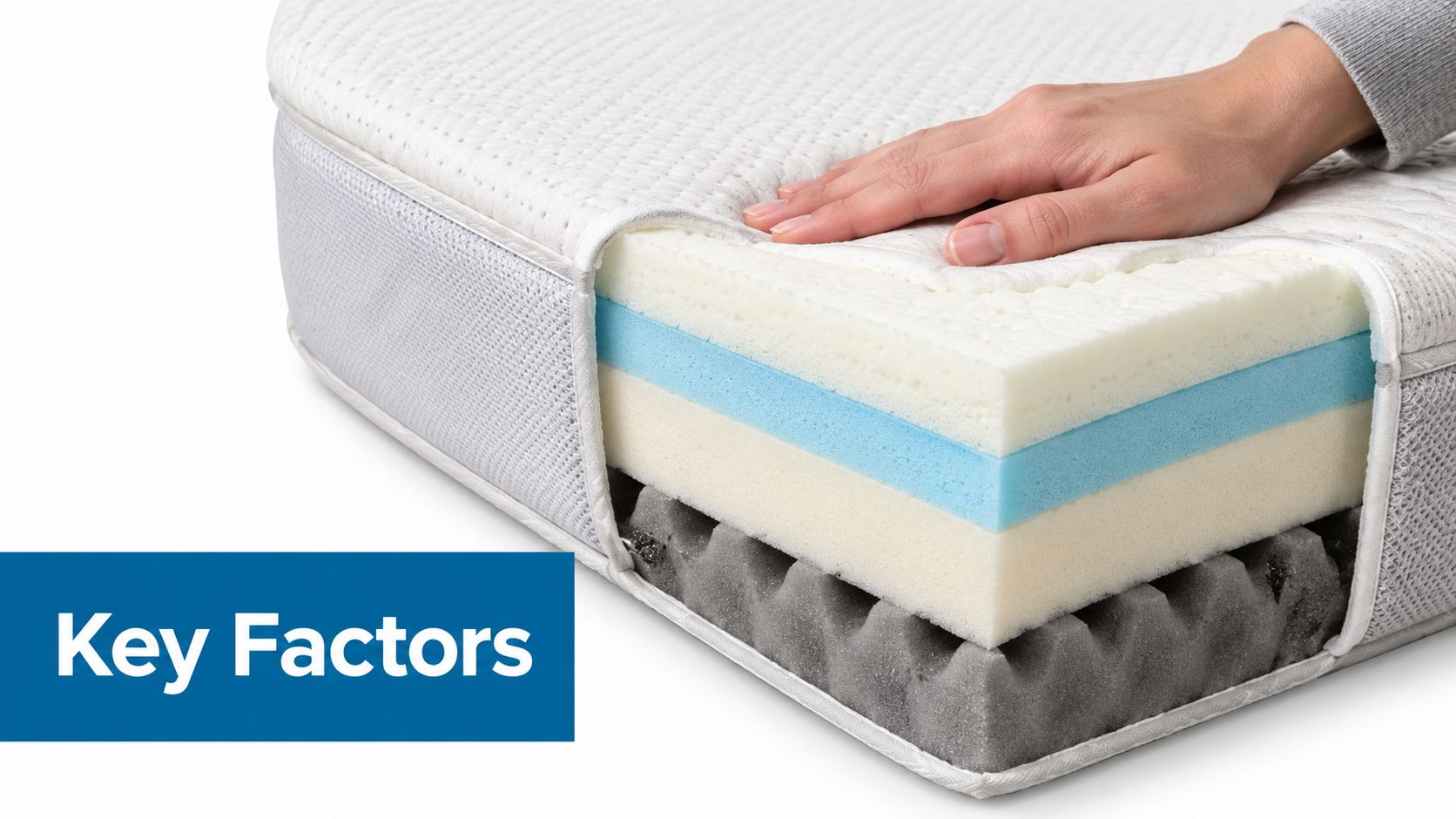
Dense memory foam usually takes longer to relax after compression. Thicker profiles can also need more time because there is more material recovering at once. Hybrids and latex models often regain shape faster because coils and latex push back sooner than slow-response foam.
How long the mattress stayed boxed matters too. A bed compressed for a longer stretch may need extra time to regain height evenly, especially at the corners and perimeter.
| Mattress factor | Typical effect on expansion |
|---|---|
| Dense memory foam | Slower recovery, especially near corners and edges |
| Thicker builds | Longer wait for full height and even surface shape |
| Latex or hybrid construction | Earlier shape recovery and edge lift |
| Long time spent compressed | More gradual settling after unboxing |
Room temperature has a real effect
Foam responds to temperature. In a cold room, it stays stiffer and rises more slowly. In a warmer bedroom, the same mattress usually opens faster and feels closer to its intended comfort level sooner.
Consumer guidance compiled by Mattress Miracle Canada reflects that variation. Brand advice ranges from a day to several days, and warm room conditions can help if a mattress is still undersized after the initial wait.
Winter deliveries create the most confusion. A mattress can be safe to set up right away, but still need extra time before it reaches full height and a more settled feel.
Support underneath affects the result, not just the feel
This part gets missed. Expansion is not only about time in open air. It is also about what the mattress is expanding on.
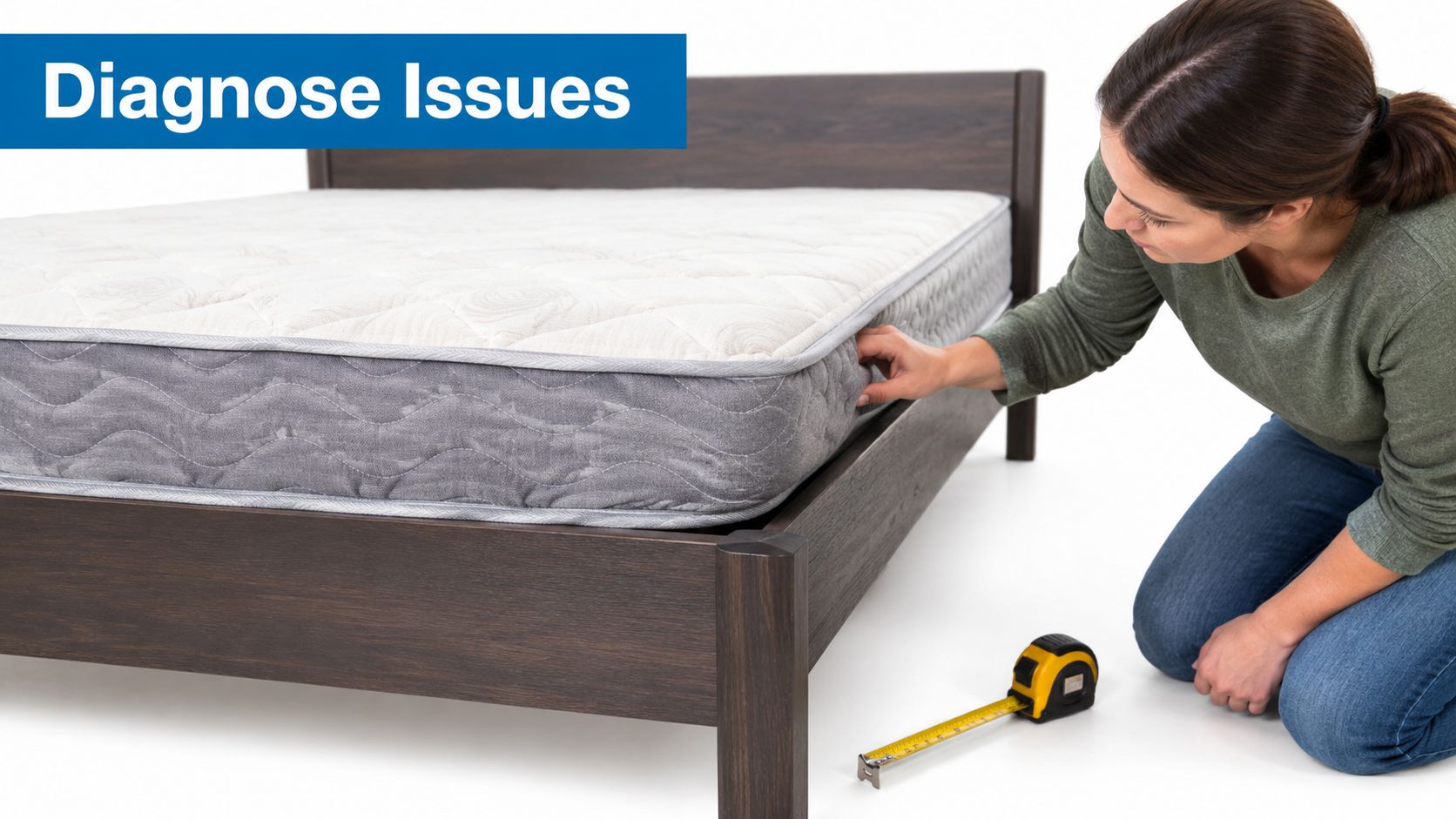
If the foundation has sagging slats, wide gaps, soft spots, or a bowed center, the mattress can recover into that shape instead of into a flat plane. That does two things. It can make the mattress look under-expanded, and it can make people judge comfort too early when the issue is support.
A practical rule: "safe to sleep on" and "fully expanded" are different timelines, and proper support helps the mattress reach the second one correctly.
The same mattress can behave differently in two rooms
A dense foam queen on a level platform in a heated room may settle predictably. That same mattress on an older frame in a chilly spare room may show slow corners, a low-looking center, or uneven edge lift for longer.
If your mattress arrives cold, use the stated expansion window as a minimum. If the base under it is questionable, fix that first before assuming the mattress failed.
When You Can Safely Sleep on Your New Mattress
This is the question people need answered at bedtime, not after a long care guide. Can you sleep on it tonight, or do you need to camp on the floor?
The answer is usually yes, but with conditions. Several consumer sources recommend waiting at least 24 hours before sleeping on a newly unboxed mattress, with 48 to 72 hours often suggested for better expansion and reduced odor (Mattress Nut air-out timing).
Safe to use versus ideal to use
These are not the same standard.
| Decision | What it means | Better choice when possible |
|---|---|---|
| Safe to sleep on | You need the bed tonight and it has opened enough for basic use | Accept some firmness and possible odor |
| Best for comfort | You want the mattress closer to intended feel | Wait longer before regular use |
| Best for final evaluation | You want to judge support and height fairly | Give it the full settling window |
If you're in a same-day move, guest room turnover, or apartment setup, first-night use may be unavoidable. In that case, the mattress should already be lying flat, fully unwrapped, and reasonably expanded. If it still has visibly collapsed zones or corners folded in on themselves, waiting is the smarter move.
Odor changes the decision
Off-gassing follows its own timeline. The strongest smell is usually concentrated in the first 24 to 72 hours, then tends to decline over the next 3 to 7 days, with many sources saying odor is minimal by day 7 to day 14. Some guidance says sleeping on the mattress after about 24 hours is usually acceptable, but waiting 3 days or more improves comfort and reduces odor exposure, especially for polyurethane memory foam and thicker mattresses (Mattress Bible off-gassing timeline).
That means the first-night decision isn't only about shape. It's also about smell tolerance and room ventilation.
A practical yes or no test
Sleep on it the first night if all three are true:
- The surface is mostly level
- The smell is tolerable in a ventilated room
- You understand it may not reflect the final feel yet
Wait longer if one of these is true:
- The mattress still shows obvious compressed areas
- The odor is strong enough to bother you
- You're trying to judge whether the firmness is right
If you need the bed tonight, use it. If you want the most accurate first impression, give it more time.
Troubleshooting Slow Expansion and Lingering Odor
A mattress that still looks short or smells strong after the normal waiting period isn't always defective. Usually, the issue is room conditions, blocked airflow, or a support surface that's working against recovery.
Peak off-gassing is generally concentrated in the first 24 to 72 hours after unboxing, when VOC levels are highest, and repeated guidance points to ventilation as the main way to reduce exposure (Mattress Miracle VOC guide).

If the mattress still looks short after 72 hours
Don't start by assuming the mattress has failed. Check the setup first.
- Warm the room: Some manufacturer and reviewer guidance notes that a well-ventilated room and proper placement can help the mattress reach full size more quickly (Sweetnight support guidance).
- Check the base: A bowed platform or uneven slats can make one side appear under-expanded.
- Clear the perimeter: Bedding, rails, or nearby furniture can press against the sides.
- Walk gently across the surface: Light, even pressure can help stubborn sections open without concentrating weight in one spot.
Don't measure final height while the mattress is sitting on a bad base. You'll end up diagnosing the frame instead of the mattress.
If the odor lingers
A new mattress smell is most noticeable early, then usually fades. What helps is simple and physical, not fancy:
- Open windows when possible
- Run a fan to keep air moving
- Keep bedding light at first so the surface can breathe
- Give the room time before sealing it up overnight
If you're also dealing with household odor issues on an existing bed, Meliusly's guide on how to remove urine odor from a mattress is useful for separating new-product smell from cleanup problems.
When to contact the manufacturer
Keep waiting if the mattress is improving, even slowly. Reach out to the manufacturer if it remains clearly misshapen after the standard waiting period and after you've corrected room temperature, airflow, and setup conditions.
Contact support sooner if the mattress has severe shape problems that don't change, visible damage from unboxing that wasn't user-caused, or an odor that remains unusually intense well beyond the normal early window.
Ensuring Long Term Comfort After Your Mattress Expands
Once the expansion window has passed, the part that decides whether that shape holds is the foundation.
I see the same pattern over and over. The mattress opens well, feels good for a night or two, then the owner starts noticing a softer middle, a low corner, or a slight tilt. In many cases, the foam is fine. The support underneath is not.
Support keeps the mattress feeling the way it should
A compressed mattress recovers based on the surface under it, but long-term comfort depends on what that surface does under body weight night after night. Weak center support, bowed slats, or wide gaps let the mattress settle unevenly. That can mimic poor expansion even when the mattress itself has fully opened.
One check catches a lot of problems fast. Measure the gaps between slats, then press down on the center third of the bed where two sleepers put the most load. If the slats flex noticeably, the center rail shifts, or the gap spacing is wider than the mattress brand allows, the base needs attention before you judge the mattress.
For a closer look at what to check, this guide to bed mattress support explains how slats, bunkie boards, and added reinforcement affect comfort over time.
A practical final check
After the mattress has settled, check the whole sleep system, not just the foam:
- Corners sit evenly: One corner sitting low often points to frame twist or uneven slat contact.
- The center stays level under load: Sit, then lie across the middle. You should not feel a trough forming underneath you.
- Slats stay straight: No bowing, cracking, or gaps large enough for the mattress to dip between supports.
- Feel stays consistent for several nights: A mattress that changes feel from one night to the next is often reacting to unstable support, not still "finishing expansion."
If the support under your mattress needs reinforcement, options such as bunkie boards, replacement slats, or a support layer between mattress and frame can help keep the surface even. Meliusly offers products in those categories for homeowners trying to extend furniture life instead of replacing the whole setup.
If your mattress looks expanded but still feels uneven, inspect the base before assuming the mattress failed. At Meliusly, we make practical support solutions for sagging furniture and bed setups, including bunkie boards, bed slats, and sleeper sofa support options that help preserve comfort and extend the life of what you already own.
Share this post
- Tags: bed in a box mattress, how long should you let a mattress expand, mattress expansion time, mattress foundation support, mattress off gassing