

Bamboo Table Cover Guide for Stylish Protected Tables
Posted by Meliusly
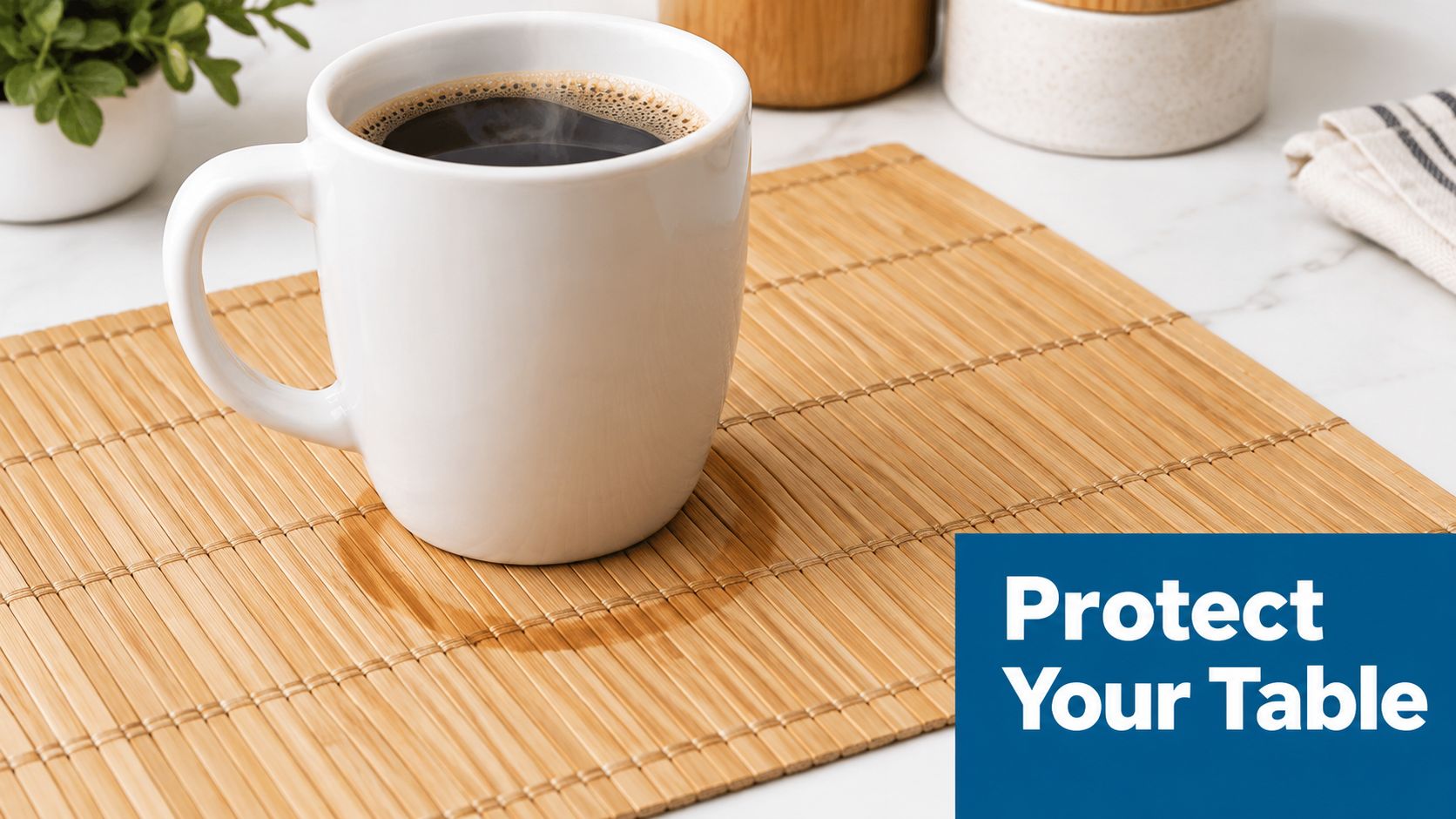
A coffee ring appears before breakfast is over. A serving dish leaves a heat mark, a child drags a cup across the finish, or a pet knocks over a glass while you're out of the room. Replacing the table isn't the only answer. A well-chosen bamboo table cover can add a practical barrier while keeping the wood, laminate, or painted surface visible enough to enjoy.
The catch is that protection only works when the cover matches the table and the room. Bamboo can handle everyday moisture well in the right construction, but a sealed cover left on a damp surface may trap condensation. Fit matters too. A mat that bunches, a full cover that pulls at the corners, or a stitched edge that stays wet can create the wear it was meant to prevent.
This guide explains how bamboo covers are constructed, how they compare with vinyl and fabric, how to measure for a renter-friendly fit, and how to maintain the cover without creating a mold problem. You'll also find practical guidance for indoor dining rooms, desks, kitchens, covered patios, and humid homes.
Introduction to Bamboo Table Covers and Why They Matter
A coffee mug sits in its usual place, and a faint ring appears before breakfast ends. Near the children's seats, small scratches gather. Along the edge, plates and elbows wear the finish until it feels rough. These marks start as surface trouble, but repeated friction and moisture can eventually lead to refinishing.
A bamboo table cover adds a removable layer between the tabletop and those daily hazards. The product may be a woven mat, a flexible bamboo-fiber textile, or a more structured protector with a laminated surface. Each format suits a different job. A small mat handles a mug or place setting, while a wider cover gives a desk or dining table broader protection.
Start with the failure you want to prevent
A mug ring usually needs only a placemat-style cover. Craft supplies, children's drinks, and frequent spills call for a larger layer that you can lift away and dry. Renters can also use covers without applying adhesive film, drilling holes, or installing permanent hardware.
Bamboo has a long tabletop history. Traditional woven bamboo placemats in Japan have been used for centuries to protect lacquerware and tables, as described in FAO's global bamboo resource information. The same basic principle remains useful: a light, breathable barrier can reduce contact with spills and abrasion while leaving some of the table visible.
Breathability determines whether that barrier helps or harms. A cover removed after a spill lets the tabletop dry. One left flat on a damp surface can hold condensation against the finish, especially around folded edges, seams, or areas where air cannot circulate. Mold risk comes from that trapped moisture, not from the word “bamboo” alone.
Fit creates another failure point. A cover that bunches can rub the finish, while one that hangs over the edge may catch on clothing or shift when someone leans against it. Measure the usable surface, allow for the table's edge profile, and choose a removable, non-adhesive fit if you rent. The right cover protects through daily use, then comes off easily enough for the table and the cover to dry.
What a Bamboo Table Cover Is and How It Is Made
A bamboo table cover is a category, not one fixed product. Bamboo may appear as woven strips, processed textile fiber, or a thin veneer joined to a backing. Each construction changes how the cover bends, dries, feels, and handles daily wear.
The simplest form is a woven bamboo mat. Thin strips follow a repeated pattern and connect with thread, narrow binding, or another flexible joint. The open structure works like a small screen, allowing some air through while adding a textured surface. These mats suit plates, bowls, serving dishes, and cups because you can lift them quickly to clear crumbs and check the tabletop underneath.
A bamboo fiber textile behaves more like a runner or cloth than a rigid mat. Manufacturers process bamboo into fibers or regenerated material, then form or blend it into fabric. A comparative study measured bamboo fabric at 13.0% moisture regain, 695 mm/s air permeability, and 2.5 m²·Pa/W evaporative resistance (comparative bamboo textile study). For table use, those properties can support a drier feel and recovery after condensation or a small spill. The finished cover still depends on its weave, backing, seams, and surface treatment.
Construction determines the protection level
A third form is a laminated bamboo veneer or composite protector. A thin bamboo layer is bonded to a backing or covered with a protective finish. The result is flatter and more stable over a larger area, but added layers create edges, seams, and adhesive joints. These areas can fail before the bamboo face does, especially if moisture remains trapped underneath.
Bamboo also comes from a substantial long-term resource base. FAO-linked information reports more than 36 million hectares of bamboo worldwide, about 3.2% of total forest area, and records China's bamboo forests expanding by about 50,000 hectares per year since the 1990s, reaching 4.99 million hectares (FAO bamboo resource data). That supply supports tabletop products ranging from traditional woven pieces to modern bamboo-fiber goods.
Construction rule: Match the bamboo form to the task. Woven mats allow more airflow, textiles bend around flexible coverage, and laminated products provide a flatter layer. Check enclosed edges and seams more often because they dry slowly.
Inspect the underside before buying. A smooth backing may reduce scratching on a delicate finish, yet it can also restrict airflow. A stitched border can hold the shape, while retaining water if it stays damp. Bamboo is only one part of the performance. The joining method, backing, and finish determine whether the cover protects the table or leaves moisture against it.
Bamboo Compared With Other Table Cover Materials
A bamboo cover can protect a tabletop well, then create a problem if it stays damp underneath. Its open weave permits air movement, while tight laminations, stitched borders, and smooth backings can hold moisture against the finish. Lift the cover after spills and let both surfaces dry. Treating bamboo as a permanent layer is how ordinary condensation can become staining, odors, or mold.
| Material | Moisture Handling | Durability and Care | Best For |
|---|---|---|---|
| Bamboo | Open weaves breathe and handle ordinary moisture, but seams and enclosed backs need drying | Wipe promptly, ventilate, and inspect edges | Natural styling, everyday dining, renters, and breathable protection |
| Vinyl | Resists surface spills and absorbs little, but can trap moisture underneath | Easy to wipe, though it may feel slippery | Heavy spill exposure, children's tables, and simple cleanup |
| Cotton | Absorbs liquid and can remain damp after a spill | Washable, but requires prompt drying to limit odors and shrinkage | Soft, washable dining textiles |
| Polyester | Usually absorbs less than cotton and dries readily | Simple care, although coatings and finishes vary | Busy households wanting flexible fabric coverage |
| Linen | Absorbs moisture and provides a dry, textured feel | Can wrinkle and needs careful laundering | Decorative dining rooms and occasional entertaining |
Bamboo sits between hard plastic protection and absorbent fabric. It adds texture without making the table feel wrapped in plastic, and a ventilated construction can reduce the time moisture remains against the surface. Vinyl is the better choice when fast spill cleanup matters most. Cotton and linen feel softer, but a wet glass can leave them damp against the furniture until they are removed.
Construction changes the result as much as the material name. A loosely woven mat allows airflow but may let crumbs or splashes reach the tabletop. A laminated cover presents a flatter barrier, yet its seams and backing can dry slowly. A stitched edge can prevent fraying, while also acting like a small reservoir if water collects there. Check those areas after cleaning.
For guidance on removable protection and surface choices, see tabletop covers and furniture protection. Match the cover to the finish beneath it. A polished wood table may benefit from a breathable mat, while a child's activity table may need a washable, nonabsorbent layer. Renters should favor a cover that lies flat without adhesive, clips, or permanent fasteners, since removable protection lowers the risk of marks when the cover is repositioned.
Sustainability needs a fuller calculation
Bamboo's renewable-material story is useful, but the label alone does not prove that a product has the lowest impact. Lifecycle research on bamboo-fiber tableware reported a better environmental profile than polypropylene, while identifying raw-material and product transport as major impacts. It also reported better results for recycling than for incineration or landfill disposal (bamboo-fiber tableware lifecycle research).
A cover used for years may therefore be a better purchase than a cheaply made one that needs frequent replacement. Check where it is made, how it is packaged, whether damaged joints can be repaired, and how you will dispose of it. For households reducing disposable plastic, compare the wider material choices through swap plastic for glass and steel.
How to Choose the Right Size and Fit for Your Table
A cover that looks right in a product photo can still expose the working edge, drag across knees, or trap moisture against the finish. Measure the table first, then choose coverage and attachment based on how people use it.
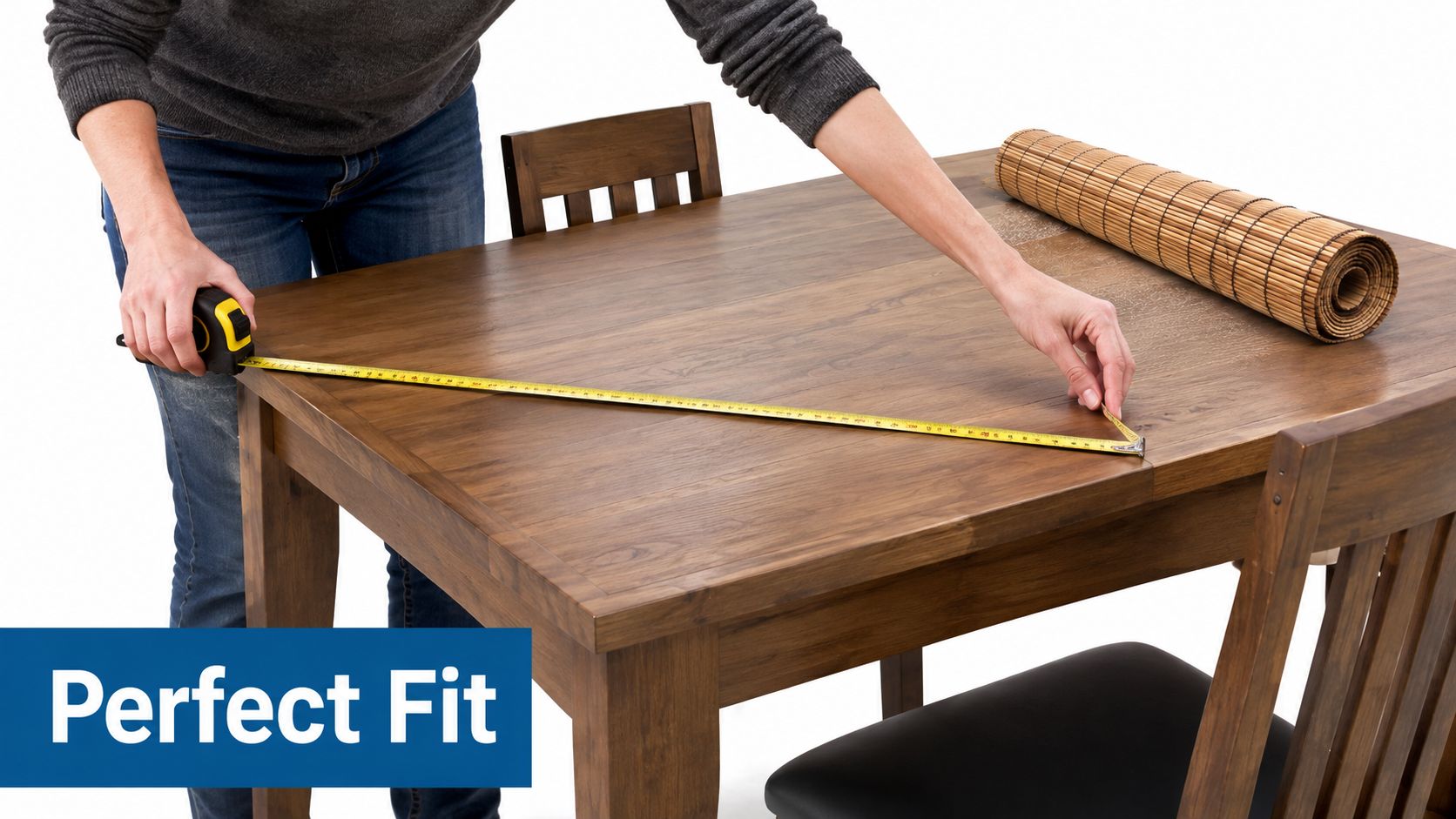
Measure the tabletop itself, not the legs or apron. For a rectangular table, record the length and width across the widest usable surface. For a round table, measure straight across the center. If the top is slightly irregular, use the larger measurement so the cover does not pull toward one side.
Choose coverage before calculating overhang
A placemat-style bamboo cover protects the space beneath one setting, leaving most of the tabletop open for airflow. Common bamboo placemat listings use a standardized rectangular size around 45 x 30 cm, approximately 17.7 x 11.8 inches to 18 x 12 inches (example bamboo placemat sizing). Use that size only as a reference. Large dinnerware, serving bowls, or tight chair spacing may call for a wider mat.
A full cover needs a deliberate drop. A short drop ending near the tabletop edge is easier to lift for ventilation and less likely to catch clothing. A longer drop gives a tablecloth appearance, but it can shift as people sit down and may need elastic, clips, or a shaped edge.
Use this sequence:
- Measure the surface. Record the length and width, or the diameter for a round table.
- Add the intended drop. Add the drop to both sides of a rectangular table and around the edge of a round one.
- Check finished dimensions. Compare the usable cover size, not only the package measurements.
- Check the movement zone. Keep the cover clear of knees, chair arms, drawers, and extension hardware.
- Account for table positions. An extendable table may need separate measurements when closed and fully extended.
Fit also affects moisture. A full bamboo cover that lies tightly across a damp tabletop can hold condensation in place, turning protection into a mold risk. A placemat or cover that lifts easily allows the surface to dry. Inspect the underside after spills or humid periods, especially where edging meets the table.
For renters, choose removable tension instead of permanent attachment. Elastic edging, discreet non-permanent clips, and covers that lift cleanly for ventilation avoid adhesive marks. If you are comparing vinyl elastic tablecloth options, focus on how edge tension affects fit and whether the cover can be removed without stressing the finish.
A snug cover stays put without pulling tightly across corners. Excessive tension strains stitched borders and may separate laminated layers. If the cover bunches, recheck the measurements and choose a shape-specific construction rather than adding more fasteners.
Care and Maintenance That Keeps Bamboo Looking New
A bamboo table cover protects well when it stays dry between uses. After a drink spills during dinner, lift the cover rather than leaving liquid pressed against the tabletop. Moisture trapped under a flat cover can move into stitching, edging, or laminated layers, where mold and soft seams begin before damage is visible.
Blot the cover's top and underside with a soft cloth, then wipe the tabletop separately. Pay attention to the perimeter and any binding, since those areas hold moisture longer than the center. A barely damp cloth is suitable for routine cleaning. Soaking the material, using harsh cleaners, or leaving residue in the weave can dull the finish and weaken coatings.
A simple routine for daily and weekly care
Use a short inspection routine:
- After spills: Remove the cover, blot both sides, and let the table and cover dry separately.
- After meals: Shake out crumbs and wipe the surface with a soft cloth.
- During weekly cleaning: Follow the manufacturer's bamboo furniture care instructions, including guidance for the border and underside.
- After humid weather: Improve airflow and check for a musty smell, darkening, or softened seams.
- Before storage: Confirm that the cover is completely dry, then roll or lay it flat as its construction requires.
A bamboo desktop durability test found that the surface resisted short-term water exposure and stayed intact during a 24-hour condensation test. Only a faint seam line appeared after prolonged exposure. The practical lesson is limited but useful: bamboo may tolerate brief moisture contact, while seams can still act like small channels that draw water inward.
Inspect the edge first: With stitched, laminated, or bound covers, dry and examine the perimeter before judging the center panel.
Give the material room to breathe
A damp cover needs air, not tight storage. Hang it or lay it open until both sides are dry, then store it in a dry place where residual humidity can escape. Keep hot cookware off the bamboo unless the manufacturer specifically approves that use. The cover reduces everyday contact, but it is not automatically a heat shield.
Long-term coverage creates a different failure mode. One bamboo care guide warns against leaving plastic or sealed covers on bamboo furniture for more than 12 hours, because the material needs to breathe and adjust to room humidity. Treat that as a strong caution for natural bamboo, especially in a damp room. Remove the cover regularly and inspect the underside after spills or humid periods. A clean, dry cover can still trap condensation once the table or room becomes more humid.
When a cover repeatedly bunches, stays damp, or smells musty, change the setup rather than adding more fasteners. A looser, removable layer that lifts easily can protect against scratches while allowing the tabletop to dry.
Where Bamboo Table Covers Work Best Indoors and Outdoors
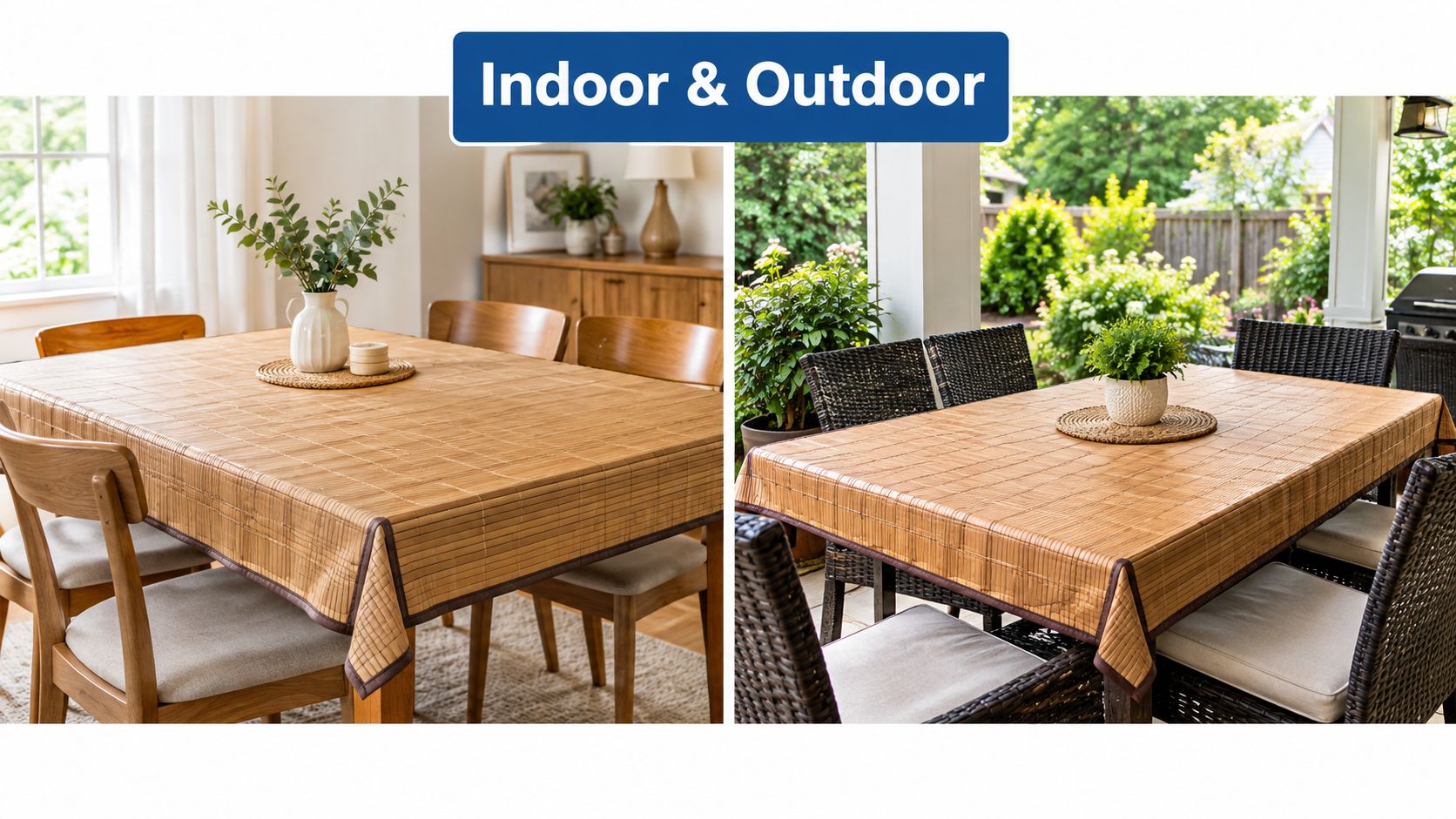
Indoor rooms are usually the easiest environment for a bamboo table cover. A dining table in a dry, ventilated room benefits from a removable mat that catches drips and protects against scratches without permanently sealing the finish. The same logic works on a kitchen island when you use the cover for food preparation or serving, then lift it after cleanup.
A work-from-home desk can also benefit from a smaller bamboo surface protector beneath a keyboard, coffee mug, or writing area. Keep electronics and standing water separate, though. Bamboo can improve the feel of the workspace, but it won't replace a coaster, spill discipline, or proper cleaning around cables and devices.
Covered outdoor use needs a different standard
A covered patio is not the same as an indoor dining room. Outdoor air carries more humidity, temperature changes create condensation, and wind-driven moisture can reach the underside even when the table appears protected. On a coastal balcony or in a damp climate, a cover that sits flat against natural bamboo may hold moisture against the surface and create conditions for mold or fungi.
A furniture-care source specifically warns that a cover can trap condensation and eventually contribute to mold and fungi on bamboo furniture (bamboo furniture ventilation guidance). That makes ventilation the deciding factor. Use an open, removable design, avoid leaving it in place through wet weather, and uncover the table whenever the area stays humid. If the furniture already shows dark spots, soft fibers, or a musty smell, remove the cover and address the underlying moisture before continuing to use it.
Match the cover to the household
Families with children may prefer a washable or easily wiped surface over a delicate woven mat. Pet owners should choose a construction that doesn't snag easily on claws and can be lifted often for hair removal. Hospitality operators and vacation-rental hosts need covers that can be cleaned, inspected, and replaced without complicated installation.
A renter can use removable mats or non-permanent clips, then take everything with them at move-out. If chair seats also need protection, a removable chair protector cover can help create a coordinated setup without altering the furniture.
Bamboo is a strong fit for dry indoor use, decorative protection, and households that value natural texture. Choose vinyl or another nonabsorbent option when fast spill cleanup is the top priority. For damp outdoor settings, prioritize ventilation over appearance, and leave the natural surface uncovered whenever a cover would trap condensation.
Smart Buying Tips and Renter Friendly Next Steps
A good bamboo table cover should solve a specific problem without creating a hidden maintenance burden. Start with the table, not the product photograph. Measure the usable surface, decide whether you need a placemat or full coverage, and check how the edge will behave around chairs, drawers, and extensions.
Then inspect the construction. Look for a stable weave, clean binding, and an underside that won't scratch the finish. If the product is laminated, examine the perimeter for lifted layers or exposed gaps. If it's textile-based, check whether the care instructions allow the cleaning routine you can realistically maintain.
Use this purchase checklist
- Fit: Confirm the finished dimensions and leave enough clearance for chairs and table mechanisms.
- Breathability: Prefer a design you can lift and air out, especially in humid rooms.
- Seams: Treat stitched and laminated edges as inspection points, not minor details.
- Cleaning: Choose a cover you'll remove and dry after spills.
- Storage: Make sure you have a dry place to keep it when the table needs airflow.
- Returns: Check the return policy before buying an unusual shape or custom-size cover.
- End of life: Consider transport, packaging, repairability, and disposal rather than relying only on the bamboo label.
The most sustainable cover is usually the one that fits properly, survives regular use, and stays in service. A low-cost product that bunches, traps condensation, or fails at the edge can force an earlier replacement. A durable cover used selectively can protect the table while keeping maintenance manageable.
The same repair-first thinking applies to other furniture problems. If a couch has started sagging, a sleeper sofa feels uneven, or a bed needs firmer support, replacing the entire piece may not be necessary. Start by identifying the failing support layer, then choose a removable or properly fitted solution that restores comfort without permanently changing the furniture.
Meliusly offers practical support products for sagging sofas, sleeper sofas, chairs, bunk beds, and mattresses, including sofa support boards, sleeper sofa support boards, bunkie boards, and bed slats. Visit Meliusly to find an affordable furniture support solution that helps extend the life of the pieces you already own.