

8 Sofa Cushion Arrangement Ideas for Comfort and Style
Posted by Meliusly
Most sofas don't wear out evenly. The seat you use most, the corner you lean into, and the sleeper's metal bars each carry different loads, so cushion placement helps determine where damage appears first. A neat-looking layout can still concentrate pressure in one spot, push users toward the front edge, or hide a sagging deck beneath the cushions.
The best sofa cushion arrangement ideas balance appearance with load distribution, posture, and maintenance. Some layouts spread use across the seat. Others create a comfortable lounging position but concentrate compression in one corner. The difference comes down to how you position cushions, how often you rotate them, and whether the support beneath them is still level.
Before moving a sofa through a doorway or stairwell, review these tips for damage-free delivery. Once the sofa is in place, use the eight arrangements below to make comfort and furniture longevity work together.
1. Symmetrical Matched-Pair Arrangement
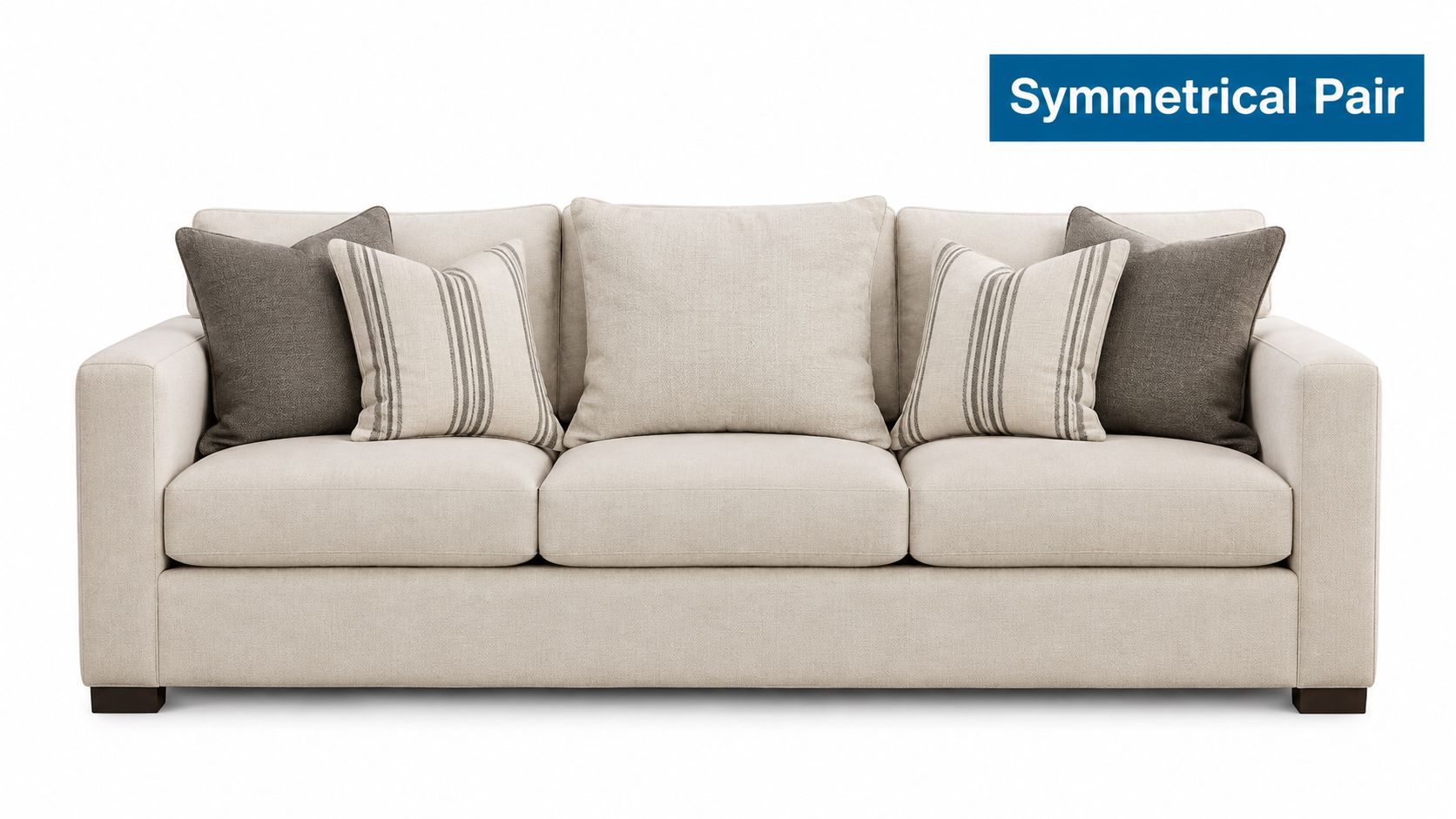
A matched-pair layout gives a sofa a deliberate, balanced appearance. Place identical back cushions at opposite ends, then add matching accent pillows near the arms or slightly inward. The arrangement suits traditional living rooms, formal sitting areas, and hotel lobby sofas where visual order matters.
Its practical advantage is more specific: paired cushions encourage people to use both ends instead of treating one side as the default seat. That spreads compression more evenly across the seat deck and makes an emerging dip easier to spot. It cannot level a foundation that has already sagged.
Match the internal construction as carefully as the fabric. Cushions that look identical may differ in fill, firmness, or loft. The softer one will flatten sooner, leaving a height difference beside its firmer partner and shifting more load onto the remaining cushion.
Build the arrangement carefully
Set the larger back cushions first and align their lower edges. Place smaller accents where they support the arms or lower back without taking too much usable seat depth. A typical sofa seat is approximately 21–22 inches deep, with many models within a broader 20–24-inch range, according to sofa seat depth dimensions. Measure with the existing cushions in place, not from the outside back of the frame.
Practical rule: Matching cushions should match in compression as well as appearance.
Rotate the paired pillows every few weeks, switching their positions and turning reversible cushions when the covers allow it. This prevents one insert from carrying the same load continuously. If one end still dips, place a heavy-duty Meliusly sofa cushion support board beneath the cushions to stabilize the deck. It can make the seating surface more even, but it will not replace a damaged insert or repair broken framing.
2. Asymmetrical Layered Arrangement
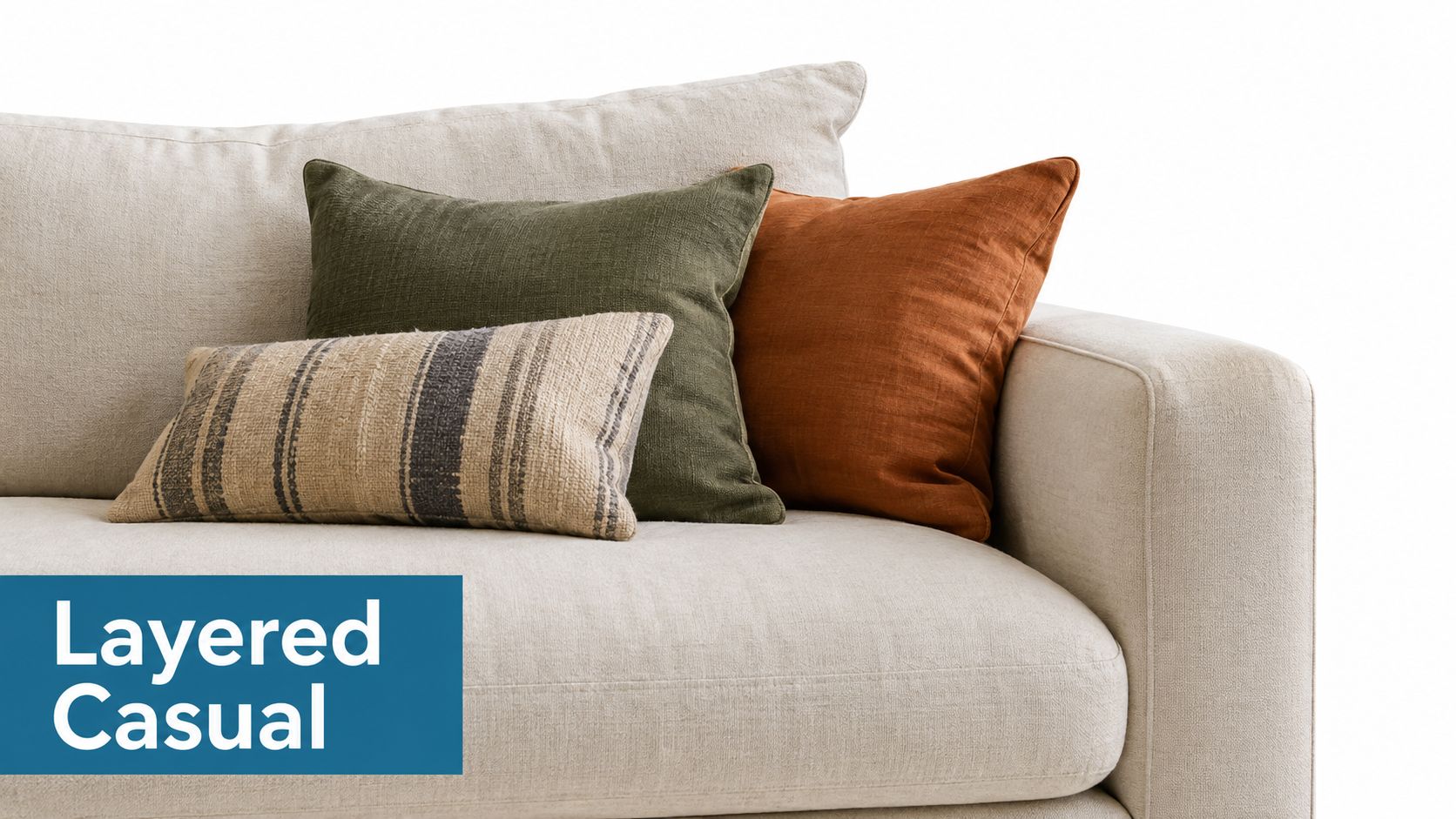
An asymmetrical layered arrangement looks relaxed because the cushions aren't distributed as mirror images. Start with the largest cushion against the back, add a medium cushion in front, and finish with a smaller lumbar or accent cushion placed slightly off-center. The result suits family rooms and open-plan spaces where the sofa needs to feel comfortable rather than formal.
This layout can work well when different people use different parts of the sofa. One end might hold a large floor-style cushion for reading, while the opposite end remains open for upright sitting. The trade-off is that an attractive cluster can encourage everyone to settle into the same favored area, concentrating load beneath it.
Keep the largest cushion on the side where people sit most often, but move that cushion periodically. The cushion gives that position more support, while rotation prevents its insert and cover from aging in one fixed location.
Preserve the usable seat
Use inserts with reasonably consistent firmness across different sizes. A small, firm cushion beside a large, soft cushion can look unbalanced and create an awkward pressure point when someone leans into the grouping.
Avoid filling the entire seat with decorative layers. If the cushions push your pelvis toward the sofa edge, remove one layer or move the largest cushion higher against the back. The arrangement should support the sitter, not turn the seating surface into a narrow perch.
A firm base matters here. If the seat pulls toward the lowest point, a Meliusly sofa support board beneath the existing cushions can help create a more stable platform. It's a practical distinction: layered cushions change contact and posture, while base reinforcement addresses movement beneath the cushions.
3. Diagonal Corner-Lean Arrangement
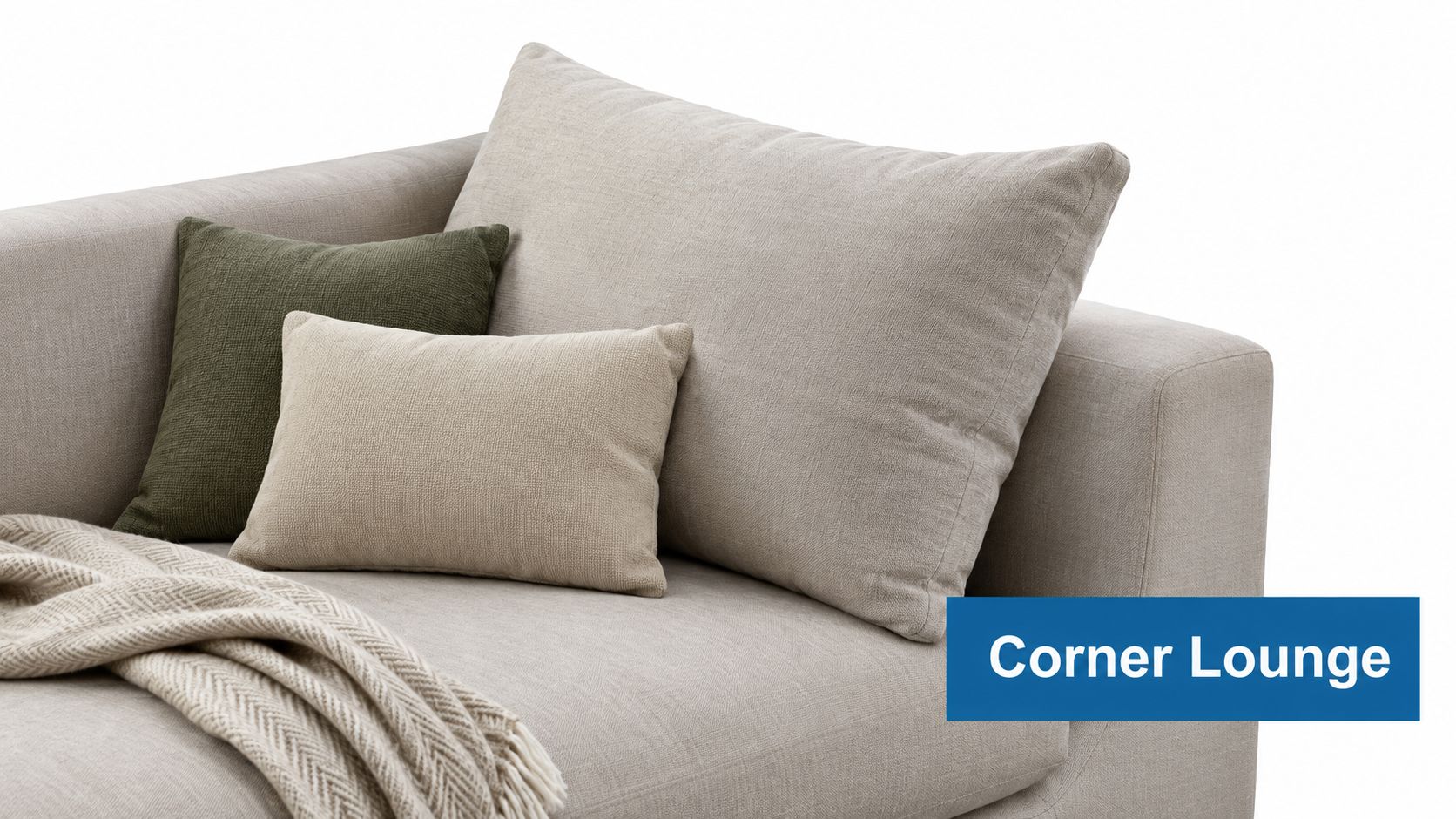
A diagonal corner lean creates a dedicated reading or reclining position without changing the sofa itself. Angle one large cushion into the corner, place a second cushion beside or slightly in front of it, and use a smaller pillow to fill the lower-back gap. On a sectional, angle the cushions to follow the geometry of the corner instead of forcing them into a straight row.
The setup is comfortable because it creates a shaped support surface. It's useful in an apartment where the sofa doubles as a reading nook, or in a family room where one person wants to recline while another sits upright.
The weakness is concentrated loading. The corner seat cushion, the lower back cushion, and the adjacent frame can receive repeated pressure from the same person in the same position. That can produce a dip even when the rest of the sofa remains level.
Alternate the preferred corner
Use cushions with a firm core so they hold their angle instead of collapsing into the corner. A soft cushion may look inviting at first, but once it folds, it can reduce effective seat depth and leave the sitter leaning into the arm.
Check the corner seat regularly for compression. Press across the cushion with your hand and compare it with the opposite end. If one area bottoms out or stays depressed after the load is removed, repositioning alone probably won't restore support.
Rotate the lean position between the two ends of the sofa. If the arrangement is on a sectional, switch the reading position when the layout allows it. When the deck itself has begun to sag, reinforce that section before adding more pillows. A cushion can shape comfort, but it can't rebuild a weakened platform.
4. Lumbar-First Ergonomic Arrangement
A lumbar-first arrangement starts with the lower back. Place a firm cushion behind the waist, where it supports the lumbar curve and helps keep the pelvis from sliding forward. Keep it low on the backrest, not up between the shoulder blades. A smaller secondary cushion can support the upper back or sit near the arm, but it should not push the sitter forward or steal seat depth.
This setup suits deep sofas, home-office seating, and homes where older adults or caregivers need easier posture support. Deep, soft furniture can feel fine for reclining and still make upright sitting and standing harder. A firm lumbar cushion reduces the empty space behind the body and gives the sitter a clearer point of contact.
The cushion should spring back after use. If it stays flat, folds in the centre, or slips behind the sitter, it is not doing the job.
Keep the seat firm enough
A lumbar cushion works best when the seat deck does not let the body sink too far. A common sofa seat height is about 17–19 inches from the floor to the top of the seat cushion, as noted in furniture-sizing and accessibility guidance similar to ADA seating recommendations. A sagging seat can lower the sitting position and make rising more difficult, even when the back cushion is placed well.
Choose a lumbar cushion with a firm, resilient fill rather than loose material that shifts to the sides. Keep it slim enough to preserve usable seat depth. Several large pillows behind the sitter can create the opposite problem, pushing the pelvis forward and leaving the legs unsupported.
If the seat cushions are already soft or dipped, base support comes first. Meliusly sofa support boards can add firmness beneath sagging seat cushions. Install the board under the existing cushions, then adjust the lumbar cushion again. That order matters, because a back cushion cannot correct a weakened seat platform.
For a closer look at support choices for discomfort, see this guide to sofa cushion for back pain.

5. Rotation-Based Maintenance Arrangement
Some of the best sofa cushion arrangement ideas aren't fixed looks. They're maintenance routines. Rotate loose back cushions, exchange seat cushions of similar size, and flip reversible cushions when the construction allows it. The purpose is to distribute compression, fading, and fill fatigue rather than letting one sitting position absorb every load.
Set a reminder for the first weekend of each month, or attach the rotation to a regular cleaning routine. Mark the underside of cushions with discreet tags so you know which position each cushion occupied previously. This is especially useful on a family sofa where cushions look interchangeable but have developed different compression patterns.
Use a simple rotation pattern
For a sofa with three removable seat cushions, move the left cushion to the centre, the centre to the right, and the right to the left. For back cushions, turn or exchange cushions only when their shape and seams allow it. Don't force a cushion into a position that changes its intended orientation.
- Check the insert: Look for permanent flattening, uneven edges, and areas that bottom out.
- Inspect the deck: Remove every cushion and check for sagging webbing, a dropped platform, or broken support components.
- Compare positions: Note whether the same area dips again after the cushions have moved.
- Clean before rotating: Follow a broader furniture care guide so dirt and moisture don't accelerate wear beneath the covers.
Rotation can redistribute cushion wear, but it can't repair a sagging base. If a cushion still dips after rotating and fluffing, place a Meliusly heavy-duty support board beneath the cushions and reassess the seating height.
The material also matters. Upholstery guidance commonly places residential foam around 30–35 kg/m³, while heavier-duty seating guidance begins around 45 kg/m³, according to foam density and firmness guidance. Density and firmness aren't the same property, so don't assume a denser replacement will automatically feel harder.
For cleaning timing and practical maintenance considerations, review Top Cleaners' sofa care advice.
6. Sectional Zoning Arrangement
A large sectional often serves several purposes at once. One end becomes a reading seat, the middle handles conversation, and the chaise becomes the lounging area. A zoning arrangement makes those uses visible through cushion groupings, while also encouraging people to use more of the sofa instead of wearing out one favorite seat.
Keep each zone distinct without blocking the seating surface. A reading zone might use a firm lumbar cushion and a smaller side pillow. The conversation zone can remain more open, with cushions aligned to support upright sitting. The lounge zone can hold softer cushions, provided they don't cause the user to sink into an unstable position.
Match support to the activity
Use consistent colors or materials to separate zones subtly. For example, place firmer neutral cushions at the reading end and softer textured cushions near the chaise. The visual distinction helps family members choose a suitable position without turning the sectional into a collection of unrelated pillow piles.
Sectional layouts also reveal uneven sagging quickly. If one seat section sits lower than the next, people may slide toward the dip, increasing the load on that area. Individual support boards beneath separate sections can help restore a more consistent height, provided the cushions and frame remain in usable condition.
A zone should describe how the seat is used, not excuse a weak foundation.
Check the seat deck beneath each section every few months. Compare the front edge, centre, and back of each cushion. A stable primary seat cushion with movable lumbar cushions is generally more adaptable than stacking soft cushions across every section.
For shared apartments, this arrangement offers a practical compromise. One person can keep an upright work or reading position while another uses the chaise for reclining. The cushions shift according to activity, but the underlying support should remain stable.
7. Textured Layering Arrangement
Texture gives a sofa depth without requiring a strong color contrast. Combine woven, velvet, linen, knit, or boucle covers, then keep the palette connected through one base color. On a neutral sofa, this approach can make the arrangement feel deliberate without adding visual clutter.
Texture doesn't tell you anything about support, however. A thick boucle cover can hide a flat insert, while a smooth velvet cover can make a firm cushion look slimmer than it is. Check the insert before judging the arrangement by appearance.
Layer texture without crowding the seat
Place the largest cushion against the back and the smaller textured accent in front. Leave open seat space for the sitter. Interior guidance often recommends odd-numbered groupings such as three or five cushions, while also stressing that sofa size should determine the final quantity, as explained in cushion arrangement guidance from OKA. Treat that as a styling option, not a mechanical rule.
Use similar firmness across the grouping even when the covers differ. A firm insert behind a collapsed soft insert creates a lopsided arrangement and can push the user into an awkward posture. Keep darker or more durable fabrics on the side of back cushions that faces the sitter, where contact and handling are greatest.
A texture-heavy layout can also encourage overfilling. If people have to move cushions to sit down, remove one layer. The best arrangement keeps the sofa usable without a daily clearing routine.
For a finishing detail above a neutral sofa, pair the cushion palette with framed canvas wall decor. The wall should support the arrangement rather than compete with it.
8. Hospitality-Standard Uniform Arrangement
Hotels, vacation rentals, and Airbnb properties benefit from a repeatable cushion layout. Use the same cushion set and placement pattern on every sofa or sleeper sofa, then document the arrangement with a photo. Consistency makes room turnover easier and helps staff spot a cushion that has flattened, shifted, or developed a stain.
A standard layout might place two matching pillows at the back and one lumbar cushion in front. On a sleeper sofa, keep decorative cushions away from the mechanism and store them in the same location after conversion. The layout should look finished when the sofa is closed and leave a clear, level surface when it becomes a bed.
Turnover is also an inspection
Inspect cushions at every guest turnover. Rotate equivalent cushions, check seams, and look beneath the seat cushions for a depressed deck. A guest may not report early sagging, but a repeated dip will show up when every room is photographed and reset in the same way.
Create a simple photo guide and keep it inside the storage area or linen closet. It should show the cushion positions, the storage location, and the correct arrangement after the sleeper mechanism is closed.
For sleeper sofas, support beneath the mattress is separate from decorative cushion placement. Meliusly foldable and permanently installed sleeper sofa support boards can help maintain a more level sleeping surface when the existing mechanism creates an uncomfortable transition. Review guidance on the best cushions for a sofa before replacing inserts or changing the room's standard setup.
A consistent routine also reduces unnecessary replacement. When every cushion has a designated position, staff can identify whether the problem follows the cushion or stays with the frame. If the dip stays in the same location after the cushions move, investigate the deck or mechanism rather than ordering another decorative pillow.
8-Style Sofa Cushion Comparison
| Arrangement | Implementation complexity | Resource requirements | Expected outcomes | Ideal use cases | Key advantages |
|---|---|---|---|---|---|
| Symmetrical Matched-Pair Arrangement | Low | Matching cushion sets; moderate cost | Polished, balanced look; even load distribution | Formal living rooms, hotel lobbies, 3+ seat sofas | Easy to restore; reduces uneven sagging; tidy appearance |
| Asymmetrical Layered Arrangement | Medium | Mixed sizes/shapes; extra cushions | Relaxed, lived-in look; flexible styling | Family sofas, contemporary open-plan spaces | Versatile updates; hides minor wear; modern feel |
| Diagonal Corner-Lean Arrangement | Low–Medium | One or two large firm cushions; small supports | Defined lounging spot; better single-user comfort | Apartment reading nooks, sectional corners | Improves recline support; creates chaise-like area |
| Lumbar-First Ergonomic Arrangement | Medium | Firm lumbar cushions; firmer seat deck preferred | Improved posture; easier standing and safer seating | Older adults, caregiver setups, home offices | Strong lower-back support; aids rising from seat |
| Rotation-Based Maintenance Arrangement | Low | No extra purchases; time and routine | More even wear; extended cushion life | High-use family sofas, hospitality turnover routines | Extends longevity; prevents one-sided wear |
| Sectional Zoning Arrangement | Medium–High | More cushions; varied firmness per zone | Distributed use; multifunctional large sofa | Large sectionals, shared apartments | Spreads use and wear; allows tailored comfort |
| Textured Layering Arrangement | Medium | Multiple fabric textures; matched inserts | Rich, tactile appearance; conceals wear | Neutral modern rooms, rentals, showrooms | High-end look on a budget; easy incremental refresh |
| Hospitality-Standard Uniform Arrangement | Low | Identical cushion sets; housekeeping guides | Consistent appearance; simplified inspections | Hotels, vacation rentals, Airbnb properties | Simplifies maintenance and replacement; consistent guest experience |
Choosing the Right Cushion Arrangement and Keeping It Working
Choose the layout according to how the sofa is really used, not only how it looks in a photograph. A symmetrical matched-pair arrangement works well when you want balanced support and an orderly appearance. A lumbar-first layout is better for upright sitting, home-office use, and anyone who finds a deep sofa difficult to rise from. A corner lean creates a comfortable retreat, but it needs regular rotation because repeated lounging concentrates load.
Sectional zoning is useful when one sofa serves several people and activities. It distributes use across the piece, gives each area a clear purpose, and makes it easier to select firmer or softer support where it belongs. Textured layering is primarily a visual approach, so check insert firmness and usable seat depth before adding more covers.
Keep the practical limits in view. Sofa seat cushions commonly use approximately 4–6 inches of foam, with 5 inches described as a popular general-purpose thickness in sofa cushion foam guidance. A decorative pillow can improve the back position, but it can't restore a cushion that has permanently flattened or a platform that has begun to sag.
Diagnose the source of the dip
Remove every cushion and inspect the sofa deck. Look for a sagging platform, broken slats, displaced webbing, distorted seams, or a cushion insert that has lost its shape. Press along the seat from front to back and compare the most-used position with the least-used position.
If the cushion is the problem, replacement or professional upholstery work may be appropriate. If the base has dropped, rearranging cushions will only disguise the issue temporarily. A support board beneath the existing cushions can be a practical, non-permanent step for renters and homeowners who want to test improved support before committing to a larger repair.
For older adults, caregivers, and long-duration users, judge the result by posture and pressure as well as appearance. Research on upholstered seating found that support shape, foam characteristics, and seat construction affect compression behavior, while a separate seat-pressure study found that contoured support can reduce peak pressure and increase contact area compared with flat support. That evidence supports a straightforward rule: keep the primary seat stable, use movable cushions to adapt the back support, and avoid stacking soft cushions until the user sinks too far.
Set a recurring rotation reminder, check the deck every few months, and move the preferred lounging position when practical. If a cushion still dips after rotating and fluffing, reinforce the base with a Meliusly sofa support board before considering a new sofa. Meliusly has served over 400,000 customers with furniture support solutions that address sagging sofas, sleeper sofas, beds, and related seating problems.
Meliusly offers sofa cushion support boards, sleeper sofa support boards, bunkie boards, and bed slats for homeowners, renters, caregivers, and hospitality operators who want to extend furniture life without immediate replacement. Review the available support solutions and choose the right fit for your sofa at Meliusly.
Share this post
- Tags: couch cushion layout, ergonomic sofa cushions, sagging sofa cushions, sofa cushion arrangement, sofa support board